Package 19: Golden Triangle Tour with Varanasi - India in 10 Days
Route: Delhi → Agra → Jaipur → Delhi → Varanasi → Delhi
Duration: 10 Days / 9 Nights | Private AC SUV + Fast AC Train |
Price: GBP 2,099 per person (Twin Sharing basis)
Best For: First-time International tourists, couples, families, cultural explorers, heritage lovers, spiritual travellers
The Four Experiences That Define India - In One Complete Journey
Every country has a version of itself that it shows the world first. France offers Paris and the Loire Valley. Italy offers Rome and Tuscany. Egypt offers Cairo and the Nile. These are not the whole truth of those countries but they are the truths that matter most, the ones that contain, in concentrated form, the essence of what makes each place irreplaceable.
India's equivalent is this: Delhi, Agra, Jaipur, and Varanasi.
These four cities together tell a story of India that is richer, more complex, more emotionally layered, and more completely human than any other combination of destinations the subcontinent offers. Delhi tells the story of power of empire after empire choosing this plain between the Yamuna and the Aravalli Hills as the seat of their ambition, leaving behind monuments that still stop pedestrians in their tracks. Agra tells the story of love, of one man's grief made into the most beautiful building the world has ever produced. Jaipur tells the story of royalty of a Rajput kingdom that made beauty a governing principle and left a city so colourful and confident that it is still, three centuries later, impossible to walk through without smiling. And Varanasi tells the story of something older and harder to name than any of them of faith, of the river, of the particular quality of life that happens at the edge of eternity.
Golden Triangle Tour with Varanasi - is the journey that visits all four. Ten days, nine nights, a private AC SUV for the road journeys and Fast AC Trains to cover the longer distances without fatigue, 3-star and 4-star accommodation throughout, and an itinerary designed with the specific intelligence that first-time India visitors need and deserve: not rushed, not padded, but perfectly balanced between the iconic and the authentic.
This is the India that changes people. The India that first-time visitors describe, when they return home, not as a holiday they took but as an experience that happened to them. The India that makes every other destination feel, briefly, slightly less vivid by comparison.
It begins in Delhi. It ends on the Ganges. And in between, it gives you everything.
Day by Day Itinerary
Day 1: Arrival in Delhi - Welcome to the Capital of Empires
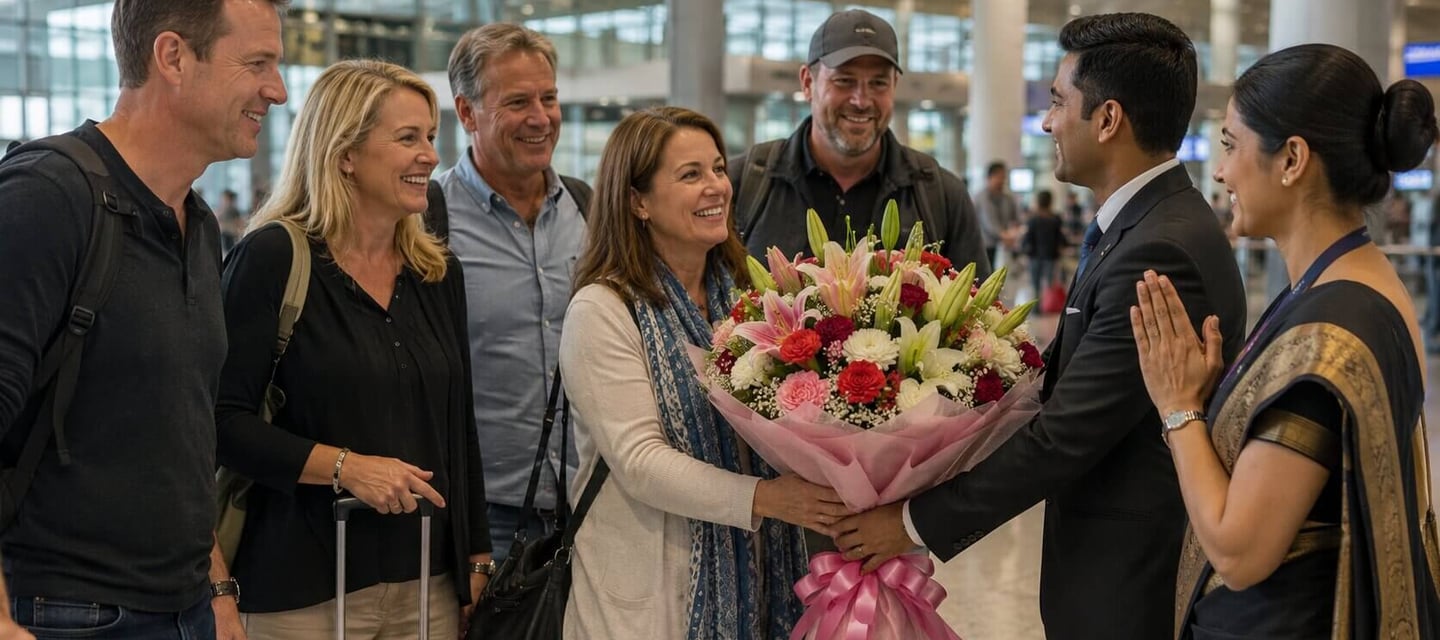
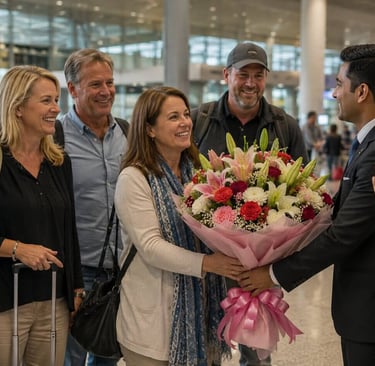
At Indira Gandhi International Airport, our private representative will be waiting, your name on a board, a warm welcome, and a private, air-conditioned SUV to take you to your hotel. From the moment you land, the logistics are handled. Your only job is to arrive.
Delhi announces itself immediately and completely, the scale of it, the heat or the cool depending on the season, the traffic, the smell of the city, the distant silhouette of a Mughal monument visible from the expressway. This is a city of thirty million people that has been the capital of successive great empires for nearly a thousand years, and it carries that weight visibly and magnificently.
The evening is gentle, a relaxed orientation drive through the ceremonial heart of New Delhi:
India Gate - The great sandstone war memorial at the end of Rajpath, lit beautifully after dark, is an ideal first image of India: grand, accessible, and quietly moving in its simple statement of sacrifice and remembrance.
President's House (Drive Past) - The vast domed Rashtrapati Bhavan seen from the ceremonial boulevard in evening light is one of the great formal vistas of any capital city in the world, the scale of Lutyens' design visible even from a moving car.
Dinner at your hotel or a local restaurant, and an early night. Delhi gives generously to those who arrive rested.
Day 2: Delhi - UNESCO Heritage & the Story of Six Centuries
After breakfast, a full day exploring the extraordinary heritage of New Delhi, the planned imperial capital built by the British between 1911 and 1931 as a statement of permanence that lasted, in the event, barely sixteen years before independence rendered it the capital of a free nation.
Qutub Minar Complex - Built in the twelfth century to mark the establishment of the Delhi Sultanate , the first Muslim kingdom in India, the Qutub Minar is a 73-metre minaret of red sandstone and marble that is the tallest brick minaret in the world and one of the finest examples of early Indo-Islamic architecture anywhere. The surrounding complex adds the Quwwat-ul-Islam Mosque, the first mosque built in India after the Islamic conquest, and the enigmatic Iron Pillar of Delhi, a seven-metre column of wrought iron cast in the fourth century CE that has stood in the open air for 1,600 years without significant corrosion, a metallurgical achievement that continues to puzzle modern scientists.
Humayun's Tomb - Built in 1572, this garden tomb is the architectural predecessor of the Taj Mahal, the first great Mughal garden tomb, with its characteristic double dome, its charbagh garden layout, and its serene, perfectly proportioned beauty. Quieter than many Delhi monuments and UNESCO-listed, it is one of the most satisfying heritage experiences the city offers. The light in the late afternoon, falling through the sandstone lattice screens onto the white marble of the central chamber, is extraordinarily beautiful.
Delhi Haat (Evening) - A government-run crafts market where artisans from every state in India display and sell their traditional work - textiles, pottery, jewellery, woodwork, handloom fabrics. An excellent and reliable introduction to the breadth of Indian craft tradition, and a good place for an initial round of gift shopping at fair prices.
Day 3: Old Delhi - The Living Museum of Mughal India
After breakfast, we cross the invisible but very real boundary that separates New Delhi from Old Delhi and the crossing is like moving between centuries.
Old Delhi was built by Shah Jahan in the seventeenth century as the new Mughal imperial capital, and its street plan, its architecture, and its human density have changed remarkably little since. This is the Delhi that the Mughals built and the British modified and that Independence inherited, layered, chaotic, magnificent, and alive with the particular energy of a city that has been continuously and intensely inhabited for four hundred years.
Red Fort - The great Mughal citadel of Shah Jahan, its massive red sandstone walls rising 33 metres above the street, enclosing a complex of palaces, audience halls, and gardens that was the centre of Mughal imperial power for nearly two centuries. The Diwan-i-Khas, where the Peacock Throne once stood, and the Diwan-i-Aam, where the emperor appeared before his subjects, give a visceral sense of the authority and ambition of Mughal governance at its height.
Chandni Chowk - From the Red Fort, we enter the famous bazaar of Chandni Chowk, one of the oldest and busiest markets in Asia, its main boulevard branching into a labyrinth of specialised lanes, each dedicated to a specific trade. The Kinari Bazaar for wedding decorations and embroidered trimmings. The Dariba Kalan for silver jewellery. The Khari Baoli spice market, whose smell of turmeric and dried chilli and star anise is unlike anything else on Earth. An optional rickshaw ride through the narrower lanes, the human-powered three-wheelers threading through crowds with a confidence that defies physics, is one of the great short travel experiences of India.
Connaught Place & Janpath Market - The afternoon moves to New Delhi's grand commercial centre for a more relaxed browsing experience - Janpath's craft stalls for souvenirs and textiles, Connaught Place's cafés and restaurants for lunch and the pleasure of watching the capital go about its busy afternoon.
Day 4: Delhi → Agra - The Taj Mahal & the Monument to Love
After breakfast, we drive south to Agra, approximately 200 kilometres on the smooth Yamuna Expressway, three to four hours of comfortable travel that arrives at the city of the monument.
The Taj Mahal - Built by Emperor Shah Jahan between 1632 and 1653 as a mausoleum for his beloved wife Mumtaz Mahal, the Taj is not merely the most famous building in India. It is, by the widest possible consensus, the most beautiful building ever constructed by human hands, a statement that, standing before it, feels not like hyperbole but like simple, accurate description.
The white Makrana marble from which it is built changes colour through the day, cream in the gentle morning light, brilliant white at noon, gold in the late afternoon, silver under the full moon. The proportions are so perfectly resolved that the building seems to exist outside the normal rules of architecture, not built but grown, not designed but inevitable. Twenty thousand workers from across Asia laboured for over two decades to produce it, and the result is a building that continues, four centuries after its completion, to produce in almost every visitor an emotional response that surprises them with its intensity.
Agra Fort - A short drive from the Taj, the great red sandstone fort of Agra is a UNESCO World Heritage Site in its own right, a layered complex of Mughal palaces built by Akbar, Jahangir, and Shah Jahan, each in their distinct architectural language. The Musamman Burj, the octagonal tower where Shah Jahan spent his final years under house arrest by his son Aurangzeb, with a view of the Taj Mahal visible in the distance, closes the story of this city's greatest monument with a poignancy that no visitor quite forgets.
Evening is free for the famous marble craft shopping of Agra, the local tradition of pietra dura inlay work, the same technique used on the Taj's decorative panels, produces pieces of genuine beauty at a range of price points.
Day 5: Agra → Jaipur via Fatehpur Sikri - The Ghost City & the Pink City
After breakfast, we drive west toward Jaipur but the route takes us through one of the most remarkable detours in India.
Fatehpur Sikri - Emperor Akbar's abandoned imperial capital, built in red sandstone between 1571 and 1585 and deserted barely fourteen years after completion, stands today in near-perfect preservation on its rocky ridge, an entire Mughal city, complete and empty, exactly as it was left four centuries ago. The Buland Darwaza, the largest gateway in the world at 54 metres, the Panch Mahal five-storey pavilion, the Jama Masjid, and Akbar's extraordinary Diwan-i-Khas are architectural masterworks in a setting of haunting, beautiful desolation. Fatehpur Sikri is one of the most genuinely extraordinary heritage sites in India and one of the most consistently underestimated by travellers who focus entirely on the Taj.
Continue to Jaipur, arriving in the evening. Check in and explore the local market at leisure. The Pink City, as Jaipur is universally known, announces its character immediately in the warm rose-coloured sandstone of its old city walls and the cheerful, colourful energy of its bazaars.
Day 6: Jaipur Sightseeing - Forts, Palaces & Royal Rajasthan
After breakfast, a full day in one of India's most rewarding and most photographed cities.
Amber Fort - The finest fort-palace in Rajasthan, climbing the hillside above Maota Lake in a sequence of courtyards and palatial apartments of extraordinary beauty. The Sheesh Mahal (Mirror Palace), its walls, ceilings, and arches entirely covered in tiny mirror mosaic set in patterns of breath taking delicacy, is one of the great decorative interiors of the world. At any hour of the day, the fort's combination of military architecture and palatial refinement is magnificent.
Jaigarh Fort - Perched on the ridge above Amber, the Jaigarh Fort is the military counterpart to Amber's palatial elegance, a working fort of formidable proportions, home to the Jaivana cannon, the largest wheeled cannon ever cast, whose barrel stretches over six metres. The views from Jaigarh's ramparts over the surrounding valley and the distant plains are extraordinary.
Jal Mahal (Photo Stop) - The Water Palace, standing in the middle of Man Sagar Lake on the road between Amber and the city, is one of the most photographed buildings in Rajasthan, a five-storey palace of pink sandstone with four floors submerged below the lake surface, its reflection doubling its already considerable elegance. A brief stop here as the light turns golden is a genuinely lovely moment.
Hawa Mahal (Palace of Winds) - The iconic five-storey screen of 953 small latticed windows through which the royal women of the Kachwaha court could observe the street processions below without being seen. Built in 1799 in the form of Lord Krishna's crown, it is the defining image of Jaipur and one of the most photographed facades in India.
Day 7: Jaipur - City Palace, Jantar Mantar & the Drive Back to Delhi
After breakfast, the morning continues Jaipur's cultural exploration:
City Palace - The seat of the Jaipur royal family, partially still inhabited by the Maharaja's descendants, is a complex of courtyards, palaces, and museums containing some of the finest collections of royal artifacts, weapons, miniature paintings, and historical textiles in Rajasthan. The Chandra Mahal, the central palace building, can be visited on a ticketed tour that reveals interiors of extraordinary decorative richness.
Jantar Mantar - The largest stone astronomical observatory in the world, built by Maharaja Jai Singh II in 1734, is a collection of nineteen monumental stone instruments designed to measure celestial time and movement with remarkable precision, several still accurate enough to be useful to astronomers today. UNESCO-listed and genuinely fascinating for anyone with even passing interest in science, architecture, or the history of knowledge.
Jaipur's Famous Jewellery & Bazaars - Jaipur is the gemstone capital of India and one of the world's great centres of jewellery production. The Johari Bazaar (Jewellers' Market) is an extraordinary concentration of goldsmiths, gemstone cutters, and jewellery shops producing work of remarkable quality. The Bapu Bazaar for textiles and the Nehru Bazaar for leather goods and Rajasthani crafts complete a shopping afternoon of considerable pleasure.
After lunch, we drive back to Delhi, arriving in the evening for a comfortable night's rest.
Day 8: Delhi → Varanasi by Fast AC Train - Into the Spiritual Heart of India
After a relaxed breakfast, the morning in Delhi is light, a final market visit, rest, or simply a quiet cup of chai before the afternoon transfer to the railway station.
The Fast AC Train to Varanasi with complimentary snacks, meals, and mineral water served on board, covers the approximately 800 kilometres to the holy city in comfort, arriving in the evening. This train journey is one of the specific design decisions that elevates this tour above comparable itineraries: the alternative road journey to Varanasi is long and fatiguing, the domestic flight short but airport-heavy. The train is the intelligent middle path - comfortable, reliable, and allowing you to arrive in Varanasi rested and ready.
Arriving in Varanasi in the evening, your private car transfers you to your hotel. Through the car window, the city begins its introduction: the narrow streets, the temple spires, the smell of incense and marigold garlands and the river. Varanasi does not withhold itself. It begins the moment you arrive.
Day 9: Varanasi - Sunrise on the Ganges, Temples & the Ganga Aarti
No day in India quite compares to this one.
Sunrise Boat Ride on the River Ganges - Before dawn, your private car takes you to the ghats, the great stone steps descending to the Ganges that are Varanasi's defining feature and the site of its most ancient and continuous religious life. You board a rowing boat as the darkness begins to lift. The river is wide and dark and surprisingly calm. And then, gradually, the far bank catches the first light, and the near bank, the ghats, the temples, the burning grounds, the priests, the bathers, the flower sellers, the silk-robed pilgrims - begins to emerge from the dark in a sequence of images so specific, so entirely unlike anything else in the world, that the most travelled visitors are frequently rendered completely silent by it.
Varanasi is one of the oldest continuously inhabited cities in the world - older than Rome, older than Athens, continuously lived in and worshipped at for over three thousand years. The Ganges here is not merely a river. It is the physical manifestation of the divine, the goddess Ganga herself, descended from heaven to purify the sins of the world. Hindus believe that to die in Varanasi is to achieve immediate liberation from the cycle of rebirth. And so the city has drawn pilgrims, priests, philosophers, poets, musicians, and the dying for thirty centuries and continues to draw them, in exactly the same spirit, today.
The boat ride at sunrise, watching the ghats wake up, watching the bathers immerse themselves in the river with an expression of complete, unself-conscious devotion, watching the smoke rise from the Manikarnika Ghat (the burning ghat, where cremations continue around the clock without pause), watching the flower offerings float downstream in the current, is one of the most profound travel experiences available anywhere on Earth. It requires no religious belief to be moved by it. It only requires the willingness to be present.
Temple Exploration - After breakfast, the morning is devoted to Varanasi's extraordinary sacred landscape. The Kashi Vishwanath Temple, dedicated to Lord Shiva and considered one of the holiest temples in Hinduism, rebuilt in the eighteenth century and recently incorporated into a magnificent new temple complex, is the spiritual centrepiece of the city. The Sankat Mochan Hanuman Temple, set in a riverside garden and alive at all hours with devotional singing and the particular warmth of a genuinely active place of faith, is the most beloved temple among Varanasi's own residents. The narrow lanes between the ghats, the gallis, lined with silk shops, sweet stalls, tea vendors, astrologers, and the incidental theatre of a city that has always lived its life in public, are worth unhurried exploration.
Banarasi Silk & Local Markets - Varanasi is the home of Banarasi silk, the most celebrated silk weaving tradition in India, producing fabrics of extraordinary richness and complexity that are considered the finest possible material for a Hindu wedding saree. A visit to a genuine silk weaving workshop, watching the intricate jacquard looms produce their patterns of gold and silver brocade on silk, is both a genuine insight into a remarkable craft tradition and a very good place to buy something of lasting beauty.
Ganga Aarti - The Evening Prayer Ceremony - As dusk falls, the entire city of Varanasi moves toward the Ganges. At Dashashwamedh Ghat, the main ghat, where a flight of stone steps descends to the river in a wide arc, the evening Ganga Aarti ceremony begins. Seven priests in saffron robes stand at the water's edge, each holding a large, multi-tiered oil lamp of brass. In perfect synchrony, they begin the ceremony, swinging the lamps in wide arcs, the flames describing circles in the darkening air, the chanting rising over the sound of conches and bells, the smoke of incense drifting out over the river where flower-and-candle offerings float downstream in the current. On the river, dozens of boats crowd the water as visitors and pilgrims watch from the surface of the Ganges itself. The sound and the light and the smoke and the water and the ten thousand people gathered in devotion and curiosity make this the most powerful ceremonial experience available anywhere in India.
To witness the Ganga Aarti is to understand something fundamental about the relationship between beauty and belief in Indian culture, that the two have never, here, been considered separate things.
Day 10: Varanasi → Delhi by Fast AC Train - Departure
An early morning transfer to Varanasi Railway Station for the Fast AC Train back to Delhi, again with complimentary snacks, meals, and mineral water served throughout the journey. Arrive in Delhi in the afternoon, and your private car takes you directly to Indira Gandhi International Airport as per your flight timing.
Your India in 10 Days journey ends at the departure gate, ten days, nine nights, four cities, and the accumulated weight of everything you have seen, heard, tasted, and felt across the breadth of northern India.
The Taj Mahal at noon, its marble brilliant in the sun. The narrow lanes of Old Delhi, the smell of spices and the sound of the rickshaw bell. The Mirror Palace of Amber glittering in the afternoon light. The river at dawn, the ghats waking, the flames of the Ganga Aarti reflected in the dark Ganges water.
You carry all of it home. It stays.
✅ Inclusions
✅ 9 Nights Accommodation - Quality 3-star / 4-star properties ( as available ) across Delhi (3 nights), Agra (1 night), Jaipur (2 nights), Delhi (1 night), and Varanasi (1 night). ✅ Daily Breakfast - A proper breakfast at your accommodation every morning. ✅ Private AC SUV with Driver - Your dedicated vehicle for all road journeys and local sightseeing throughout the tour. ✅ Fast AC Train Travel - Comfortable reserved seating on Delhi–Varanasi and Varanasi–Delhi services, with complimentary snacks, meals, and mineral water included. ✅ All Sightseeing as per Itinerary - Every monument, market, and experience mentioned is built into your plan. ✅ All Tolls, Parking & Driver Allowances - No hidden road costs. ✅ Full Tour Support Throughout - Our team is available throughout your journey for any assistance needed.
❌ Exclusions
❌ International flights and airfare ❌ Boat ride on the Ganges, payable directly ❌ Lunch, dinner, and personal expenses ❌ Travel insurance and visa charges
Best Time to Visit
October to March is the ideal season for this complete tour:
October – November: Post-monsoon North India is fresh and clear. Excellent conditions across all four cities. The Varanasi ghats are particularly beautiful in the clear post-monsoon light.
December – February: Peak season for comfort and clarity. Cool, crisp days make extended sightseeing genuinely pleasant. The Taj Mahal in winter morning mist is one of the great photographic moments of India.
March - Warming pleasantly. The last comfortable month before the North Indian heat makes midday sightseeing more demanding. Holi festival falls in March, one of the most extraordinary cultural experiences in India if your dates coincide.
Frequently Asked Questions
Q: Is this tour genuinely suitable for first-time visitors to India? It is specifically designed for them. The four cities of this itinerary - Delhi, Agra, Jaipur, and Varanasi are the destinations that define India's global reputation and give first-time visitors the most complete possible introduction to what the country offers. The private transport, 3 and 4-star accommodation, and carefully paced itinerary provide the comfort and support that make a first India experience genuinely wonderful rather than overwhelming.
Q: Why travel to Varanasi by Fast AC Train rather than flying? The Fast AC Train to Varanasi offers a combination of comfort, convenience, and value that the domestic flight alternative does not match. The train is catered, comfortable, and arrives directly in the city, whereas the domestic airport at Varanasi requires an additional road transfer. For travellers who have not experienced India's premium train services, it is also a genuinely enjoyable travel experience in its own right.
Q: Can we add Ranthambore National Park for a tiger safari? Yes, Ranthambore, India's most celebrated tiger reserve, sits naturally on the route between Jaipur and Delhi and can be added as a one or two-night extension with a morning safari. It is an excellent addition for wildlife enthusiasts. Contact us to plan this extension with adjusted pricing.
Q: Can we upgrade to 5-star hotels throughout? Yes, luxury upgrades are available at all destinations, including iconic properties such as the Oberoi Amarvilas in Agra (with Taj Mahal views from every room) and the Rambagh Palace in Jaipur. Revised pricing is shared in advance of booking.
Why Book This with UK India Tourism?
This is India's most demanded itinerary and it is also the one most frequently done badly. Rushed through in eight days with exhausting road journeys, poor hotel choices, and sightseeing packed so tightly that no single place has room to breathe. This package is built on a different philosophy entirely: that the Golden Triangle plus Varanasi, done at the right pace, with the right transport, in the right accommodation, is not merely a good India tour. It is a life-changing one.
At UK India Tourism, we have spent years understanding exactly what international travellers, from the United Kingdom, the United States, and beyond, need from a first India experience. The right balance between famous monuments and breathing space. The use of the Fast AC Train to Varanasi rather than a long and tiring road journey. The two full days in Delhi rather than one rushed morning. The inclusion of Old Delhi as a separate and essential experience from New Delhi.
These are not random decisions. They are the product of experience, care, and a genuine commitment to delivering not the India tour that is easiest to sell, but the one that is best to take.
From Royal Palaces to Sacred Flames - Experience the Soul of India in 10 Unforgettable Days
UK India Tourism
UK : +44 7345 191205
India: +91 9958 480873
Email: sales@ukindiatourism.co.uk
Travel Specialists for UK, USA, Canada, Australia, France, Poland, Singapore, Japan & Beyond
UK: +44 7345191205
UK India Tourism© 2026, all rights reserved
India: +91 9958480873
⭐⭐⭐⭐⭐ 4.9/5 | 2,600+ Travelers | 18 Years | 98% Recommend