JAIPUR - THE PINK CITY OF INDIA
Your Complete Travel Guide for UK, USA, Australia, Canada, France, Poland, Japan & Singapore
Presented by UK India Tourism – Your Trusted Royal India Travel Partner
Welcome to Jaipur - India's Most Enchanting Royal City
Imagine a city where every sunrise gilds the rooftops of 300-year-old palaces, where bazaars perfumed with jasmine and cardamom overflow with handcrafted jewels, where fortress walls rise dramatically from rocky ridgelines against a blazing Rajasthani sky. That city is Jaipur, the legendary Pink City of India and it is waiting to reveal itself to you.
Declared a UNESCO World Heritage City in 2019, Jaipur is the vibrant capital of Rajasthan, India's largest and most historically rich state. Founded in 1727 by the visionary astronomer-king Maharaja Sawai Jai Singh II, Jaipur was one of the world's first planned cities, its streets designed on an elegant grid, its buildings wrapped in a distinctive warm terracotta pink, symbolising hospitality. That colour, and that welcome, have never faded.
For international travellers from the United Kingdom, the United States, Australia, Canada, France, Poland, Japan, Singapore and beyond, Jaipur offers something profoundly rare: a living encounter with a royal civilisation that is simultaneously ancient and vibrantly alive. Towering forts, floating palaces, marble temples, star-gazing observatories, rooftop restaurants, gem markets, camel safaris, and five-star heritage hotels, Jaipur delivers all of this and more.
UK India Tourism is your trusted, expert partner to plan the perfect Jaipur journey. From bespoke luxury itineraries to family adventures, cultural immersions to romantic escapes, we handle every detail so you can simply fall in love with India.
Why Jaipur? The Perfect Introduction to Royal India
Jaipur forms one-third of India's legendary Golden Triangle, alongside Delhi and Agra, making it one of the most visited international destinations in South Asia. But Jaipur is far more than a stopover, it is an experience that can fill five days, ten days, or a lifetime of visits and still leave you wanting more.
Jaipur Is Perfect For Every Type of Traveller
• Couples & Honeymooners: Rooftop dinners beneath starlit Rajasthani skies, intimate palace stays, romantic lakeside sunsets
• Families with Children: Elephant rides, wildlife parks, interactive museums, fort explorations, and vibrant cultural shows
• History & Heritage Enthusiasts: UNESCO World Heritage Sites, royal museums, centuries-old astronomical observatories
• Adventure Travellers: Hot air balloon rides over the Pink City, camel safaris, desert camping at the edge of Jaipur
• Luxury Seekers: Heritage palace hotels, Michelin-class Rajasthani cuisine, private royal experiences
• Photography & Art Lovers: Geometric architecture, vibrant bazaars, folk performances, and golden-hour fort views
• Spiritual Explorers: Ancient temples, meditation retreats, yoga ashrams, and timeless rituals
Whether you are a first-time visitor to India arriving from London, Sydney, Toronto, Chicago, Paris, Warsaw, Tokyo, or Singapore, or a seasoned traveller returning for more, Jaipur has a way of surprising you, moving you, and claiming a permanent place in your heart.
Top Places to Visit in Jaipur - Best Tourist Attractions for International Visitors
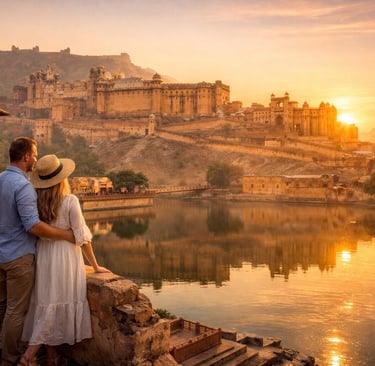
1. Amber Fort (Amer Fort) - UNESCO World Heritage Marvel
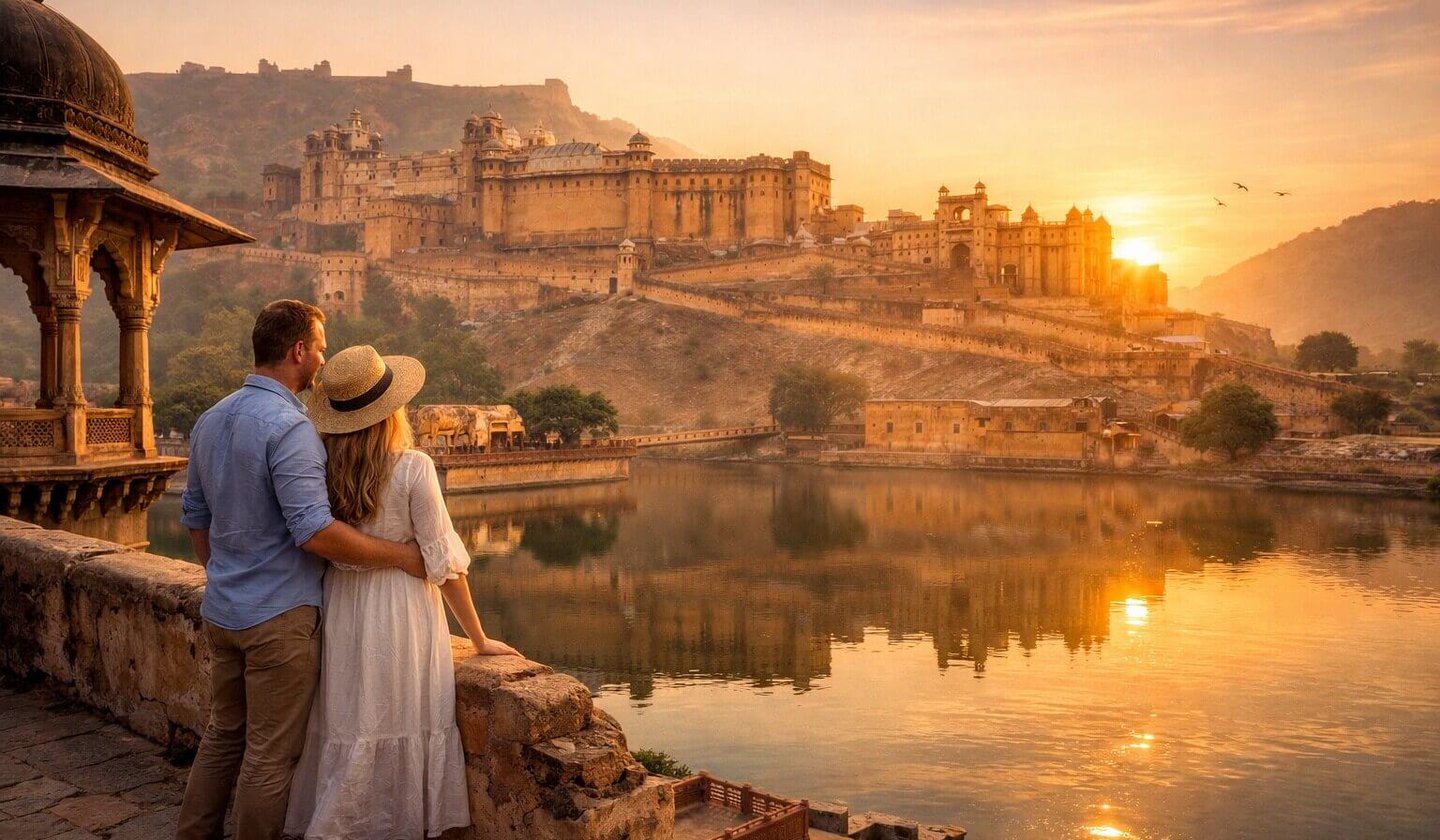
Perched commandingly on the craggy Aravalli hills, 11 kilometres from the city centre, Amber Fort is among the most spectacular fortresses on the planet. A UNESCO World Heritage Site, it was the ceremonial and residential seat of the Rajput Kachchwaha dynasty for over four centuries before Jaipur was established in the valley below.
For visitors from the UK and Europe, Amber Fort draws immediate comparisons to the great medieval castles of England, Scotland, and France — but on an altogether grander, more theatrical scale. The fort is a layered world of sandstone and marble, intricate Mughal-Rajput architecture, and astonishing decorative craftsmanship.
What Not to Miss at Amber Fort
• Sheesh Mahal (Palace of Mirrors): A breath-taking hall where a single candleflame is reflected by thousands of inlaid glass pieces into a swirling galaxy of light — one of the most photographed interiors in India
• Ganesh Pol Gateway: A stunningly painted ceremonial gate considered one of the finest gateways in Rajasthani architecture
• Diwan-i-Aam & Diwan-i-Khas: The grand public and private audience halls where the Maharajas held court
• Jas Mandir (Hall of Victory): Latticed marble screens, floral glass inlays, and cool breezes make this a serene masterpiece
• Evening Light & Sound Show: History narrated under starlight as the fort dramatically illuminates - deeply moving for families and couples
Practical tip for international visitors: Arrive early morning (7–9 AM) to beat the crowds and experience the golden light on the sandstone walls. Elephant rides up the ramp are available, though many travellers choose to walk or take jeeps. Hire a licensed guide through UK India Tourism for a rich historical narrative.
2. Hawa Mahal - Palace of Winds
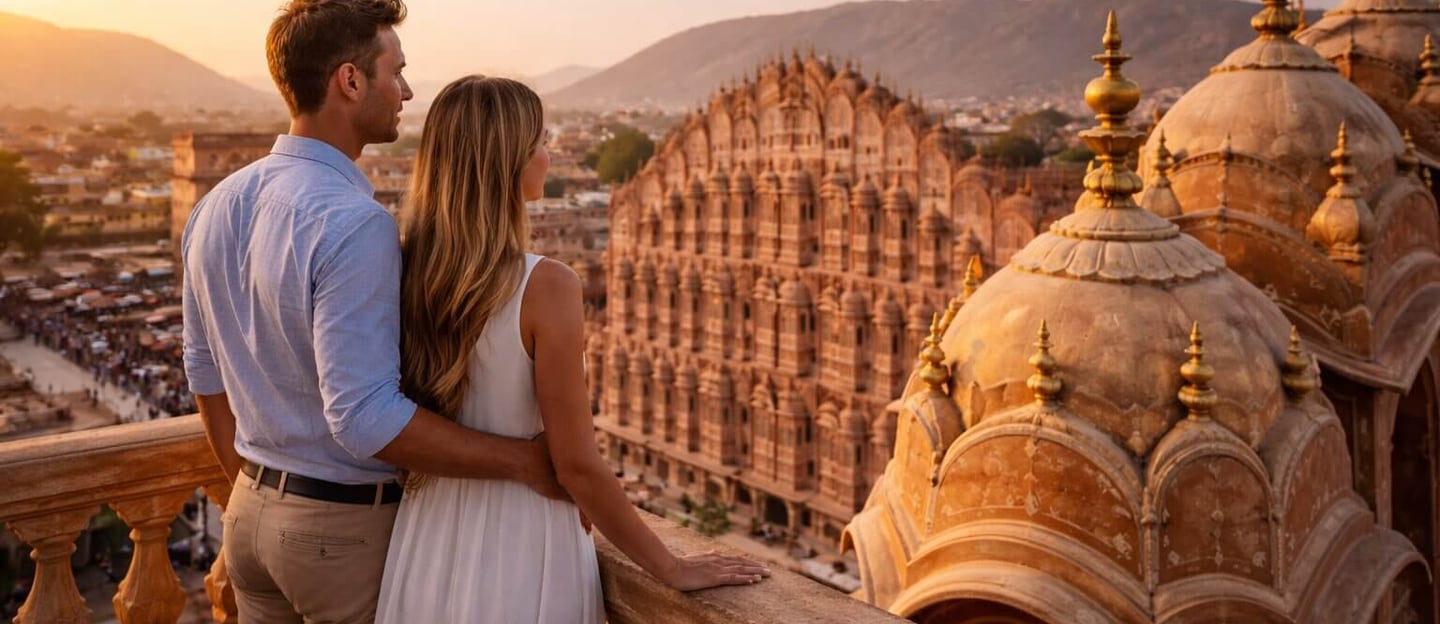
No image of Jaipur is more instantly iconic than the Hawa Mahal, a five-storey honeycomb fantasy of pink sandstone rising above the old city bazaars. With 953 intricately carved jharokha (latticed windows), this 1799 architectural marvel was conceived by Maharaja Sawai Pratap Singh as a screen through which royal women could observe city life and street festivals in absolute privacy, while cool breezes kept the palace naturally air-conditioned, giving it the poetic name 'Palace of Winds'.
Standing before it feels like discovering a natural wonder sculpted by a master artist. The façade, designed to resemble the crown of Lord Krishna, glows amber at sunrise, blush-pink in afternoon sun, and burns a deep terracotta gold as the light fades. For photographers from Japan, Singapore, and Europe, Hawa Mahal offers some of the most technically compelling architectural photography in Asia.
The interior museum is underrated, visitors can explore the small chambers behind those famous windows, climb to the rooftop, and look out over the old city with sweeping views across minarets and market rooftops. The surrounding bazaar of Johari Bazar adds authenticity and colour to the experience.
3. City Palace - Living Royal Heritage
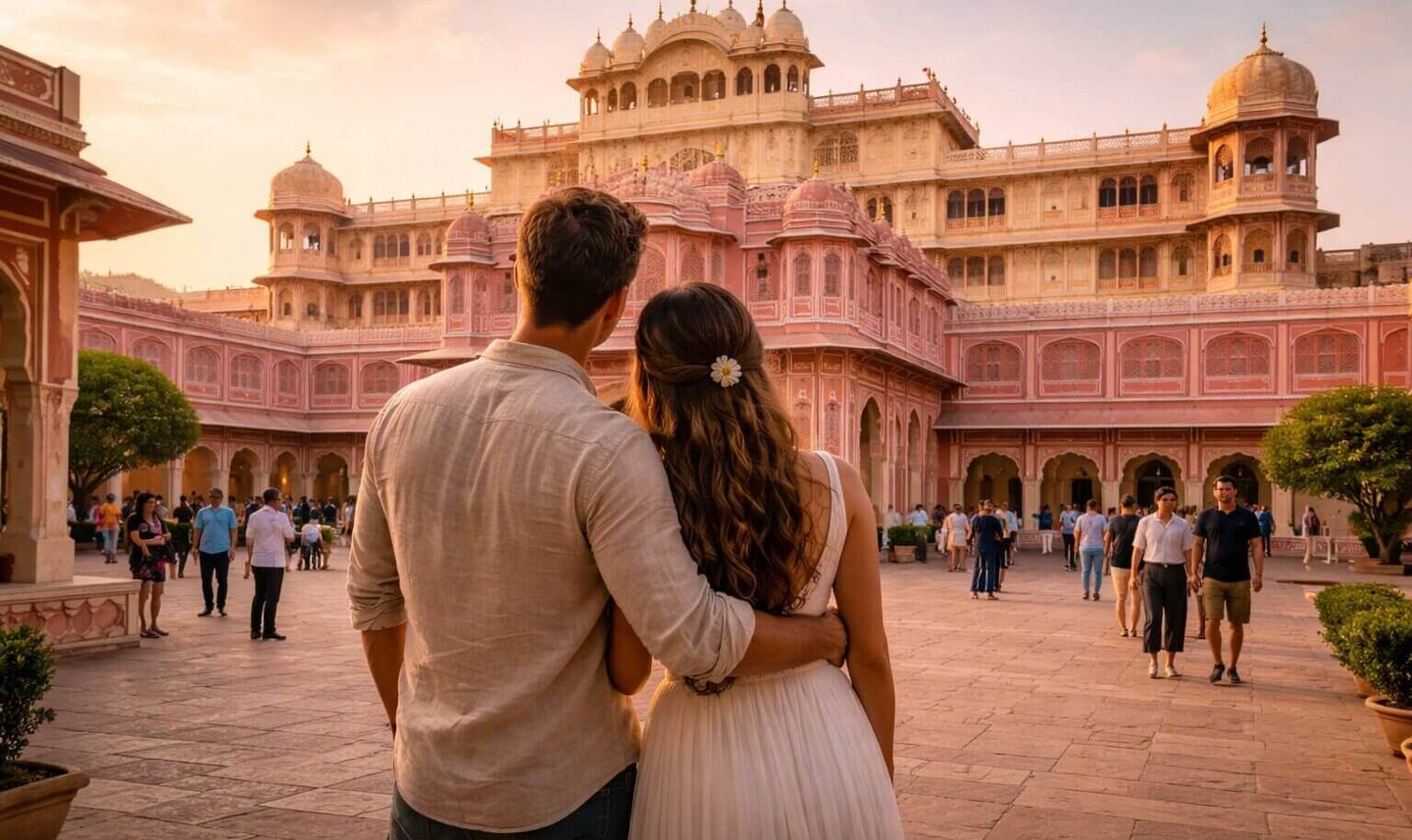
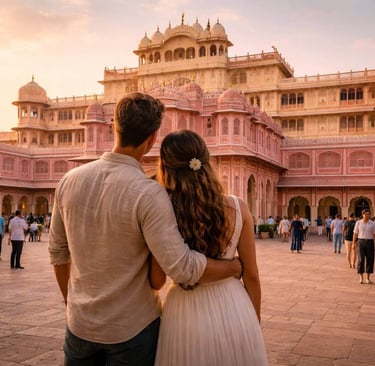
Unlike many historic palaces around the world that have been emptied of their royal families and preserved as museums, Jaipur's City Palace is remarkable because it remains an active royal residence. The current descendants of the Jaipur royal family still occupy a private wing of the palace, lending the entire complex a very real and deeply felt sense of living history.
Built over several generations from 1729 onwards, City Palace is a glorious fusion of Rajput, Mughal, and European architectural styles, reflecting the cosmopolitan vision of the maharajas who welcomed influences from across the world. The complex contains multiple palaces, courtyards, gardens, and museums.
Highlights Inside City Palace
• The Peacock Gate (Mubarak Mahal Courtyard): Four gates representing the four seasons, decorated with peacocks, lotuses, and green glazed tiles — among the most photographed courtyards in Rajasthan
• Maharani's Palace (Textile Museum): Royal silk robes, embroidered costumes, and ceremonial garments spanning centuries
• Diwan-i-Khas: Contains two enormous sterling silver urns - at 345 kg each, they are recognised by the Guinness World Records as the world's largest silver objects, carried filled with holy Ganges water by Maharaja Sawai Madho Singh II on his 1901 visit to England
• Diwan-i-Aam: Houses stunning Mughal and European miniature paintings from the royal collection
• Chandra Mahal: The seven-storey residential palace still occupied by the royal family — the exterior is viewable and simply magnificent
4. Jal Mahal - The Floating Palace
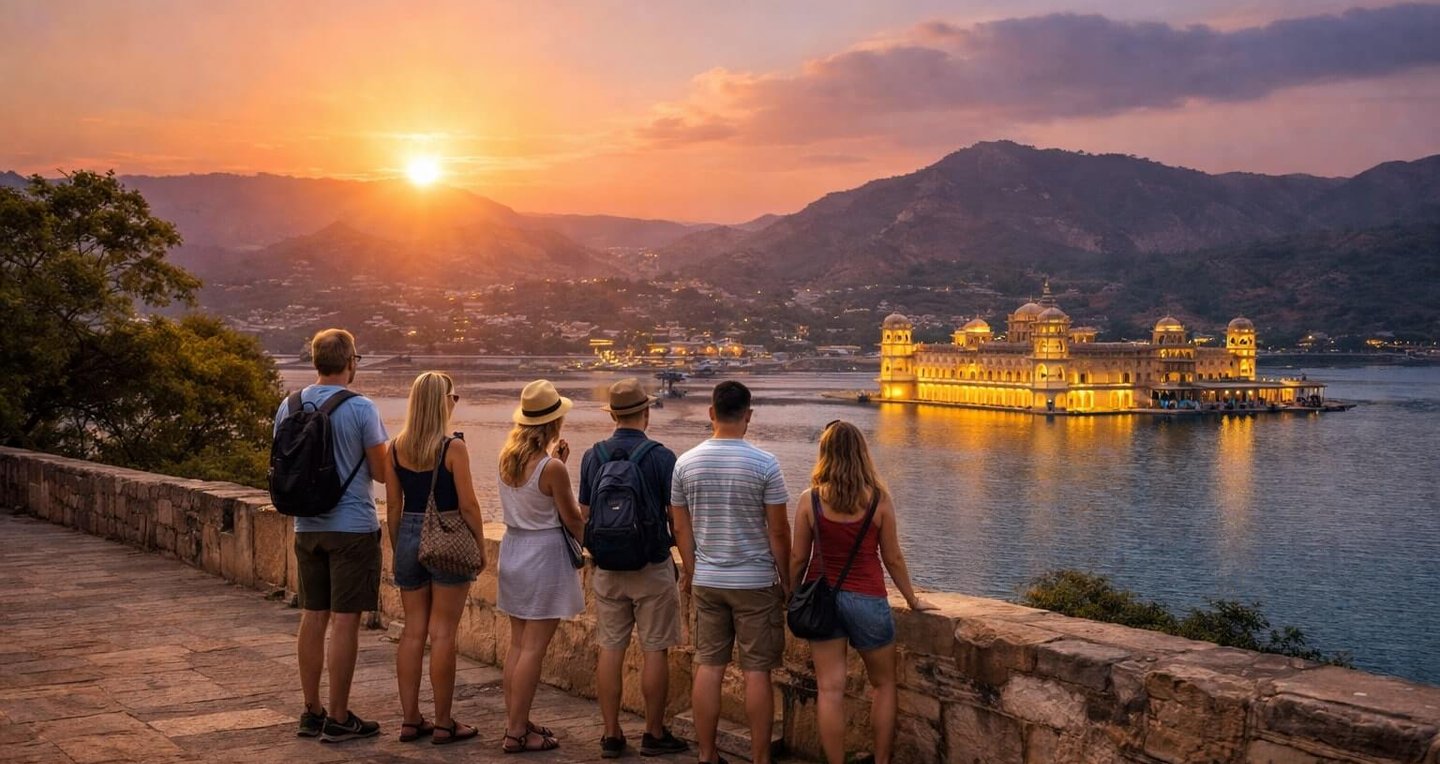
Rising serenely from the middle of Man Sagar Lake, Jal Mahal is one of those sights that simply stops you in your tracks. The name means 'Water Palace', and this five-storey Rajput-Mughal structure appears to float effortlessly on the calm lake surface, surrounded by the gentle Aravalli hills, its perfect reflection shimmering below.
Built in the 18th century as a summer pleasure retreat for the Maharajas, Jal Mahal was also used as a duck-hunting lodge. Today, the interior is not open to visitors, but the lakeside promenade, known as the Jal Mahal Road, offers extraordinary views at every hour of the day. At sunrise, the palace is bathed in liquid gold; at sunset, it is reflected in molten shades of amber and crimson; on full moon nights, it becomes a silver apparition hovering on the water.
The area around the lake also hosts a thriving bird sanctuary, attracting migratory birds in winter, a delight for wildlife photographers and nature lovers from Australia and Canada, where birding tourism is deeply popular. Local boat operators sometimes offer early-morning excursions on the lake (availability varies by season - UK India Tourism can confirm current access).
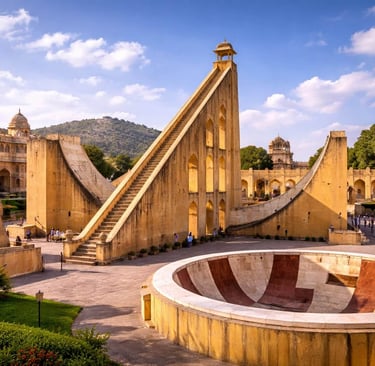
5. Jantar Mantar – Ancient Astronomical Observatory
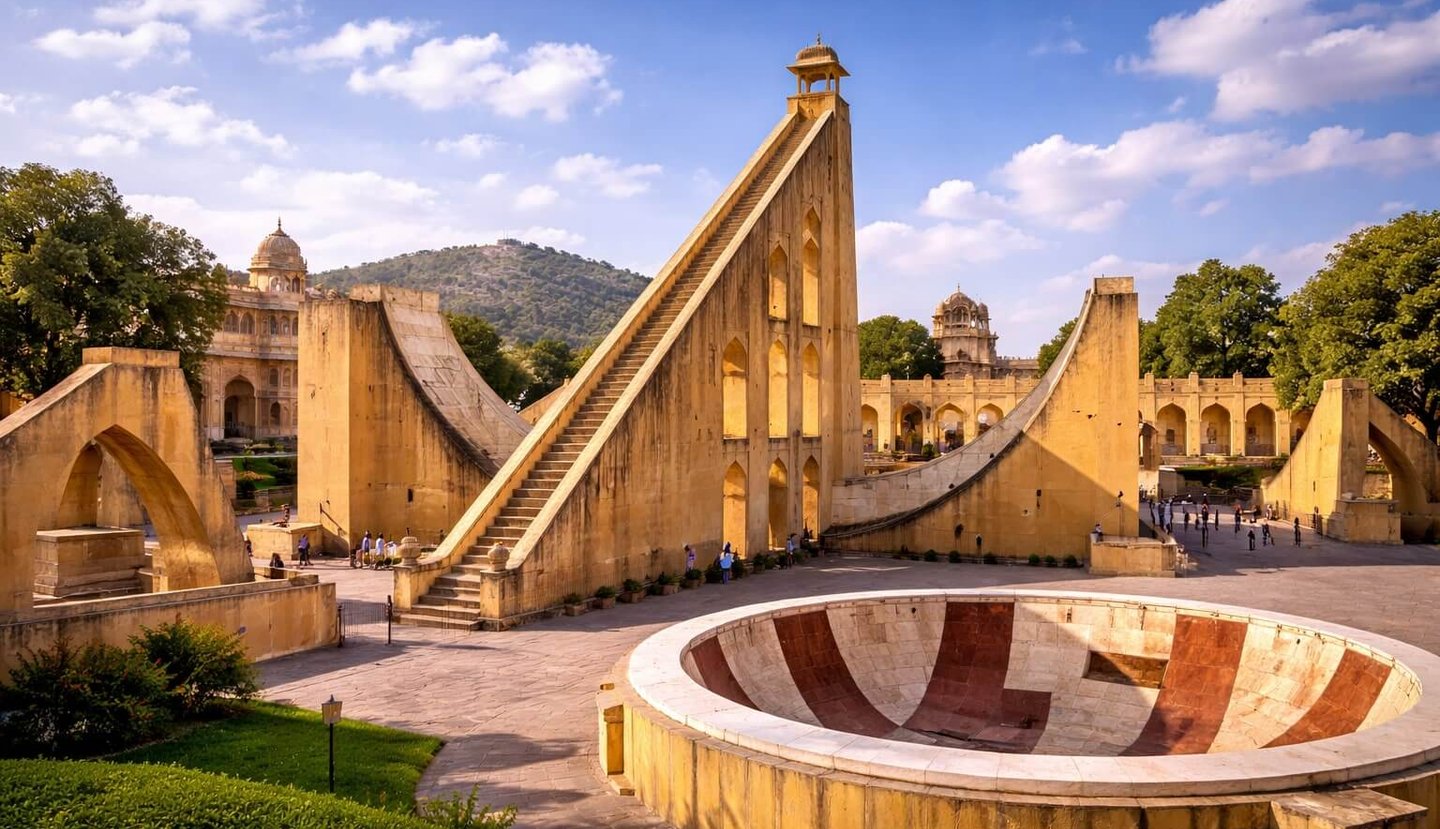
Before there were telescopes, satellites, or digital star-tracking systems, Maharaja Sawai Jai Singh II built Jantar Mantar in 1734, a monumental outdoor observatory of stone and plaster instruments designed to measure time, track the movements of planets, predict solar and lunar eclipses, and observe celestial phenomena with extraordinary precision.
A UNESCO World Heritage Site, Jantar Mantar is one of five observatories built by Jai Singh across India, and Jaipur's is the largest and best-preserved. Its 19 massive architectural instruments are a stunning fusion of science and sculpture, functioning to this day with remarkable accuracy. The Samrat Yantra, the world's largest sundial at nearly 27 metres tall, can calculate time to within two seconds.
For visitors from France, Poland, Japan, and Singapore - countries with strong traditions of scientific heritage, Jantar Mantar offers a profound and moving experience: proof that 18th-century India was at the cutting edge of global astronomical science. Walking among these stone giants, understanding their purpose and precision, is as intellectually exciting as it is visually striking.
6. Nahargarh Fort - The Perfect Sunset Viewpoint
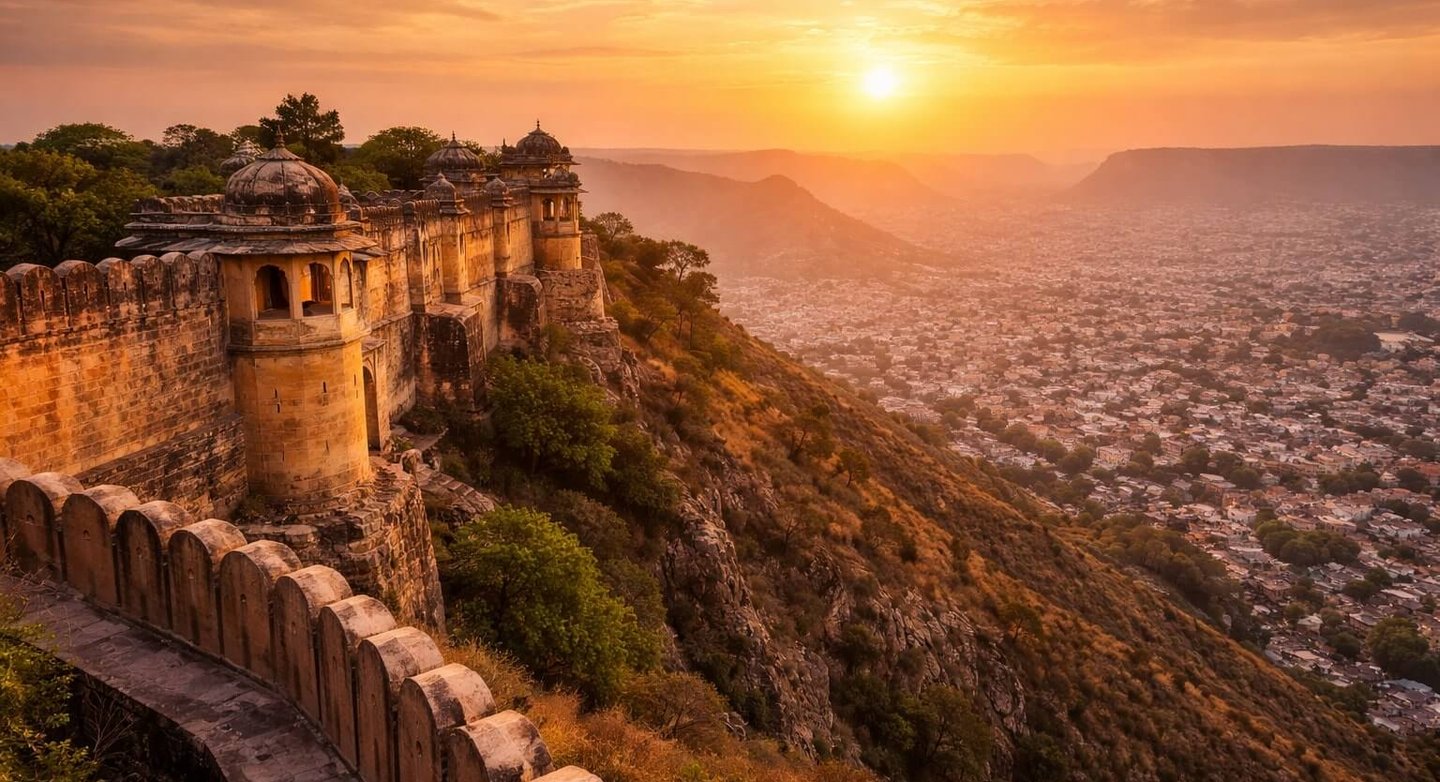
Nahargarh Fort ('Abode of Tigers') watches over Jaipur from a commanding ridge of the Aravalli hills, its walls snaking along the skyline like a great stone dragon. Built in 1734 as a defensive retreat, it was later extended into a summer retreat for the royal family.
Today, Nahargarh is the most popular sunset destination in Jaipur, and for very good reason. As the sun descends towards the horizon, the entire Pink City below transforms, warm light catching thousands of rooftops, minarets, and the gleaming dome of Hawa Mahal, while the sky above dissolves from blue to amber to a deep, burning rose. The experience is deeply romantic, deeply moving, and impossible to photograph badly.
The fort itself contains the charming Madhavendra Bhawan, a complex of 12 identical suites designed for the Maharaja's queens, each connected by a labyrinth of corridors and staircases that reportedly allowed the Maharaja to visit any suite discreetly. Today, a popular café-restaurant within the fort allows visitors to sit on the ramparts with a chai or a cold drink, watching the light change over the city. A wax museum on the premises features royal and historical figures and is popular with families.
7. Jaigarh Fort – The Warrior Fortress
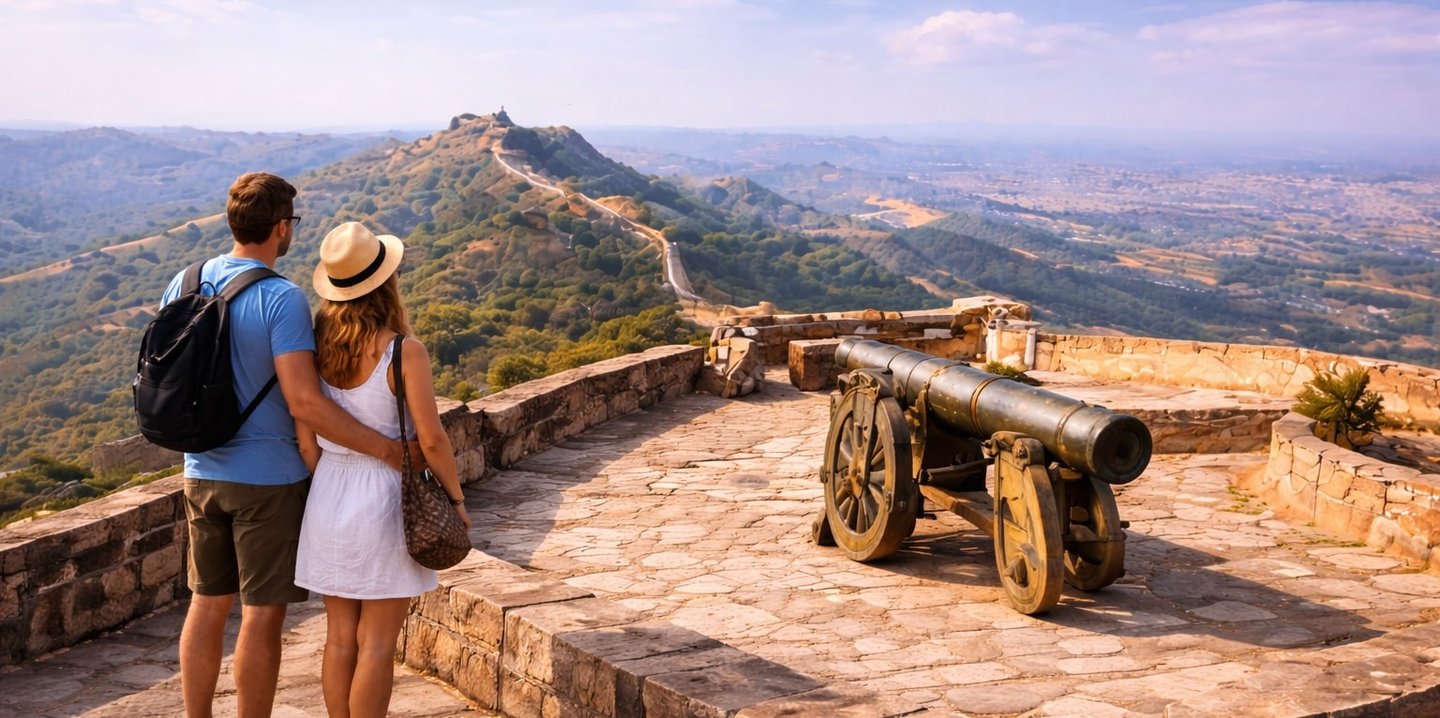
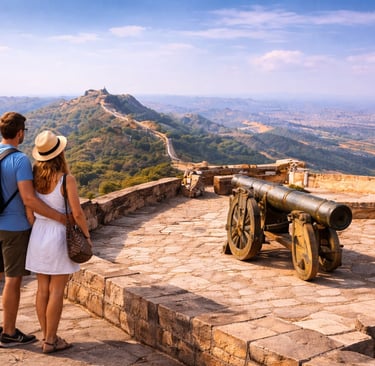
Jaigarh Fort stands behind and above Amber Fort, connected by an underground passage, and represents the military might behind Jaipur's royal splendour. Built primarily as an armament and storage fortress, Jaigarh is home to Jaivana, once the world's largest cannon on wheels, cast in 1720 and weighing an extraordinary 50 tonnes with a barrel over six metres long. The cannon was reportedly fired only once, in a test, its ball is said to have landed nearly 35 kilometres away.
The fort also houses one of the largest freshwater tanks in Rajasthan and offers extraordinary panoramic views of Amber Fort, the surrounding valley, and the arid Rajasthani landscape stretching to the horizon. For history enthusiasts from the UK who love military history, Jaigarh is a compelling and undervisited gem.
8. Jaipur Zoological Park – Wildlife Wonder in the Pink City
Founded in 1877 and occupying a lush 32-acre campus adjacent to the historic Ram Niwas Garden, the Jaipur Zoological Park (also known as Jaipur Zoo) is one of the oldest and most beloved zoos in India, and a wonderful family destination for international visitors, particularly those travelling with children.
The zoo is home to an impressive diversity of Indian and global wildlife, set in beautifully landscaped grounds that were originally designed as a garden retreat by Maharaja Ram Singh. The natural enclosures and green surroundings make this feel far removed from typical urban zoos, and the zoo actively participates in conservation and breeding programmes for endangered Indian species.
Animals and Species at Jaipur Zoo
• Bengal Tiger: India's national animal and the zoo's most iconic resident — the Bengal tiger paddock draws crowds throughout the day
• Indian Lion: One of the rarest large mammals on earth, with populations confined to India's Gir Forest, seeing them in Jaipur is an important and moving conservation moment
• Gharial (Indian Crocodilian): A critically endangered, fish-eating crocodilian native to the rivers of India and Nepal, rarely seen outside specialist wildlife reserves
• Sloth Bear, Hyena, Leopard, Nilgai, Sambar Deer, Blackbuck: A wonderful cross-section of the Indian subcontinent's wildlife
• Ostriches, Flamingoes, Indian Peafowl: The bird section is particularly vibrant, with peacocks roaming freely, a delight for children
• Reptile House: Includes Indian Python, Monitor Lizard, and various tortoise and snake species
• Children's Corner and Aviary: Interactive areas designed for younger visitors, making the zoo an excellent family half-day destination
The zoo is open daily (closed on Fridays) from 8:30 AM to 5:00 PM. Entry fees are nominal and there are separate ticketing options for cameras. The nearby Ram Niwas Garden and the Albert Hall Museum (Jaipur's oldest museum, modelled on London's Victoria & Albert Museum) combine beautifully with a zoo visit for a full cultural morning.
9. Albert Hall Museum – Jaipur's Crown Jewel of Culture
Standing magnificently in the Ram Niwas Garden, the Albert Hall Museum is a stunning Indo-Saracenic building, a deliberate architectural conversation between Rajput, Mughal, and Victorian Gothic styles. Inaugurated in 1887 and named in honour of Prince Albert's 1876 visit to Jaipur, the museum houses Rajasthan's most comprehensive collection of art, artefacts, and cultural treasures.
Highlights include an exquisite Egyptian mummy (one of very few displayed in India), royal carpets, miniature paintings, ceramic tiles, weapons, coins, metalwork, and natural history displays. The building itself, lit up magnificently after dark, is as spectacular as anything inside it, and forms an iconic image of Jaipur's heritage.
10. Galtaji Temple – The Sacred Monkey Temple
Tucked into a narrow mountain gorge of the Aravalli hills, 10 kilometres east of the city, Galtaji is a complex of ancient Hindu temples, natural freshwater springs, and sacred kunds (pools) that has been a pilgrimage site for hundreds of years. Known popularly as the Monkey Temple for the thousands of rhesus macaques who inhabit the site, Galtaji is a deeply atmospheric, spiritually charged, and utterly authentic experience that lies well off the mainstream tourist trail, making it a wonderful discovery for curious international travellers.
The temple complex includes the Galta Kund (considered sacred, believed to have inexhaustible water despite no visible inlet), shrines dedicated to Lord Rama, Sun, and Hanuman, and breathtaking views back towards Jaipur across the valley. At dawn, when priests chant and bells ring against the backdrop of peacock calls and macaque chatter, it is genuinely magical.
Shopping in Jaipur - Where Every Purchase Tells a Royal Story
Jaipur is one of the world's great shopping cities, ranked alongside Bangkok, Istanbul, and Marrakech for the quality, authenticity, and diversity of its traditional craft markets. For international visitors, shopping here is not merely a retail activity: it is a cultural experience, a conversation with artisans, and a way of carrying a piece of living heritage home.
Jaipur's Famous Bazaars and Markets
Johari Bazaar – The Jewel Market
The heart of Jaipur's globally famous gem and jewellery trade. Jaipur is the world's largest cutting and polishing centre for coloured gemstones, rubies, emeralds, sapphires, and the city's own signature Kundan and Meenakari jewellery. Visitors from the UK and USA consistently describe Johari Bazaar as a transformative shopping experience: prices are a fraction of equivalent pieces at home, and the craftsmanship is extraordinary. Always ask for a certification of authenticity for precious stones.
Bapu Bazaar – Textiles and Everyday Colour
A long, energetic street market specialising in Jaipuri quilts (razais), block-printed fabrics, traditional clothing, leather mojri shoes, and everyday handicrafts. This is the best place to buy Jaipuri cotton, the double-layered razai quilts, printed in traditional floral block designs, are among the best-value luxury souvenirs available anywhere in India.
Tripolia Bazaar – Lac Bangles and Traditional Crafts
Specialising in the iconic lac (resin) bangles of Jaipur, stacked rainbow-bright and made by artisans whose families have produced them for generations. Also find marble handicrafts, blue pottery, brassware, and miniature paintings.
Nehru Bazaar and Chandpole Bazaar
Nehru Bazaar is the go-to destination for traditional Rajasthani mojri (embroidered leather shoes) in every colour imaginable. Chandpole Bazaar is renowned for marble sculptures, statues, and stone-carved home décor pieces that travel beautifully back to homes in London, Sydney, Tokyo, and New York.
Jaipur's Signature Handicrafts – What to Take Home
• Blue Pottery: A distinctive Jaipur art form with Persian origins, vibrant cobalt-and-white glazed tiles, pots, and decorative pieces found nowhere else in India
• Block-Printed Textiles: Hand-stamped with carved wooden blocks dipped in natural dyes, table runners, scarves, bedspreads, and garments
• Gemstone Jewellery: Kundan, Meenakari, and Thewa jewellery, intricate goldwork enamelling unique to Rajasthan
• Miniature Paintings: Traditional Mughal and Rajput-style paintings on silk, ivory (modern alternatives), or marble
• Camel Leather Goods: Journals, bags, belts, and accessories tooled and crafted by traditional artisans
• Puppet Crafts (Kathputli): Hand-crafted Rajasthani string puppets — colourful, lightweight, and beloved by families
Food in Jaipur – A Royal Feast for Every Palate
Rajasthani cuisine is one of India's most distinctive and celebrated culinary traditions - bold, generous, fragrant, and deeply satisfying. Developed in a land of desert heat and limited water, Jaipur's food culture emphasises preserved, dried, and slow-cooked ingredients elevated by aromatic spices. For international visitors, eating in Jaipur is not merely sustenance; it is an adventure.
Must-Try Dishes in Jaipur
Dal Baati Churma – The Quintessential Rajasthani Meal
Hard wheat dumplings (baati) baked over a fire, dunked in rich lentil curry (dal) and served with crumbled sweetened churma (roasted wheat with ghee and sugar). This is Rajasthan's signature dish - utterly unlike anything most international visitors will have encountered in Indian restaurants abroad.
Laal Maas – Royal Red Meat Curry
A fiery, deeply aromatic lamb curry cooked with Mathania red chillies — the true flavour of Rajputana royal kitchens. Deeply spiced but remarkably complex, this is essential eating for adventurous palates.
Ker Sangri
A uniquely Rajasthani dish made from dried desert berries (ker) and dried beans (sangri) - a vegetarian dish that speaks directly of the desert landscape from which it comes.
Pyaaz Kachori and Mirchi Bada
Flaky deep-fried pastry stuffed with spiced onion (kachori) or green chillies filled with potato (mirchi bada) - Jaipur's iconic street snacks, best enjoyed at roadside stalls in the old city early morning.
Ghewar
Jaipur's most beloved sweet, a disc-shaped honeycomb pastry soaked in sugar syrup and topped with malai (clotted cream), saffron, and pistachios. Available year-round but especially prominent during the Teej and Diwali festivals.
Where to Eat in Jaipur
• 1135 AD Restaurant at Amber Fort: Fine dining within the fort complex itself, with dishes inspired by Rajput royal recipes and dramatic fort views, one of India's most atmospheric dining experiences
• Suvarna Mahal, Rambagh Palace: Opulent heritage dining within Jaipur's most famous palace hotel - ceiling frescoes, silver cutlery, and royal menus
• Laxmi Mishtan Bhandar (LMB): A Jaipur institution since 1954, the city's most celebrated sweet shop and pure vegetarian restaurant, always thronged with locals and visitors alike
• Peacock Rooftop Restaurant: Affordable rooftop dining with views of Hawa Mahal, perfect for sunset meals and atmospheric photography
• Anokhi Café: A serene, organic café beloved by international travellers seeking lighter, healthy, Western-friendly meals in a beautiful courtyard setting
Unique Experiences in Jaipur You Cannot Miss
Hot Air Balloon Ride Over the Pink City
Rising silently above Jaipur at dawn aboard a hot air balloon is one of the most extraordinary travel experiences available anywhere in India. As the city glows in early morning light below you - forts, minarets, bazaars, and pink rooftops stretching to the horizon and the Aravalli hills glow purple and gold around you, the experience is profoundly beautiful. Balloon flights operate October to March and must be booked in advance. UK India Tourism arranges premium balloon packages with certified operators.
Rajasthani Cultural Evening
No visit to Jaipur is complete without an evening of traditional Rajasthani folk performance. Chokhi Dhani, a recreated Rajasthani village experience on the outskirts of the city, offers international visitors an immersive evening of Kalbelia snake-charmer dance, Ghoomar group dance, puppet shows, camel rides, elephant rides, traditional village games, and an authentic Rajasthani thali dinner served on a leaf plate while you sit cross-legged on a charpai. For visitors from Japan, Singapore, or Poland who want to experience authentic rural Rajasthan, Chokhi Dhani is transformative.
Elephant Experience at Amber
At the foot of Amber Fort, visitors can enjoy mahout-guided elephant rides and elephant-feeding experiences. UK India Tourism works with operators who prioritise elephant welfare, please ask our team for ethical operator recommendations.
Cooking Class with a Rajasthani Family
Some of the most cherished memories international visitors take home from Jaipur are not photographs but recipes, the knowledge of how to make daal - baati - churma, or how to blend a proper Rajasthani masala. Home cooking experiences with local families can be arranged by UK India Tourism and offer an intimacy and authenticity that no restaurant can replicate.
Jaipur Literature Festival – January
Held every January at the Diggi Palace Hotel, the Jaipur Literature Festival (JLF) is now the world's largest free literary festival, drawing hundreds of thousands of visitors and featuring Nobel laureates, Booker Prize winners, international journalists, musicians, and thinkers. For visitors from the UK, USA, Canada, France, and beyond, JLF represents a thrilling convergence of global literary culture with the magic of Jaipur. Plan a January visit around it, it is unmissable.
Where to Stay in Jaipur – From Heritage Palaces to Boutique Gems
Jaipur's hospitality landscape is arguably the most distinctive in India, home to some of the world's most celebrated and romantic heritage hotels, where the palaces, hunting lodges, and aristocratic mansions of the Rajput era have been lovingly converted into extraordinary places to sleep.
Ultra-Luxury Heritage Palace Hotels
• Rambagh Palace (Taj Hotels): Arguably India's most famous palace hotel, the former residence of the last Maharaja of Jaipur, set in 47 acres of Mughal gardens with a legendary history of royal guests
• Samode Palace: A magnificent heritage hotel in Samode village, 45 minutes from Jaipur, frescoed interiors, rooftop pool, and an atmosphere of absolute royal exclusivity
• Oberoi Rajvilas: Award-winning luxury resort with private pool villas set within 32 acres of landscaped gardens, regularly voted among the finest luxury hotels in Asia
Premium Boutique Heritage Hotels
• Hotel Narain Niwas Palace: A 1928 heritage property with character, charm, manicured lawns, and genuine royal family hospitality
• Alsisar Haveli: An elegant heritage haveli (courtyard mansion) in the old city, brilliantly located for sightseeing and market exploration
• Dera Mandawa: A beautifully restored heritage hotel with painted frescos and a rooftop pool, beloved by European independent travellers
Mid-Range Quality Hotels
Jaipur also offers an excellent range of quality mid-range hotels - comfortable, clean, and characterful for budget-conscious travellers from Australia, Canada, and beyond. UK India Tourism can recommend and book properties across all budget ranges, always vetted for international standards of comfort, cleanliness, and service.
Practical Travel Information for International Visitors
Best Time to Visit Jaipur
October to March is the ideal travel season, temperatures are pleasant, skies are clear, and the festival calendar is richest. December and January can be cool (8–12°C at night - pack layers), while October and November offer warm days and cool evenings. April to June is hot (35–45°C), and July to September is the monsoon season, which brings dramatic skies, green hills and fewer crowds experienced travellers often love it.
How to Reach Jaipur
• By Air: Jaipur International Airport (JAI) handles direct international charter flights and connects via Delhi (DEL, 4.5-hour drive or 35-minute flight) and Mumbai (BOM) to all major global hubs. Most UK, USA, Australian, Canadian, French, Polish, Japanese, and Singaporean travellers fly into Delhi and reach Jaipur by private transfer, train, or domestic flight
• By Train: The Shatabdi Express and Ajmer Shatabdi connect Delhi to Jaipur in approximately 4.5–5 hours, a recommended scenic journey. UK India Tourism can arrange confirmed train bookings
• By Road: A luxury private car from Delhi (280 km via NH48) is the most flexible and scenically rewarding option, allow 4.5 to 5.5 hours depending on traffic
Visa Information for International Visitors
Citizens of the UK, USA, Australia, Canada, France, Japan, Singapore, and most European nations (including Poland) are eligible for India's e-Visa (eTV) system - a simple online application requiring no embassy visit. e-Visas are typically approved within 72 hours. UK India Tourism provides full visa guidance and documentation checklists as part of all booking packages.
Currency and Money
India's currency is the Indian Rupee (INR). ATMs are widely available throughout Jaipur, and international credit and debit cards are accepted in most hotels, restaurants, and larger shops. Currency exchange is available at the airport and authorised banks. For UK and US travellers, Jaipur represents exceptional value, luxury experiences, fine dining, and heritage accommodation cost a fraction of equivalent European or North American prices.
Health and Safety
Jaipur is a well-developed tourist city with good international medical facilities. Standard travel health precautions apply: drink bottled or filtered water (available everywhere), carry basic personal medication, and consider travel insurance that includes medical cover, UK India Tourism strongly recommends comprehensive travel insurance for all international guests. The city is generally very safe for international tourists, including solo female travellers, though standard urban vigilance is always advisable.
Getting Around Jaipur
• Private Car and Driver: The most comfortable, flexible, and recommended option for international visitors, UK India Tourism provides premium air-conditioned private vehicles with English-speaking drivers throughout
• Auto-Rickshaw: Colourful, atmospheric, and ideal for short distances in the old city, agree the fare before boarding or use the app-based OLA Auto service
• Cycle Rickshaw: A slow, charming, eco-friendly way to explore the narrow lanes of the old bazaars
• Jaipur Metro: The city's modern metro system connects key areas, clean, air-conditioned, and very affordable
Jaipur and the Golden Triangle – The World's Most Famous India Itinerary
Jaipur forms one corner of India's legendary Golden Triangle - the trio of Delhi, Agra, and Jaipur that has captivated international travellers for decades. Most first-time visitors to India combine all three in a 5 - 8 day itinerary.
Delhi offers the grand Mughal monuments of Old Delhi, the colonial grandeur of Lutyens' New Delhi, and the energy of a 21st-century capital city. Agra houses the Taj Mahal, the world's greatest monument to love and one of humanity's supreme architectural achievements. And Jaipur caps the triangle with royal Rajput splendour, desert colour, and cultural exuberance.
UK India Tourism specialises in crafting bespoke Golden Triangle itineraries, from 6 day private tours to 10 day luxury extended journeys that add Ranthambore National Park (for tiger safari), the blue city of Jodhpur, or the Pushkar camel fair. Tell us your travel dates and we will create your perfect itinerary.
Why Choose UK India Tourism for Your Jaipur Journey?
At UK India Tourism, we have spent years crafting journeys that go beyond sightseeing, journeys that connect you deeply to the places, people, and heritage of this extraordinary country. We are specialists in India travel for the international market, with particular expertise serving guests from the United Kingdom, United States, Australia, Canada, France, Poland, Japan, Singapore, and beyond.
What Sets Us Apart
✓ Tailor-Made Itineraries: Every journey we create is unique, designed around your travel dates, interests, budget, and pace
✓ Premium Private Transport: Air-conditioned private vehicles with professional, English-speaking drivers throughout
✓ Expert Guides: Our Jaipur guides are knowledgeable and passionate, they bring history to life in ways no audio guide can match
✓ Carefully Vetted Accommodation: From luxury palace hotels to quality heritage guesthouses, every property is personally inspected
✓ 24/7 In-Country Support: Our local teams are on call throughout your journey, no call centres, no delays
✓ Cultural Immersion: We prioritise authentic, respectful, and memorable cultural experiences over tourist-trail box-ticking
✓ Complete Peace of Mind: Comprehensive documentation, visa support, airport transfers, and travel advice included with every package
Begin Your Royal Jaipur Adventure Today
Jaipur is not simply a destination you visit. It is a place you encounter with all your senses, all your curiosity, and, before you know it, with your heart. The golden fort rising over the ridge. The mirror palace dazzling in candlelight. The sunset burning over a city that has welcomed travellers from across the world for three hundred years. The smell of jasmine and roasting spices in a lantern-lit bazaar. The sound of folk music floating over palace rooftops.
These are not memories you read in a travel guide. These are memories you live and we at UK India Tourism are here to make sure yours are extraordinary.
READY WHEN YOU ARE
UK: +44 7345 191205
India: +91 9958 480873
Email: sales@ukindiatourism.co.uk
Luxury India Tour Specialists for UK, USA, Canada, Australia, Europe, Singapore, Japan and beyond
UK: +44 7345191205
UK India Tourism© 2026, all rights reserved
India: +91 9958480873
⭐⭐⭐⭐⭐ 4.9/5 | 2,600+ Travelers | 18 Years | 98% Recommend