Why Rajasthan Remains India's Most Compelling Destination
India is a country of approximately 3.3 million square kilometres and extraordinary internal diversity. Rajasthan, at roughly 342,000 square kilometres, constitutes about ten percent of that area - yet it accounts for a disproportionate share of what most international visitors describe as the essential India experience. The question is worth examining: why does this single state so consistently dominate the imagination of global travellers?
The answer has several components. First, concentration: Rajasthan contains within its borders a density of historical architecture, royal heritage, artisan tradition and natural landscape that few regions anywhere in the world can match. Second, accessibility: its major cities are well connected by air, road and rail, and the distances between them are manageable within a standard international holiday window. Third, contrast: Rajasthan changes almost completely every two hundred kilometres - the desert of Jaisalmer bears no resemblance to the lake city of Udaipur, which in turn looks nothing like the fort city of Jodhpur, which differs entirely from the pink-walled capital of Jaipur. The state is, in effect, multiple destinations packaged within a single geography.
Fourth, and perhaps most important for the luxury traveller: Rajasthan's royal families converted their palaces, hunting lodges and forts into hotels decades before the rest of India recognised that heritage hospitality was a viable proposition. The result is an accommodation landscape unlike anything available elsewhere in Asia - properties where the architecture, the art collection, the service tradition and the food carry generations of institutional memory. Staying in a Rajput palace is not a gimmick. It is, when the property is well chosen, the most direct way to inhabit the culture rather than merely observe it.
Rajasthan is not merely a destination. It is a civilisation laid open for those with the patience and the guidance to read it. Its forts were not built for tourists, they were built by dynasties who ruled through force, alliance, art and architecture for over a thousand years. Its deserts were not preserved for photography, they shaped the character of every city, every trade route, every culture that grew within them. Its palaces were not converted into hotels as an afterthought, they were always designed to astonish, and they continue to do so with an effortlessness that more recently constructed luxury properties rarely match.
At UK India Tourism Company, our Rajasthan tours are designed around a single principle: that the quality of your experience is determined entirely by what you know before you arrive, who travels with you on the ground, and where you sleep at the end of each day. We are a specialist India operator serving private travellers from the United Kingdom, the United States, Canada, Australia, France, Poland, Singapore and Japan. Every Rajasthan journey we arrange is private, fully tailor-made and guided by expertise built through years of direct experience in the field.
This page is your comprehensive introduction to Rajasthan as a travel destination - its cities, its landscapes, its seasons, its cultural depth and the practical considerations that determine whether a journey here is merely pleasant or genuinely transformative. If you are researching a luxury Rajasthan holiday, planning an India trip from abroad, or comparing tailor-made India tour operators, you will find everything you need here.
Rajasthan Tours & Luxury Tours to India
The Destinations of Rajasthan - A City by City Guide
Rajasthan's major cities each carry a distinct identity, a distinct architectural character and a distinct set of experiences that cannot be replicated elsewhere in the state. Understanding these distinctions is the starting point for building an itinerary that genuinely reflects what you are looking for.
Jaipur - The Pink City
Founded in 1727 by Maharaja Sawai Jai Singh II, Jaipur was one of the first planned cities in India - its grid layout, wide streets and uniformly rose-pink facades designed from the outset as an expression of architectural intention rather than organic urban growth. The old city, declared a UNESCO World Heritage Site in 2019, is a living monument: its bazaars, temples, havelis and palaces functioning simultaneously as historical documents and as active centres of commerce, worship and daily life.
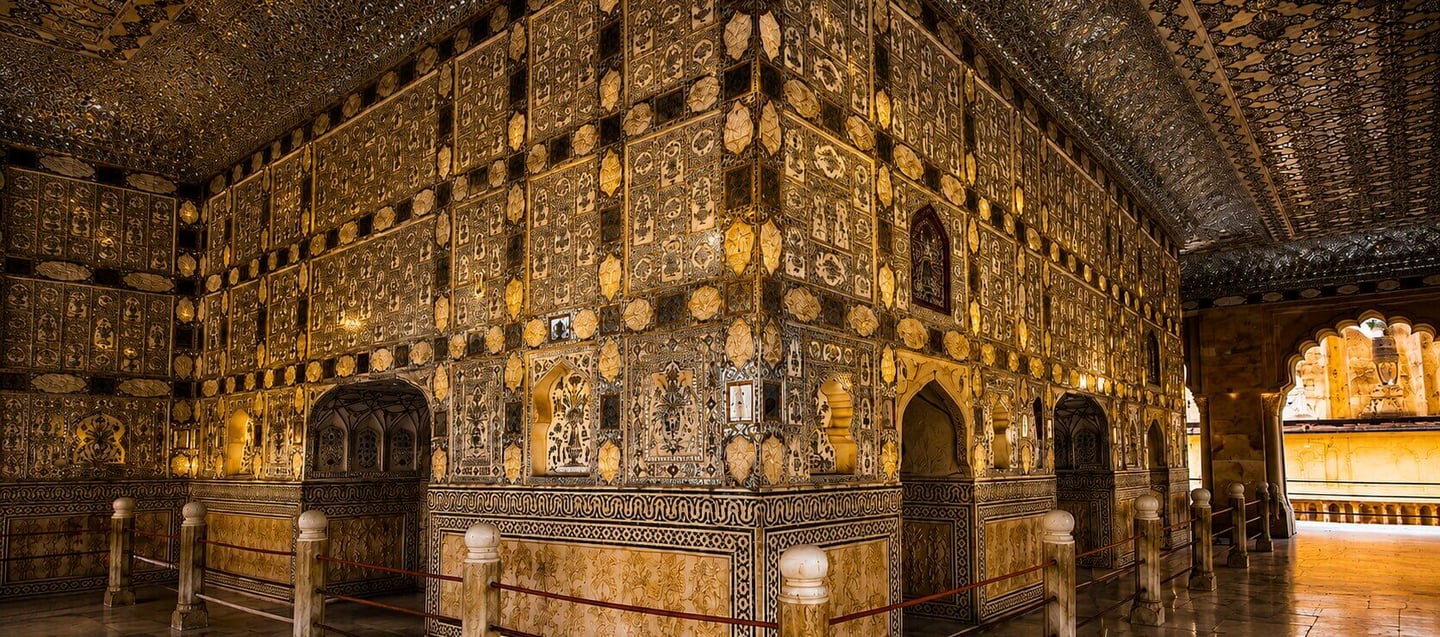
The Amber Fort, rising above a natural lake eleven kilometres from the city centre, is Jaipur's most famous landmark and one of the most significant Rajput fortresses in India. Its Sheesh Mahal, the Hall of Mirrors, where thousands of small mirror pieces are embedded in the ceiling and walls to create an effect of candlelit infinity, is among the most photographed interiors on the subcontinent. The City Palace, still partially occupied by the royal family, houses an exceptional museum collection. Jantar Mantar, the 18th-century astronomical observatory built by Jai Singh, contains the world's largest stone sundial and remains accurate to within two seconds.
For luxury travellers, Jaipur offers some of India's finest hotel experiences: restored havelis in the old city, palace hotels on the outskirts, and heritage properties where the Rajput aesthetic, carved stonework, frescoed ceilings, inner courtyards with fountains, has been preserved and enhanced rather than compromised by modern renovation. Jaipur is also India's most important centre for gemstones and jewellery, for block-printed textiles, for blue pottery and for lac bangles. Travellers with an interest in craft and design will find it the most stimulating shopping city on the Rajasthan circuit.
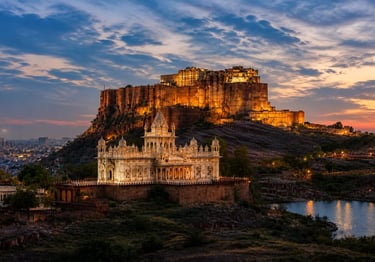
Jodhpur - The Blue City
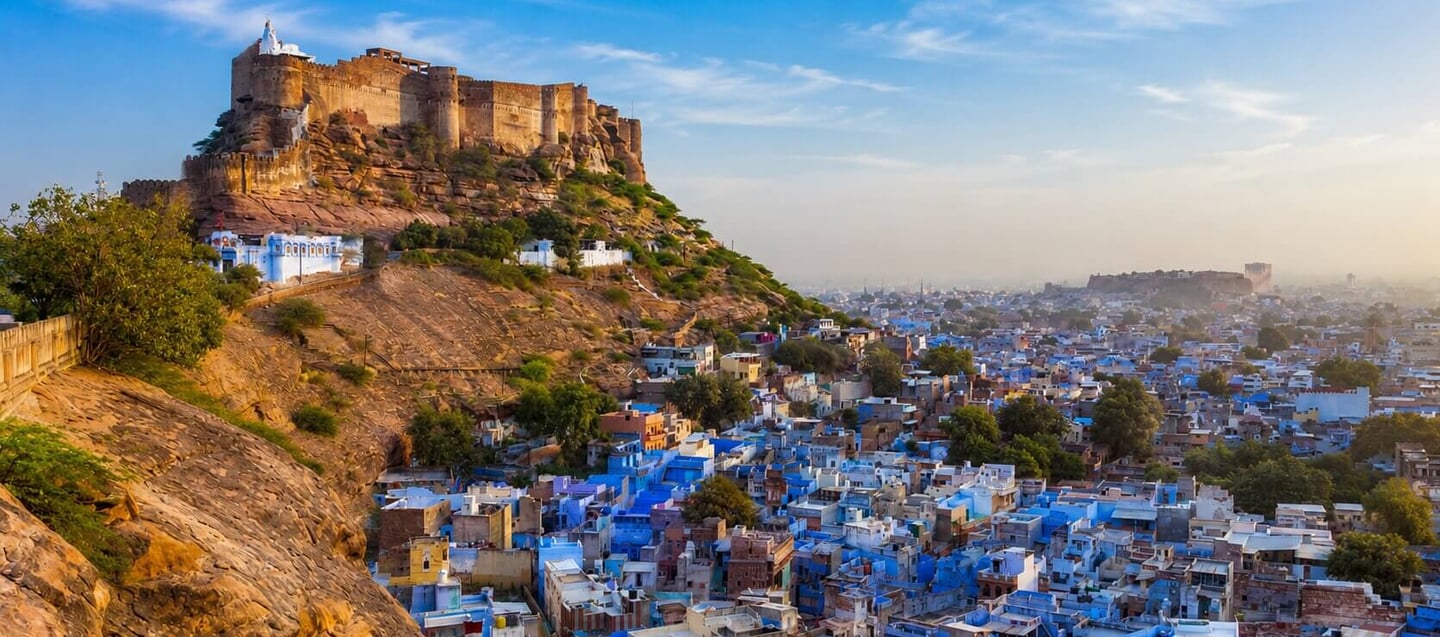
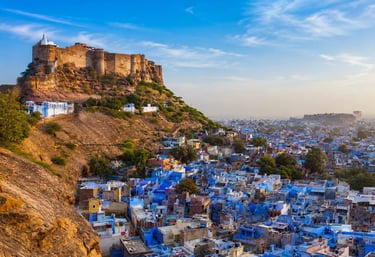
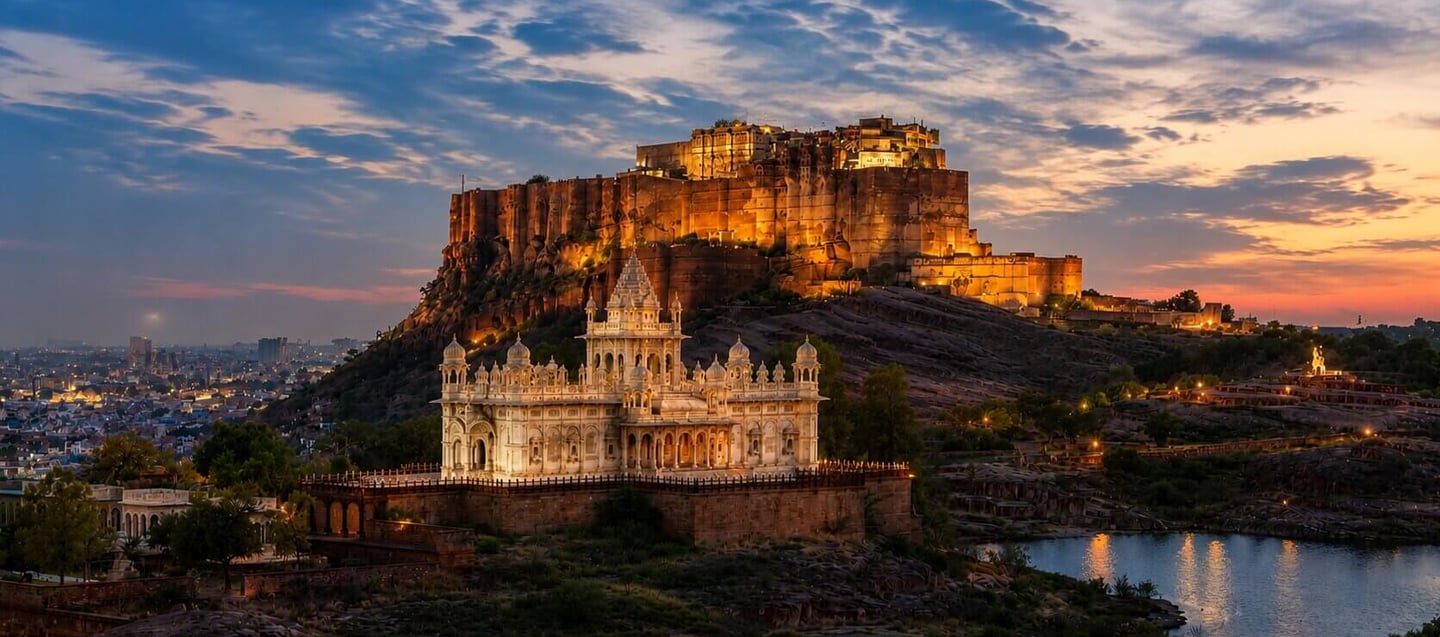
Jodhpur was founded in 1459 by Rao Jodha, the chief of the Rathore clan, on a rocky outcrop above the Marwar plains. Mehrangarh Fort, his creation rises perpendicular from the rock face, its walls five to eight metres thick at the base, its silhouette identifiable from almost every point in the city below. It is, by most architectural assessments, the most imposing fort in Rajasthan, and its museum covering Rajput weaponry, elephant howdahs, miniature paintings, palanquins and royal cradles is among the most intelligently curated in India.
Below the fort, the old city of Jodhpur is the source of its famous name. The indigo-blue wash applied to the houses of Brahmin families centuries ago has spread across the entire quarter, creating from above and from the fort's ramparts - a panorama of extraordinary visual coherence. Walking through the blue-washed lanes of Brahmpuri and the surrounding neighbourhoods is an experience that photographs suggest but do not adequately prepare you for: the scale of the blue, the depth of the colour against the sandstone architecture, the layering of carved wooden balconies and ornate doorways, requires physical presence to register fully.
Jodhpur is also the gateway to the Thar Desert's western reaches and to the craft villages of Marwar. The Jaswant Thada cenotaph, a white marble memorial built in 1899, quiet and genuinely moving in the evening light, provides a counterpoint to the fort's martial grandeur. The city's culinary tradition, particularly its sweets and its spiced meats, is one of the most distinctive in Rajasthan and worth specific attention in any itinerary.
Jaisalmer - The Golden City
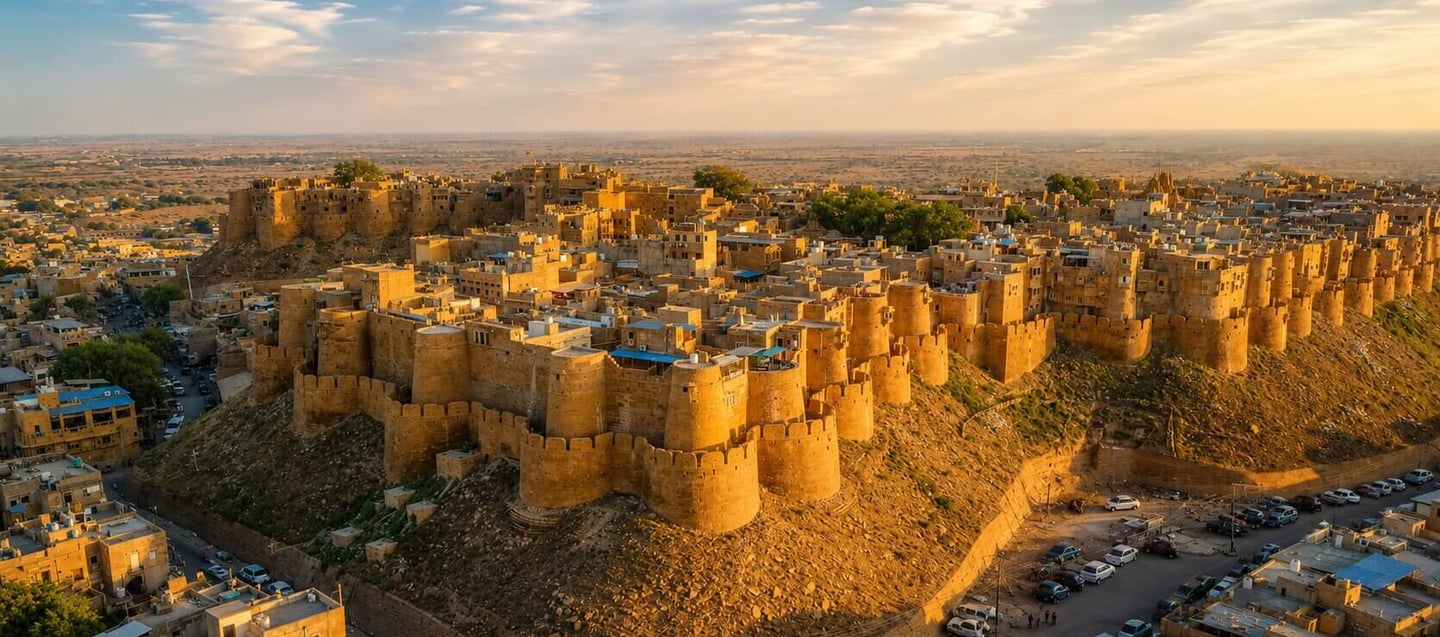
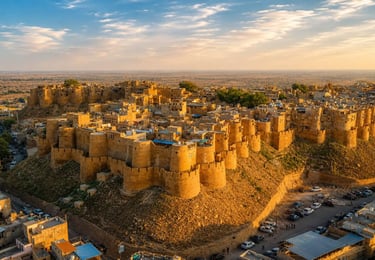
Jaisalmer sits at the edge of the Thar Desert, 575 kilometres west of Jaipur, and its sandstone fort rising from the flat desert floor with the colour and texture of the landscape itself is one of the most extraordinary urban sights in Asia. Founded in 1156 by Rawal Jaisal, the fort is one of the largest fully preserved medieval fortifications in the world and, uniquely among India's major forts, still contains a living community of several thousand residents within its walls. Temples, havelis, restaurants, guesthouses and private homes coexist inside the fort perimeter in a density of occupation that gives Jaisalmer a quality of lived authenticity that more heavily restored monuments cannot offer.
The havelis outside the fort - Patwon ki Haveli, Salim Singh ki Haveli, Nathmal ki Haveli are the finest examples of carved sandstone merchant architecture in India. The level of detail in their facades, produced by craftsmen whose descendants still work in the city, represents a tradition of stone carving so refined that the sandstone appears, in places, to have been worked with the delicacy of fabric.
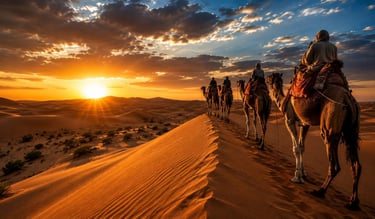
The Sam Sand Dunes, fifty kilometres from the city, offer the quintessential Thar Desert experience: sunset from the top of a dune, the light shifting through extraordinary registers of amber, orange and deep red before the desert falls into a silence and a darkness that travellers from cities rarely encounter. Luxury desert camps at the Sam dunes or the quieter Khuri location provide accommodation that is, at its finest, genuinely exceptional, private tented suites with the desert as a living backdrop and the Milky Way as the ceiling.
Bikaner - The Desert Citadel
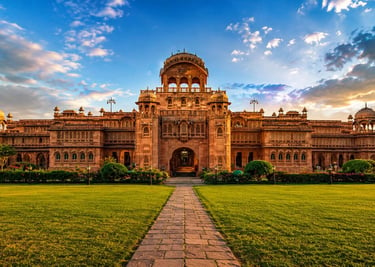
Bikaner is the most underappreciated of Rajasthan's major cities, and for that reason alone it repays attention. Founded in 1488 by Rao Bika, the fifth son of Rao Jodha of Jodhpur, it grew into a significant trading city on the caravan routes connecting Central Asia, Afghanistan and the Sindh with the markets of the Gangetic plain. Its wealth was built on trade, and the merchants who prospered here expressed that wealth in a series of extraordinary painted havelis in the Rampuria neighbourhood, their facades combining Rajput ornamentation with Mughal delicacy and, in some cases, the Art Deco influences of early 20th-century colonial architecture.
Junagarh Fort, built on flat ground in 1593 without the natural hillside advantage that most Rajput fortifications exploited, is a masterpiece of defensive ingenuity. Its interior is a sequence of extraordinary rooms: the Karan Mahal with its carved marble screen, the Anup Mahal with its gold-leaf lacquer decoration, the Vikram Vilas with its Belgian glass and German tiles. No other fort in Rajasthan contains such a density of decorative innovation within a single complex.
Bikaner is also the site of India's only government-operated camel breeding and research station, a facility that reflects the animal's central role in the desert economy for centuries and it produces what many Indians consider the finest savoury snacks in the country. The Bikaneri bhujia, spiced gram flour noodles fried to a crisp, has been exported across India for over a century and remains the city's most ubiquitous culinary ambassador.
Udaipur - The City of Lakes
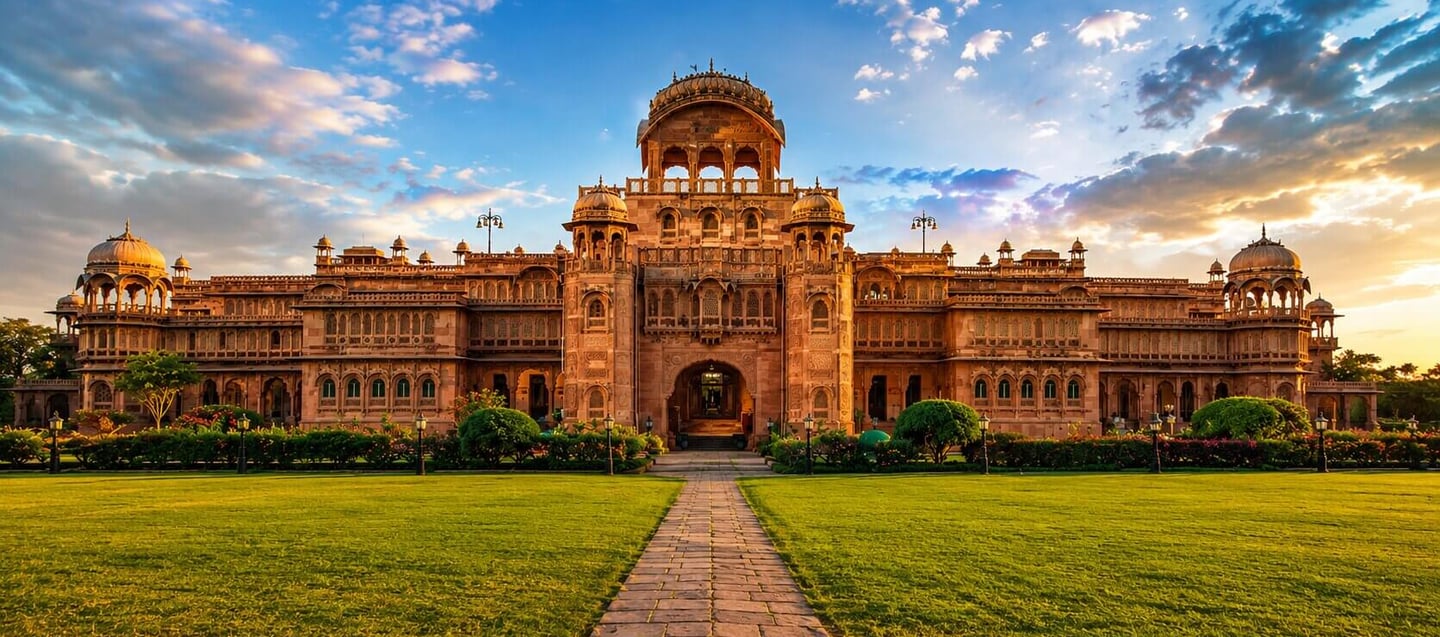
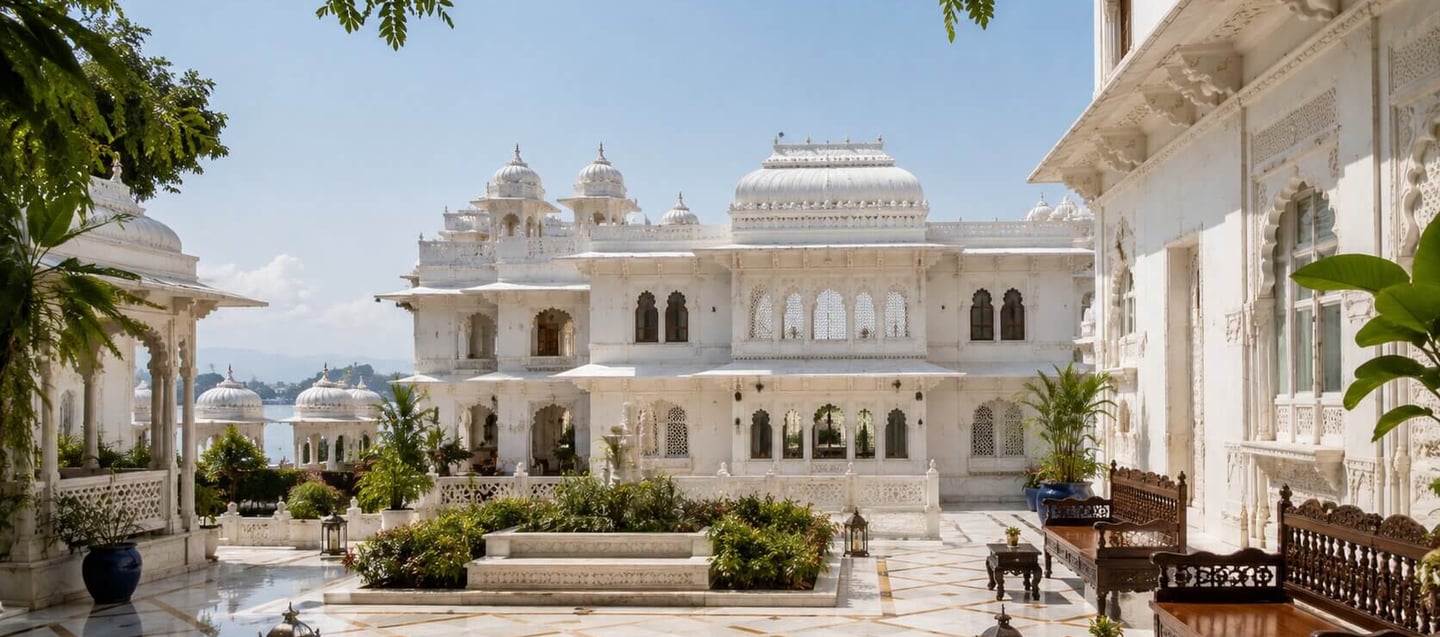
Udaipur is, for many international visitors, the most immediately beautiful city in India. Built around a series of interconnected lakes Pichola, Fateh Sagar, Swaroop Sagar and overlooked by the Aravalli hills on three sides, it presents a landscape of water, marble and whitewashed architecture that has earned it the title of the Venice of the East, though the comparison flatters Venice at the expense of Udaipur's own originality.
The City Palace, begun in 1553 by Maharana Udai Singh II and expanded over the following four centuries by successive rulers of the Mewar dynasty, is the largest palace complex in Rajasthan. Its crystal gallery, its collections of Mewar miniature paintings, its rooftop terraces overlooking the lake and the Aravalli range beyond, all are evidence of a royal tradition that combined military seriousness with exceptional aesthetic sensibility. The Lake Palace, a white marble structure rising from the centre of Lake Pichola, built in 1746 as a royal summer palace and now one of India's most celebrated luxury hotels, is visible from the City Palace's upper floors as a floating white form against the water and hills.
Udaipur's old city, on the northern and eastern shores of Lake Pichola, contains a concentration of temples, bazaars and havelis that rewards unhurried exploration. The Jagdish Temple, built in 1651, is the centre of active daily worship and provides a window into the living religious culture of the city independent of its heritage tourism. The lanes around the temple, with their silverwork shops, miniature painting studios and textile stalls, are among the most genuinely interesting shopping streets in Rajasthan for travellers with an interest in craft rather than souvenir.
Ranakpur - The Marble Temple Complex
Ranakpur is not a city but a pilgrimage site of extraordinary architectural significance, located in the forested Aravalli hills between Jodhpur and Udaipur. The Chaturmukha Dharana Vihara temple, built in the 15th century and dedicated to the first Jain tirthankara, is supported by 1,444 intricately carved marble columns, no two of which are identical in their decorative programme. The ceiling panels, carved from solid white marble to a depth and complexity that appears structurally impossible, filter the light entering through the perforated marble screens into a shifting, animate interior that changes character hour by hour.
For travellers moving between Jodhpur and Udaipur, Ranakpur is an essential half-day stop that most standard itineraries include but few allow sufficient time for. The temples are best experienced in the morning, before the midday tour groups arrive from Udaipur, and the forested setting, the Aravalli hills rising around the complex, the sound of the forest rather than the city, adds a dimension of tranquillity that enhances the architectural experience considerably.
Mount Abu - Rajasthan's Hill Station
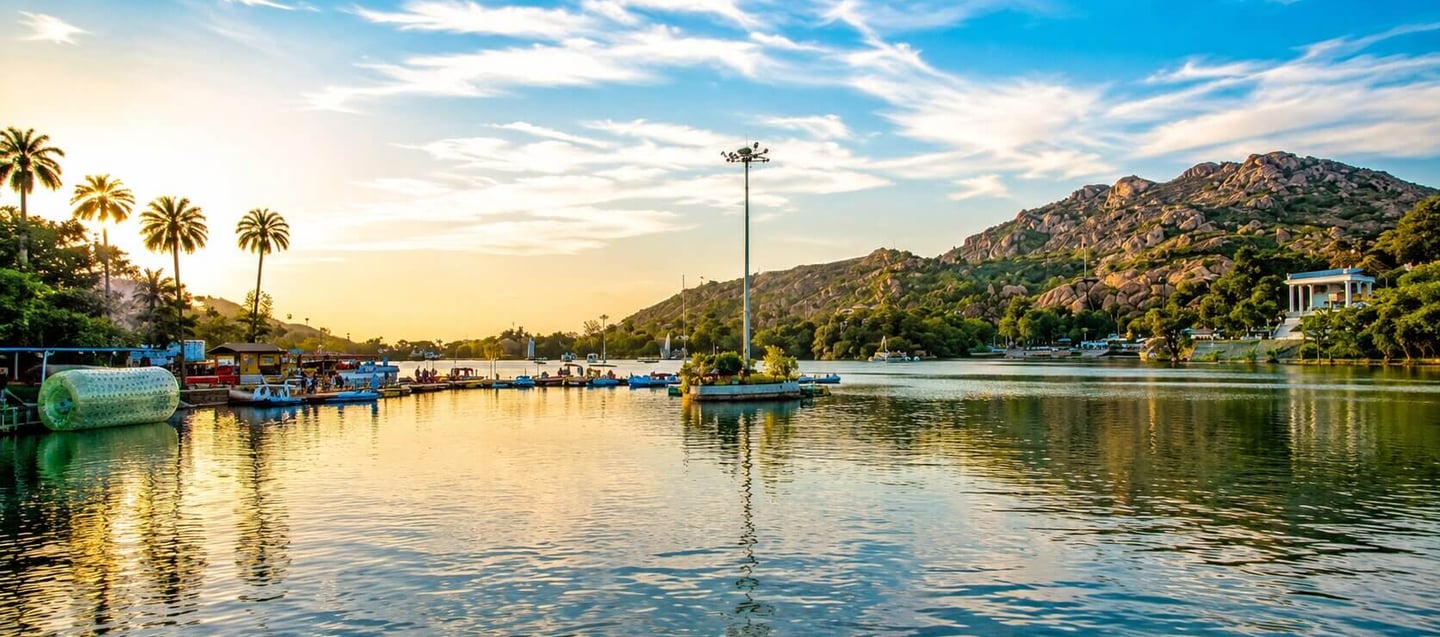
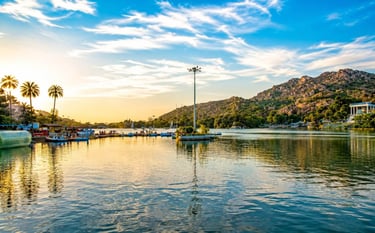
Mount Abu sits at approximately 1,220 metres above sea level in the southern Aravalli range and is the only hill station in Rajasthan, a distinction that gives it a character unlike any other destination in the state. Its temperatures are consistently ten to fifteen degrees cooler than the plains below, its vegetation is forested rather than desert, and its pace is unhurried in a way that the major Rajasthan cities, for all their charm, are not.
The Dilwara Temples, built between the 11th and 13th centuries and considered among the finest examples of Jain temple architecture in India, are Mount Abu's defining attraction. The Vimal Vasahi temple, dedicated to Adinath and built in 1031, and the Luna Vasahi temple, dedicated to Neminath and built in 1230, contain ceiling panels and column carvings of a complexity and precision that continues to challenge explanation. The marble has been worked to a translucency in places that allows light to pass through it, and the decorative programme - figures, flora, geometry and narrative scenes layered across every available surface, is of a density that requires multiple visits to begin to comprehend.
Nakki Lake, at the centre of the hill station, provides a gentler focal point: a place for early morning walks, for sunset reflection and for the kind of unhurried time that the fort cities of Rajasthan, despite their beauty, do not easily offer. For travellers concluding a Rajasthan circuit, Mount Abu provides an ideal decompression, a final day or two of landscape, quiet and excellent food before departure.
Beyond the Cities - The Wider Rajasthan Experience
Ranthambore - Tiger Safari in a Rajput Fort Landscape
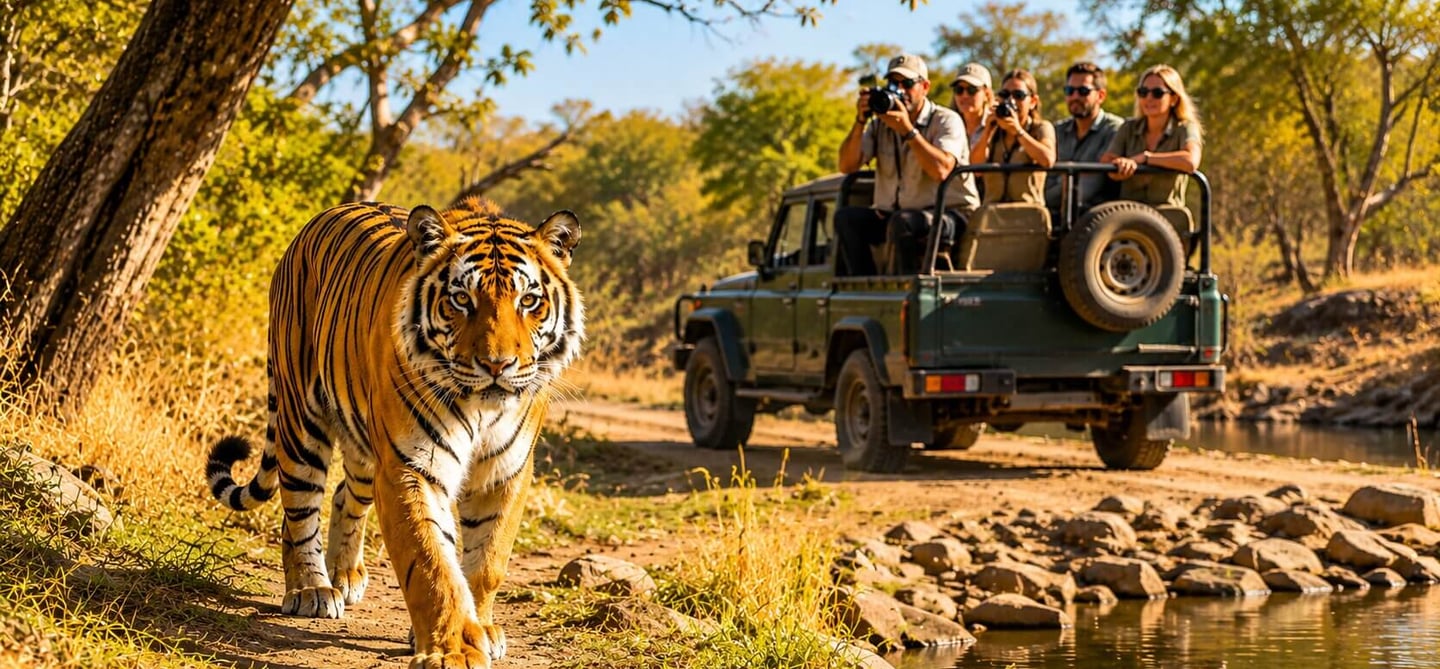
Ranthambore National Park, in the eastern reaches of Rajasthan near Sawai Madhopur, is one of India's most celebrated tiger reserves and one of the finest locations on earth for observing the Bengal tiger in its natural habitat. The park encompasses approximately 392 square kilometres of dry deciduous forest, open grassland and a series of lakes, set against the backdrop of the 10th-century Ranthambore Fort - a UNESCO World Heritage Site whose dramatic hilltop silhouette provides the most distinctive setting of any Indian wildlife reserve.
Ranthambore's tiger population has grown significantly under Project Tiger, and the reserve is known for its relatively high probability of tiger sightings compared to other Indian parks. Early morning and late afternoon game drives in open-topped Gypsy vehicles or larger Canter vehicles cover different zones of the park, each with its own character and wildlife profile. In addition to tigers, the park supports leopards, sloth bears, Indian marsh crocodiles, a substantial population of sambar, chital and nilgai, and over 320 bird species.
For travellers combining Rajasthan's cultural itinerary with a wildlife experience, Ranthambore sits naturally at the beginning or end of a Rajasthan circuit, most commonly accessed from Jaipur, two and a half hours by road or less by train.
Shekhawati - The Open-Air Fresco Gallery
The Shekhawati region, lying between Jaipur and Bikaner in the north-eastern corner of Rajasthan, is one of the most architecturally unusual areas in India and one of the least known to international travellers. Between the 18th and early 20th centuries, the wealthy merchant families of this region -trading in opium, cotton and spices along the caravan routes to Central Asia and the ports of the Arabian Sea, spent their accumulated wealth on a series of extraordinary painted mansions, or havelis, whose exterior and interior walls are covered from floor to ceiling in fresco paintings of remarkable ambition and variety.
The frescoes depict scenes from Hindu mythology, episodes from the epics, portraits of the merchant families themselves, and with the arrival of the 20th century, an increasingly eclectic range of subjects: steam trains, motor cars, telephones, European women, gramophones, aeroplanes and even early depictions of cinema. The result is a visual record of a society in transition, produced in a medium, lime fresco that has survived remarkably well in the dry desert climate.
The towns of Mandawa, Nawalgarh, Jhunjhunu and Fatehpur are the principal centres of Shekhawati haveli culture, each containing properties of significant artistic and historical interest. A dedicated Shekhawati itinerary of two to three days is one of the most rewarding specialist journeys available within Rajasthan for travellers with an interest in art history, architecture or photography.
The Thar Desert - Landscape, Culture and the Camel Route
The Thar Desert is one of the most populated arid regions on earth, a fact that distinguishes it immediately from the Sahara or the Arabian Desert and gives it a human dimension that purely uninhabited desert landscapes do not offer. Its villages are active, its craft traditions are living, and the desert landscape itself, far from being an undifferentiated expanse of sand, varies from rolling dunes to rocky plains to salt flats to scrub forest within distances of tens of kilometres.
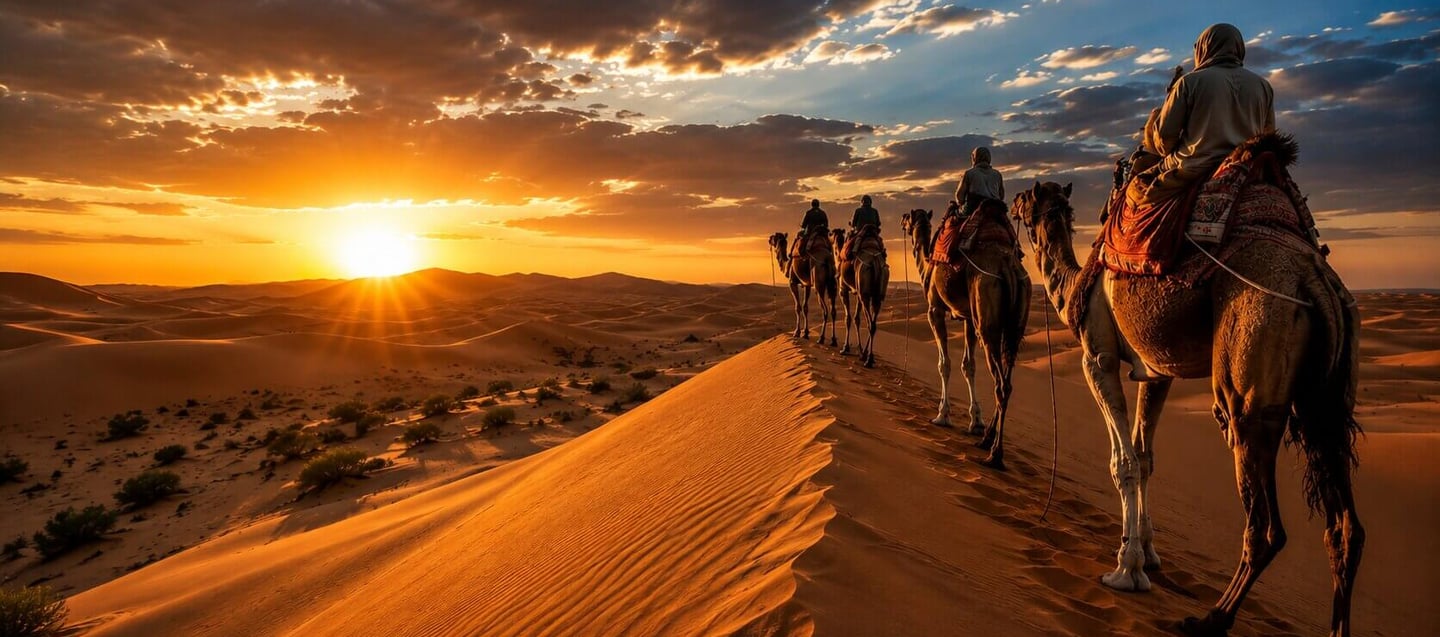
The traditional camel routes that once connected Jaisalmer, Bikaner and the markets of Central Asia are now the basis for a growing tradition of camel safari tourism, ranging from single afternoon rides at the dunes to multi-day journeys camping in the desert and visiting villages whose inhabitants have lived by the same rhythms for centuries. For travellers with the time and interest, a three to five day camel safari from Jaisalmer into the surrounding desert is one of the most genuinely immersive experiences available in Rajasthan.
Luxury Hotels and Heritage Accommodation in Rajasthan
The quality of accommodation in Rajasthan has no parallel in India and few rivals anywhere in the world. The conversion of royal palaces, hunting lodges, merchant havelis and administrative residences into hotels began in earnest in the 1970s and has produced, over the subsequent five decades, a range of properties that span every category of luxury, from internationally managed palace hotels with full contemporary amenity to intimate family-run havelis with six rooms, home-cooked food and the kind of personal attention that larger properties cannot provide.
In Jaipur, options range from the Rambagh Palace, the former royal residence, set in fourteen acres of Mughal gardens to smaller, restored havelis in the old city where the architecture and the service reflect a more personal tradition of hospitality. In Jodhpur, the Umaid Bhawan Palace, still partially occupied by the current Maharaja and his family, is one of the largest private residences in the world, its Art Deco interior and gardens maintained to a standard that reflects the family's continued investment in the property. In Udaipur, the Lake Palace, appearing to float on Lake Pichola, remains the most romantically situated hotel in Asia by most assessments.
For luxury travellers, we provide two or three accommodation options at each destination with detailed descriptions, honest assessments and photographs and ask you to select the property that best reflects your preferences. We do not receive commissions that influence our recommendations. Our advice is based on direct knowledge of each property, formed through our team's regular visits and through the feedback of our clients after each journey.
When to Visit Rajasthan - Seasons and Travel Windows
Rajasthan has three distinct seasons, and the choice of travel window significantly affects the character of your experience.
October to March - The Optimal Season
The winter months are the peak season for Rajasthan travel, and for good reason. Temperatures are moderate - 18 to 28 degrees Celsius during the day, dropping to 8 to 12 degrees Celsius at night in December and January. The skies are clear, the light is excellent for photography, and the desert landscape is at its most hospitable. November and December offer a combination of comfortable temperatures and relatively smaller crowds before the peak Christmas and New Year period. January and February are the coldest months but also some of the most beautiful for the Rajasthan circuit, with early morning mist at the lakes and forts clearing to brilliant winter sunshine by mid-morning.
For travellers from the UK, Australia and continental Europe, the Rajasthan winter aligns well with Christmas and New Year school holidays and with the January-February window that many professionals use for extended international travel. For travellers from North America, the time-zone adjustment to India approximately 10.5 hours ahead of Eastern Standard Time is significant, and we recommend building the first one to two days of any itinerary around gentle orientation rather than intensive sightseeing.
April to June - The Hot Season
April and May are possible for Rajasthan travel but demanding. Temperatures in Jaisalmer and Bikaner regularly exceed 40 degrees Celsius, and in June can approach 48 degrees in the western desert. The major cities - Jaipur, Jodhpur, Udaipur, are somewhat cooler but still challenging for travellers unaccustomed to intense heat. For those who cannot travel in winter, April represents the most workable option within this window, with temperatures still manageable in the early mornings and evenings. Mount Abu, at 1,220 metres, provides a genuine refuge from the plains heat and is worth including in any summer Rajasthan itinerary for that reason alone.
July to September - The Monsoon
The monsoon reaches Rajasthan in late June or early July and transforms the landscape, particularly in the Aravalli hills around Udaipur and Mount Abu, where the desert scrub gives way to lush green hillsides and the lakes fill to their banks. Udaipur during the monsoon is a genuinely beautiful experience for travellers willing to work around the rain, and road conditions in this part of the state are manageable. The western desert cities - Jaisalmer, Bikaner, Jodhpur, receive minimal monsoon rainfall and remain accessible and interesting throughout the season. September, as the monsoon retreats, is one of the most underrated months for a Rajasthan circuit: the vegetation is still green, the crowds are minimal and the temperatures have begun their descent towards the comfortable winter range.
Rajasthan for International Travellers - Country-Specific Guidance
UK India Tourism serves private travellers from eight countries. While Rajasthan is universally accessible and rewarding, the practical considerations - flights, visas, currency, health preparation and cultural context, differ by country of origin, and we provide tailored pre-departure information to every client based on their specific situation.
Travellers from the United Kingdom
Direct and one-stop flights connect London Heathrow, London Gatwick and Manchester to Jaipur, Delhi and Mumbai, with journey times of 8 to 10 hours. UK citizens are eligible for Indian e-visa, typically processed within 72 hours of application. The UK pound exchanges well against the Indian Rupee, and Rajasthan in October through March aligns comfortably with UK school half-term breaks, Christmas holidays and February half-term. Our UK-based team works in GMT and responds to all enquiries within one working day.
Travellers from the United States and Canada
North American travellers typically route through London, Dubai, Doha or Singapore to Delhi or Mumbai, with total journey times of 16 to 20 hours. The Indian e-visa is available to both US and Canadian citizens. We recommend a minimum of 12 days for North American travellers to Rajasthan, allowing sufficient time for acclimatisation across the significant time difference. The most popular North American departure window for Rajasthan is November through February, aligning with Thanksgiving, Christmas, New Year and the February school break.
Travellers from Australia
Australia to India is one of the more direct intercontinental routes, with connections through Singapore, Kuala Lumpur and Dubai keeping total journey times to 12 to 16 hours from east coast cities. Australian citizens are eligible for Indian e-visa. The Indian winter - October to March, aligns with the Australian summer, making Rajasthan a natural destination for Australians seeking warmth without the intensity of an Australian summer. Australian travellers frequently combine Rajasthan with Kerala or Goa, and our itineraries reflect that pattern.
Travellers from France and Poland
European travellers benefit from multiple daily connections to India via Dubai, Doha, Abu Dhabi, Amsterdam and Frankfurt, with journey times of 8 to 11 hours. French and Polish visitors have shown particular interest in Rajasthan's architectural heritage and artisan traditions - the miniature painting schools of Jaipur and Udaipur, the blue pottery workshops, the block-printing villages. We can arrange French-speaking local guides at specific stops on the Rajasthan circuit on request. Polish travellers benefit from the Indian e-visa facility, as do French citizens.
Travellers from Singapore and Japan
Singapore to Jaipur or Delhi involves a journey of approximately 5 to 6 hours, one of the shorter intercontinental routes to India from the region. Singaporean and Japanese citizens are both eligible for Indian e-visa. Japanese travellers in particular respond to the precision and depth of Rajasthan's artisan traditions: the block-printing of Bagru, the blue pottery of Jaipur, the miniature painting of Udaipur, the stone carving of Jaisalmer. Itineraries for Japanese clients frequently incorporate visits to artisan workshops and craft studios as primary experiences rather than incidental additions.
Rajasthan and Luxury Tours to India - How We Work
UK India Tourism operates exclusively in the luxury and premium private travel segment. We do not offer group tours, shared departures or fixed-date programmes. Every itinerary we design begins with a conversation about what you are looking for, how much time you have, where you are travelling from and what kind of experience, what balance of sightseeing, leisure, wildlife, culture, cuisine and accommodation, you want your India journey to deliver.
Our planning process is transparent and unhurried. We propose an itinerary, you review it and request changes, we revise it until it reflects your preferences precisely, and only then do we move to confirmation and booking. We provide detailed pre-departure documentation including day-by-day programmes, hotel confirmation copies, emergency contact numbers, cultural guidance notes and country-specific visa and health information. During the journey, our 24-hour in-country support line is available to every client throughout their time in India.
The hotels we recommend are properties we know directly, not a database of options generated by a booking platform. Our accommodation recommendations reflect years of client feedback, regular property visits and an honest assessment of where each hotel delivers on its promise and where it does not. We are not paid to recommend specific properties above others, and our advice reflects that independence.
Rajasthan is the heart of what we do. It is where many of our clients begin their India journey, and it is where most of them, having seen the forts and the palaces, the deserts and the lakes, the cities and the craft villages - tell us they wish they had spent more time. Our itineraries are designed to make the most of the time you have, and to leave you with a sense not of having covered ground but of having understood a place.
Begin Planning Your Rajasthan Journey
Whether you are planning a two-week Rajasthan circuit from the UK, a three-week luxury India tour from Australia, a first-time India holiday from the United States, or a specialist cultural journey from Japan or Singapore, we are the right partner for the journey.
To start planning, contact us with the following: your preferred travel dates, the number of travellers in your group, your country of origin, and any particular interests or requirements. We will respond within one working day with a proposed itinerary, a selection of accommodation options and a detailed, itemised quotation. There are no booking fees at the enquiry stage and no obligation to proceed.
UK India Tourism Company
UK Phone: +44 7345 191205
India Phone: +91 9958 480873
Email: sales@ukindiatourism.co.uk
Website: ukindiatourism.co.uk/
Luxury India Tour Specialists for UK, USA, Canada, Australia, Europe, Singapore, Japan and beyond
UK: +44 7345191205
UK India Tourism© 2026, all rights reserved
India: +91 9958480873
⭐⭐⭐⭐⭐ 4.9/5 | 2,600+ Travelers | 18 Years | 98% Recommend