Visit the Taj Mahal and UNESCO Sites in Agra – Travel Through Time
Agra Travel Guide - Taj Mahal, Agra Fort, Fatehpur Sikri & the Golden Triangle
Where centuries of love, power, and artistry are written in white marble
UNESCO World Heritage City · Three World Heritage Sites · Wonder of the World · Mughal Empire Legacy
Why Agra Belongs on Every International Traveller's Itinerary
Agra is not merely a destination — it is an emotion. Nestled along the sacred banks of the Yamuna River in the heart of northern India, this extraordinary city has witnessed the grandest acts of love, power, and artistry the world has ever seen. It is a place where emperors dreamed in marble, where devotion rose four hundred feet into the sky, and where every stone whispers a centuries-old story that no photograph can fully capture.
For international visitors, Agra is the crown jewel of any India holiday itinerary. It offers three UNESCO World Heritage Sites, unrivalled Mughal architectural heritage, and travel memories that last a lifetime. Whether you are visiting India for the first time or returning for a deeper cultural experience, Agra rewards every traveller with profound awe, beauty, and historical discovery.
The city sits at the heart of India's legendary Golden Triangle travel circuit — connecting the imperial capital Delhi, the eternal romance of Agra, and the royal splendour of Jaipur — making it the natural centrepiece of the most iconic journey on the subcontinent.
Top Tourist Attractions in Agra — UNESCO World Heritage Sites & Beyond
Agra is home to three UNESCO World Heritage Sites and several extraordinary monuments of the Mughal era. The following are the must-visit attractions for every international traveller arriving in Agra.
1. Taj Mahal - UNESCO World Heritage Site · One of the Seven Wonders of the World
Must Visit · Agra's Crown Jewel · Most Visited Monument in India
The immortal monument of love — Agra, India
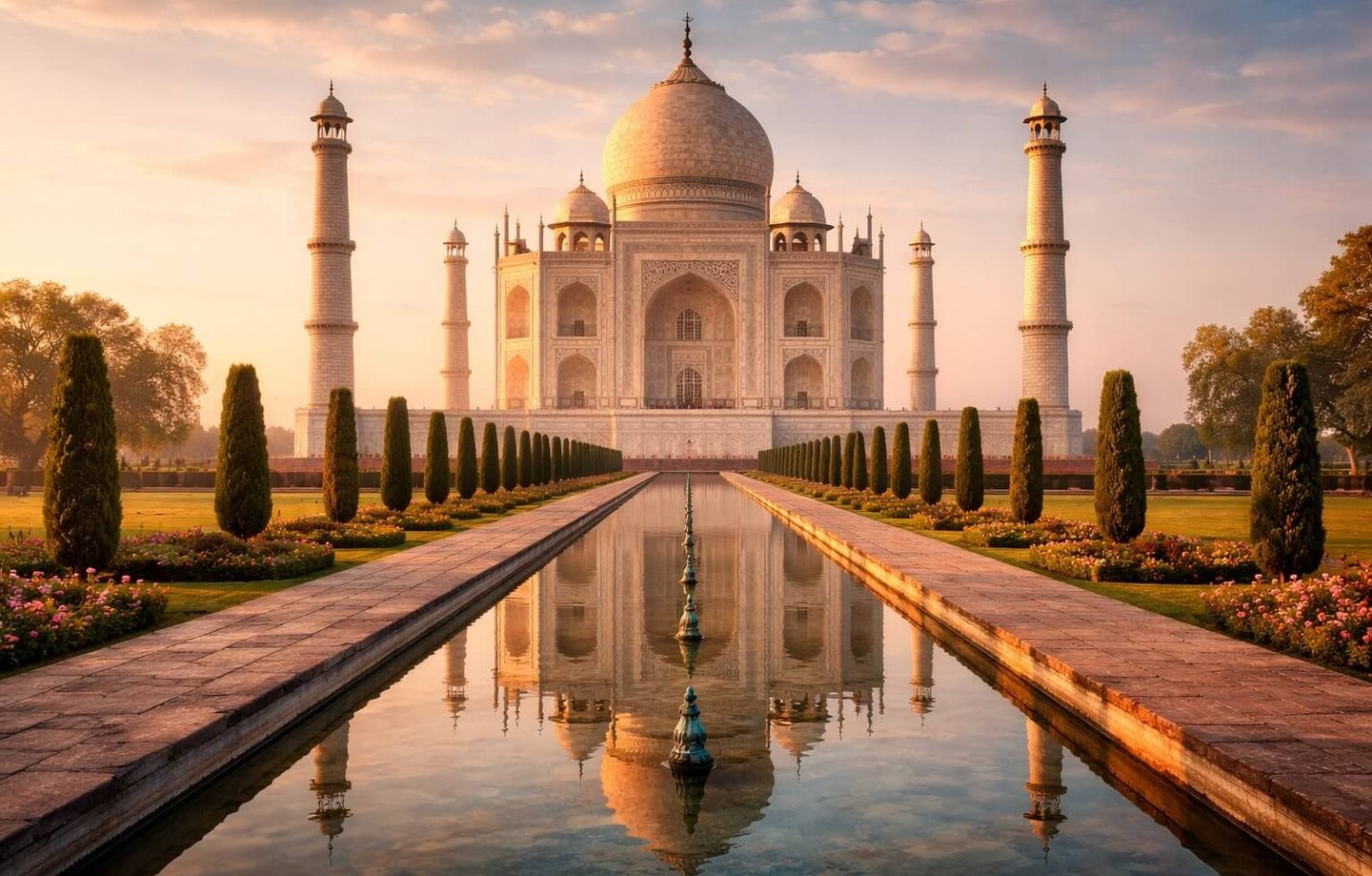
Rising serenely above the Yamuna River, the Taj Mahal is one of the most recognised and emotionally powerful structures in the history of humanity. Built between 1631 and 1653 by Mughal Emperor Shah Jahan as an eternal resting place for his beloved queen Mumtaz Mahal, this breath taking marvel of white marble, precious stone inlay, and geometric garden design has been declared one of the Seven Wonders of the Modern World and a UNESCO World Heritage Site of Outstanding Universal Value.
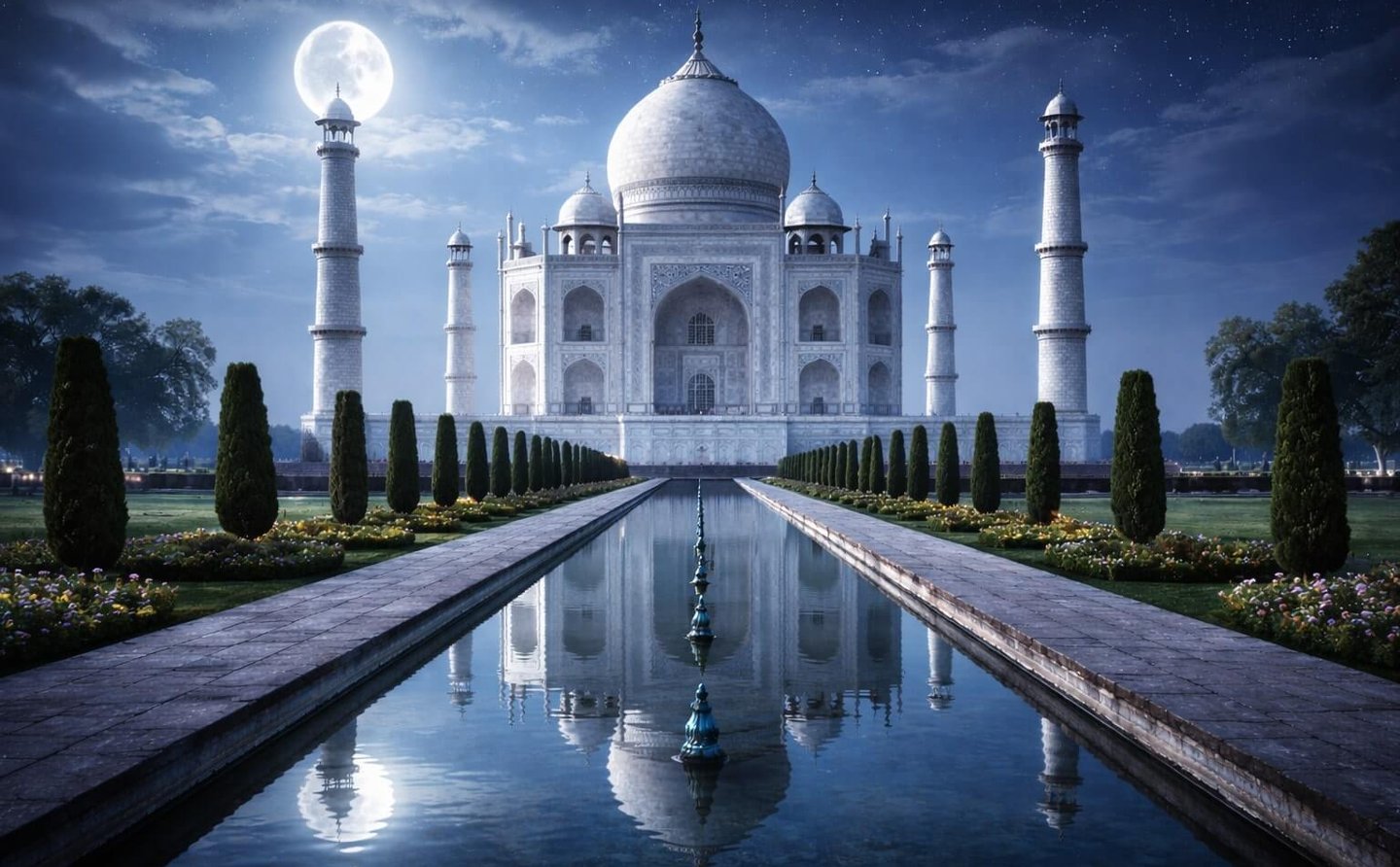
What makes the Taj truly extraordinary is its living quality — the monument changes colour with every shift of light. At sunrise, it blushes soft rose and gold. Through midday it glows brilliant white. By sunset it warms to amber, and under a full moon it becomes a luminous silver dream. No two visits to the Taj Mahal are ever the same. For international travellers visiting India, the Taj Mahal is simply non-negotiable — it is the experience against which all other travel memories are measured.
The monument complex encompasses the main mausoleum in white Makrana marble, the grand mosque, the mirror mosque (jawab), the formal charbagh garden divided by water channels, and the grand gateway — all combining in perfect geometric symmetry that has captivated visitors from every corner of the world for four centuries.
What to See at the Taj Mahal
— The main mausoleum - its marble exterior featuring exquisite pietra dura stone inlay with calligraphy and floral motifs
— The grand reflecting pool - positioned perfectly to mirror the Taj in its water, creating the world's most iconic double image
— The Taj Mosque and the Jawab - the flanking red sandstone buildings that frame the central composition
— The Charbagh Garden - a formal Mughal garden in four quadrants representing the rivers of paradise
— The Great Gate (Darwaza-i-Rauza) - the soaring entrance gateway inscribed with Quranic verses
— The inner chamber - where the cenotaphs of Shah Jahan and Mumtaz Mahal rest (photography not permitted inside)
Essential Visitor Information - Taj Mahal
— Open: Sunrise to sunset, every day except Friday (closed for Friday prayers)
— Best time of day: Sunrise - for golden light, cooler temperatures, and fewer crowds
— Entry ticket for foreign nationals: Approximately INR 1,100 (includes mausoleum surcharge)
— Photography: Permitted in gardens and exterior; not permitted inside the mausoleum chamber
— Footwear: Shoe covers are provided and must be worn on the marble plinth
— Nearest airport: Agra Airport (AGR) for regional flights; Indira Gandhi International Airport, New Delhi for international arrivals.
2. Agra Fort - UNESCO World Heritage Site · The Mighty Mughal Fortress
UNESCO Heritage · Historical Landmark · Mughal Imperial Palace
The seat of Mughal power - and the stage of history's most poignant royal tragedy
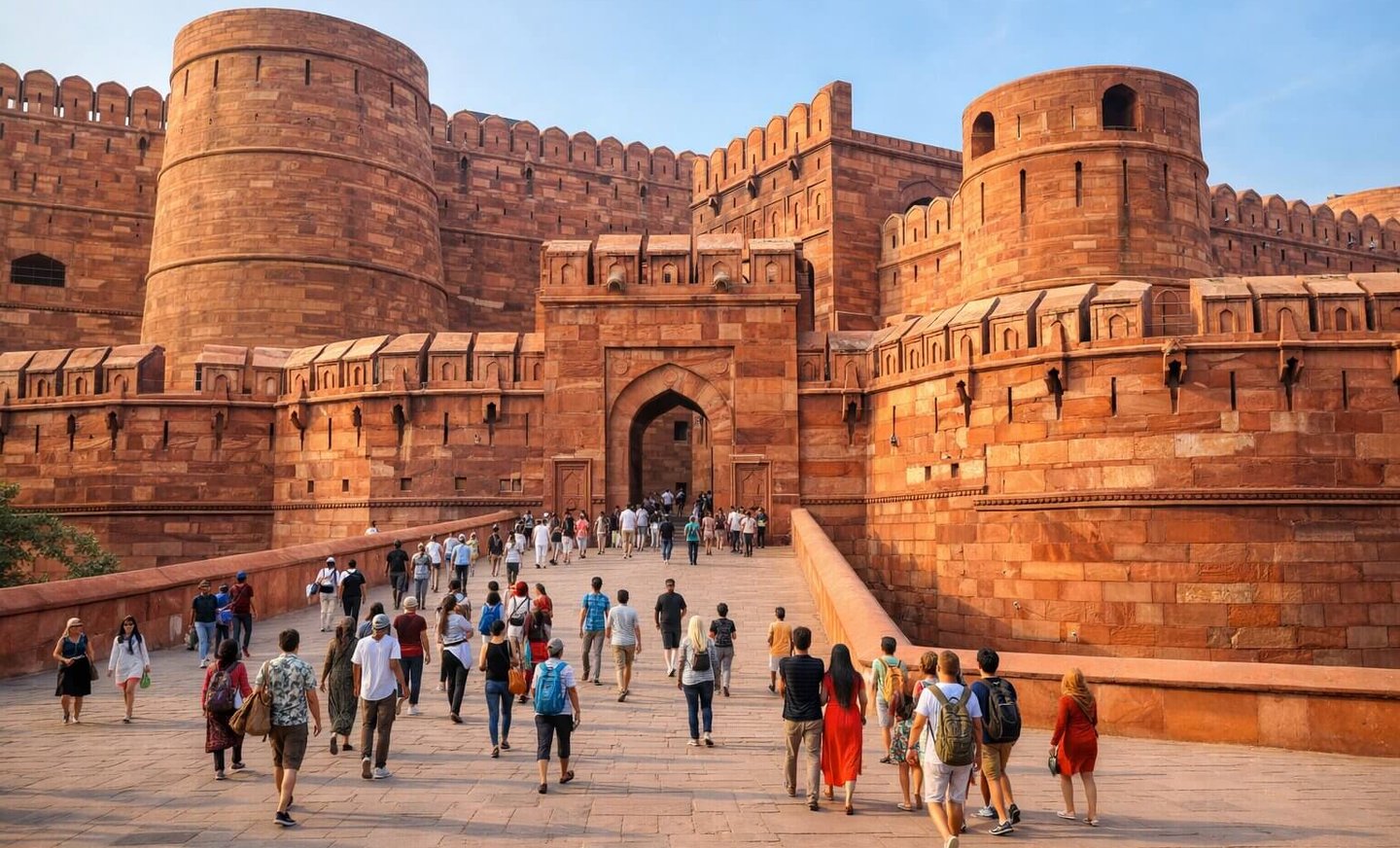
Standing as a magnificent testament to Mughal military genius and courtly splendour, Agra Fort is one of northern India's most important and dramatic historical monuments. Originally constructed in the early 16th century and substantially rebuilt by Emperor Akbar from 1565, this vast red sandstone citadel served as the primary residence of the Mughal emperors of India until 1638. Within its nearly two-and-a-half-kilometre perimeter wall lie royal apartments, marble palaces, ornate audience halls, mosques, and the haunting chamber where Emperor Shah Jahan spent his final years as a prisoner — gazing across the Yamuna at the Taj Mahal, the monument to his greatest love.
Agra Fort is a UNESCO World Heritage Site and represents the high-water mark of Mughal military and civic architecture. The fort served simultaneously as a military stronghold, an imperial palace, and a seat of government — and its buildings span the reigns of Akbar, Jahangir, Shah Jahan, and Aurangzeb, allowing visitors to trace the evolution of Mughal architectural style across a century of extraordinary creative achievement.
What to See at Agra Fort
— Diwan-i-Aam (Hall of Public Audience) - where the emperor received citizens and heard petitions
— Diwan-i-Khas (Hall of Private Audience) - the exquisite hall where Emperor Shah Jahan's legendary Peacock Throne once stood
— Khas Mahal - the private royal palace of white marble with painted ceiling decoration
— Musamman Burj (Jasmine Tower) - the octagonal marble tower where Shah Jahan was held prisoner, with views of the Taj Mahal
— Sheesh Mahal (Palace of Mirrors) - a dressing chamber whose walls and ceiling are encrusted with tiny mirror fragments
— Jahangiri Mahal - the largest residential palace inside the fort, built by Akbar for his son Jahangir
— Nagina Masjid - the private mosque of the ladies of the royal court, built entirely of white marble
Essential Visitor Information - Agra Fort
— Open: Sunrise to sunset daily
— Entry ticket for foreign nationals: Approximately INR 1100
— Best combined with: Taj Mahal on the same day for a full-day Agra heritage experience
— Location: Approximately 2.5 km from the Taj Mahal - easily reached by tuk-tuk, taxi, or with a private guide.
3. Fatehpur Sikri - UNESCO World Heritage Site · The Abandoned Mughal Imperial Capital
UNESCO Heritage · Architectural Marvel · Day Trip from Agra
A ghost city frozen beautifully in Mughal glory — 35 km from Agra
Thirty-five kilometres west of Agra, frozen in time and perfectly preserved, lies one of the most extraordinary historic sites in all of India. Fatehpur Sikri was the magnificent imperial capital of the great Mughal Emperor Akbar, constructed during the 1570s and briefly the beating heart of an empire that stretched across the subcontinent. Today it stands as a UNESCO World Heritage Site of exceptional universal value — a complete, largely intact Mughal city that was abandoned within two decades of its founding, reportedly due to water scarcity, leaving behind a staggering collection of palaces, courtyards, shrines, and gateways in a state of extraordinary preservation.
Unlike most historic sites, Fatehpur Sikri offers something genuinely unique: the experience of walking through an entire imperial city that has barely changed since the 16th century. Architects, historians, and photographers consistently rate it among the most remarkable places they have ever visited. The buildings blend Persian, Hindu, and Jain architectural traditions in a way that perfectly reflects Emperor Akbar's pluralistic, multicultural vision for his empire.
What to See at Fatehpur Sikri
— Buland Darwaza (Gate of Magnificence) - standing 54 metres tall, this is considered one of the finest gateways in the world, built to commemorate Akbar's victory over Gujarat
— Tomb of Salim Chishti - a masterpiece of white marble lattice-work (jali), this Sufi shrine continues to draw pilgrims and visitors from across the world
— Panch Mahal - a five-storey open pavilion with 176 columns, offering sweeping views across the city
— Jodha Bai Palace - the largest residential palace at Fatehpur Sikri, blending Hindu and Mughal architectural elements
— Diwan-i-Khas - Emperor Akbar's private audience hall, centred on a remarkable carved pillar connected to four bridges
— Birbal's House - an intricately carved sandstone residence adorned with Hindu decorative motifs
Essential Visitor Information - Fatehpur Sikri
— Location: 35 km from Agra city centre - approximately 1 hour by road
— Entry ticket for foreign nationals: Approximately INR 610
— Best combined with: An Agra day-trip or included as part of a Golden Triangle itinerary
— Time required: Allow 2.5 to 3 hours for a thorough visit with a guide.
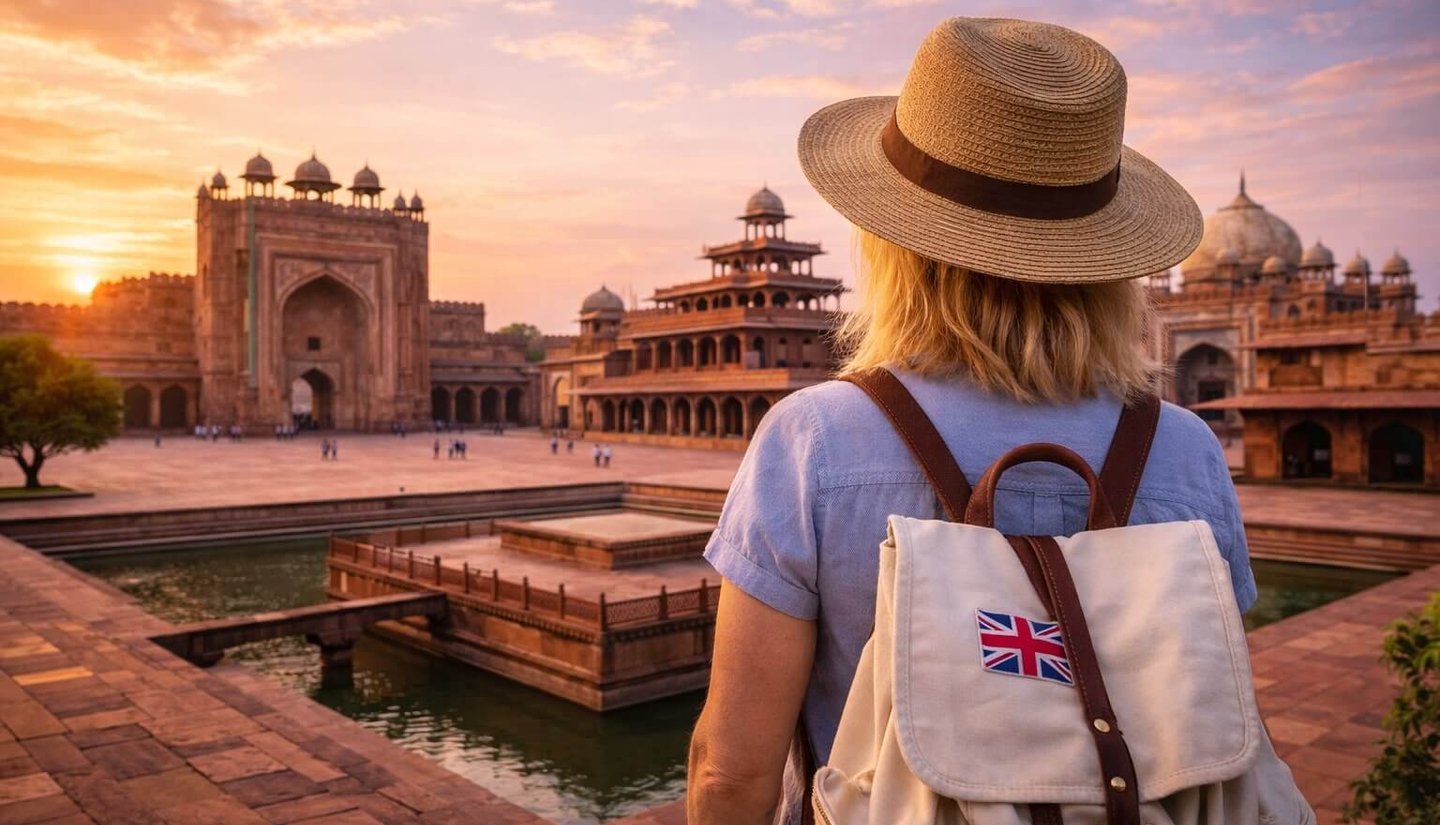
4. Mehtab Bagh - The Moonlight Garden · Best Sunset Viewpoint of the Taj Mahal
Hidden Gem · Photography Destination · Serene Mughal Garden
The finest view of the Taj Mahal in all of Agra — peaceful, beautiful, and uncrowded
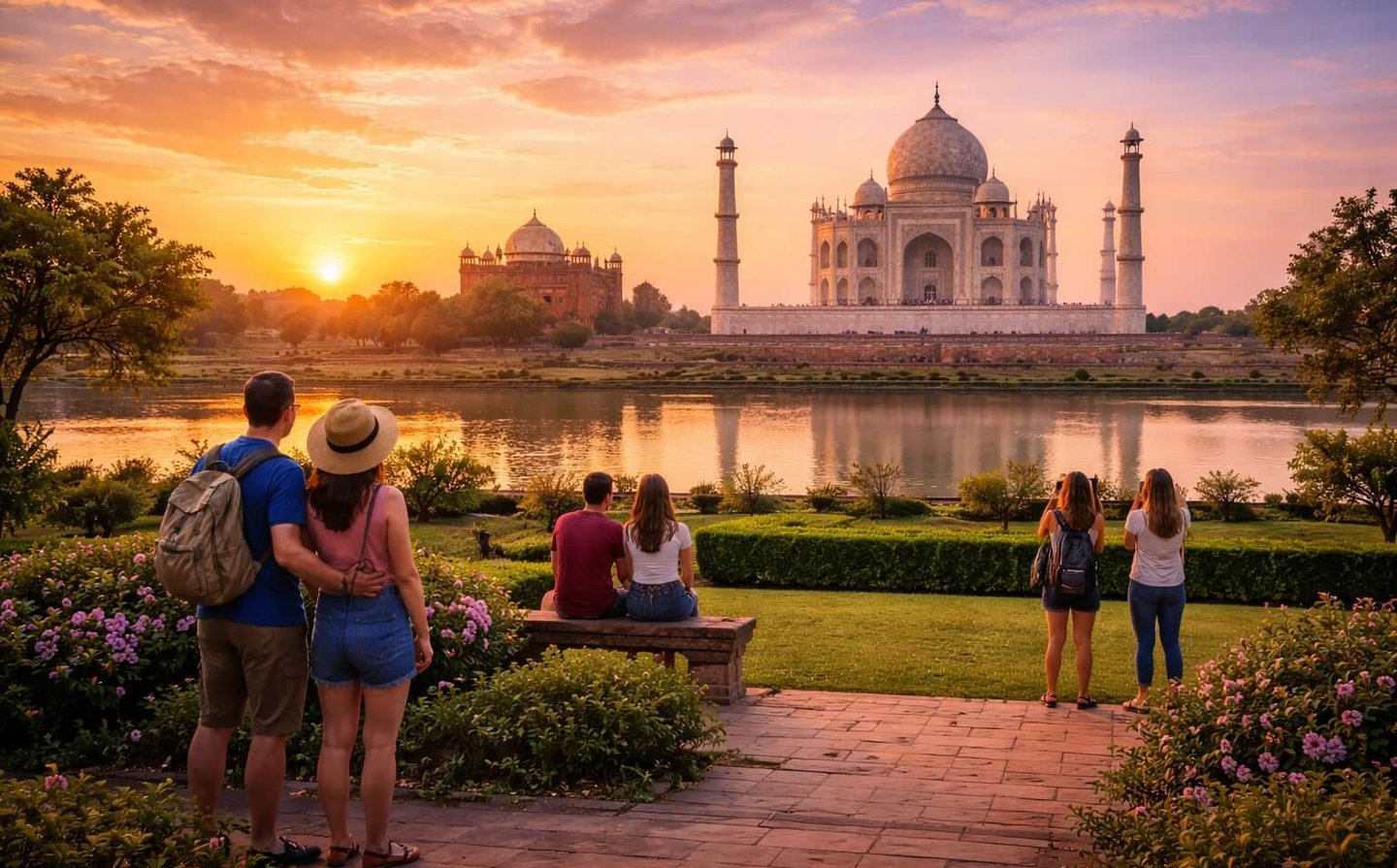
Mehtab Bagh - the Moonlight Garden - sits directly across the Yamuna River from the Taj Mahal, offering what many professional photographers and seasoned world travellers consider the single finest view of the monument in existence. Originally one of eleven Mughal gardens laid out along the Yamuna by Emperor Babur in the 16th century, Mehtab Bagh is wonderfully peaceful, refreshingly uncrowded, and perfectly positioned to capture the Taj at sunset when the marble blazes with warm gold and rose light. This is the viewpoint for the photograph that international visitors treasure most.
Unlike the monument complex itself, Mehtab Bagh offers a completely unobstructed panoramic view of the Taj Mahal across the river — ideal for wide-angle photography, for romantic proposals, and for those who wish to simply sit quietly and contemplate one of the world's great masterpieces without the bustle of the main site. The garden itself is scenic, breezy, and lushly planted, making it an ideal complement to the Taj visit.
Essential Visitor Information — Mehtab Bagh
— Best time to visit: Sunset - the Taj Mahal glows amber and gold in the evening light
— Entry ticket for foreign nationals: Approximately INR 300
— Photography: One of the best locations in Agra for unobstructed Taj Mahal photographs
— Atmosphere: Far quieter than the main monument - ideal for peaceful, unhurried visits.
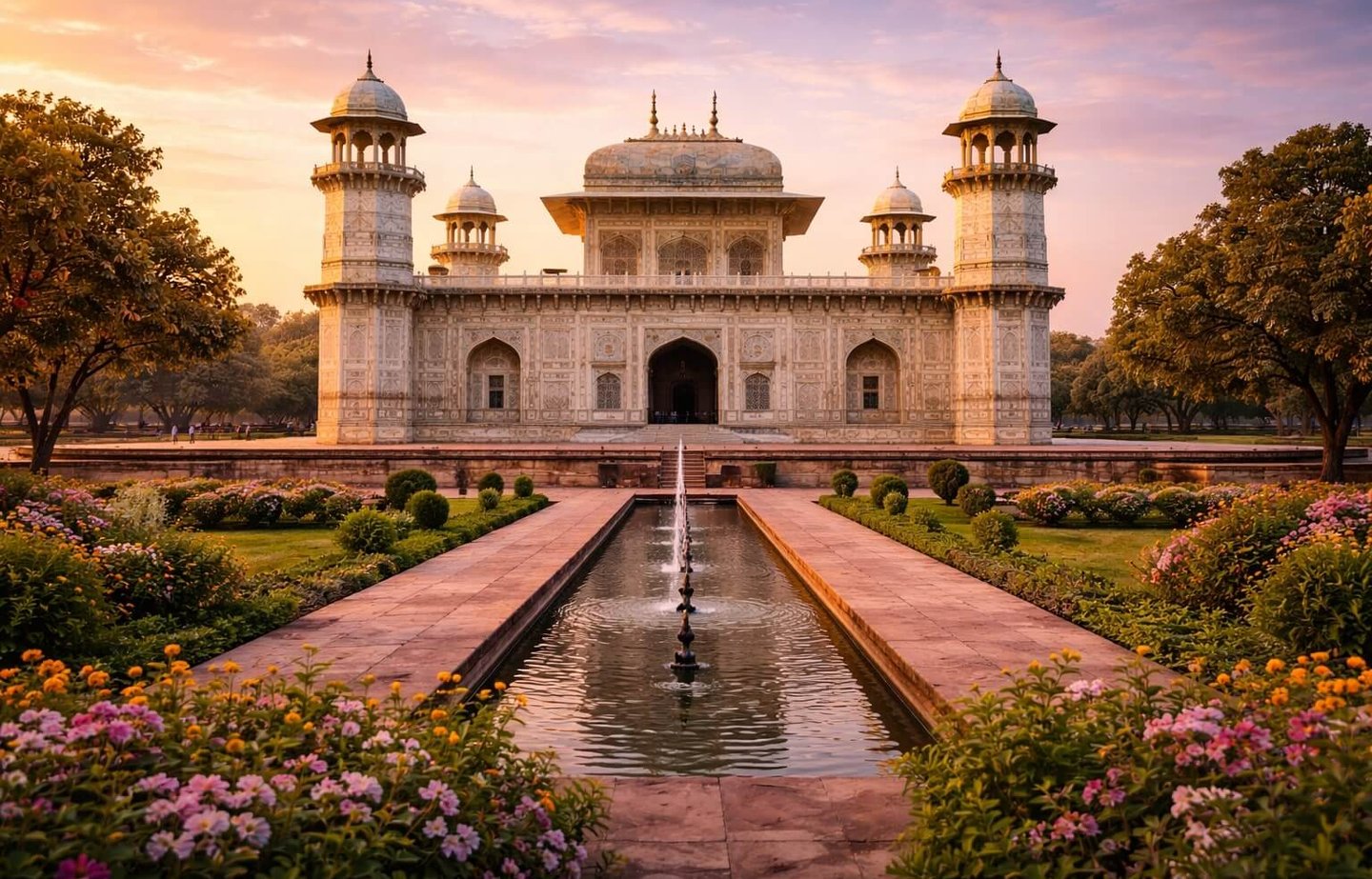
5. Itimad-ud-Daulah - The Baby Taj · Jewel of Mughal Marble Artistry
Hidden Gem · Architectural Masterpiece · Precursor to the Taj Mahal
The monument that inspired the Taj — exquisite, intimate, and unforgettable
Often called the Baby Taj, Itimad-ud-Daulah is the exquisite tomb of Mirza Ghiyas Beg - the father-in-law of Emperor Jahangir - built between 1622 and 1628 by Empress Nur Jahan. Many architectural historians believe this monument was the direct creative inspiration for the Taj Mahal itself, as it was the first Mughal structure to be built entirely of white marble rather than red sandstone, and the first to feature the pietra dura stone inlay technique - intricate patterns of semi-precious stones set into marble — that was later employed on the grandest possible scale for the Taj.
Unlike the crowded main monuments of Agra, Itimad-ud-Daulah offers a quiet, intimate encounter with some of the finest decorative craftsmanship of the Mughal era. The tomb's four minarets, its delicate marble lattice screens (jalis), and its extraordinarily detailed stone inlay panels depicting wine vessels, cypress trees, and geometric patterns reward unhurried, close inspection. For visitors who appreciate fine craftsmanship and architectural history, this is an unmissable Agra attraction.
Essential Visitor Information — Itimad-ud-Daulah
— Entry ticket for foreign nationals: Approximately INR 310
— Best combined with: Mehtab Bagh for a relaxed half-day exploring Agra's quieter monuments
— Time required: Allow 1 to 1.5 hours
— Historical significance: The first Mughal building in white marble and the first to feature pietra dura inlay.
Signature Taj Mahal Experiences — Curated by UK India Tourism
The Taj Mahal reveals itself differently at every hour. These specially curated experiences ensure you witness the monument at its most extraordinary - guided, safe, seamlessly arranged, and deeply memorable. Both tours require advance planning and are among the most sought-after travel experiences in all of Asia.
Taj Mahal Sunrise Tour - The Single Most Magical Hour in Agra
Most Popular · Daily · Recommended for All International Visitors
As the first light of dawn touches Agra, the Taj Mahal undergoes a transformation of breath taking beauty. The white marble blushes pink and rose, the minarets glow against a sky turning from deep indigo to amber gold, and the long reflecting pools shimmer with the monument's perfect image. In these early morning minutes — before the heat rises and the crowds gather — the Taj feels entirely personal. This is the Taj as Shah Jahan intended it: a place of profound stillness, beauty, and love.
Our Taj Mahal Sunrise Tour is designed for international visitors who want to experience the monument at its most photogenic and emotionally powerful - with expert guidance, priority entry, and full logistical support so that nothing stands between you and the experience.
What is Included in the Taj Mahal Sunrise Tour
— Early morning hotel pickup - typically between 5:00 and 5:30 am
— Priority queue entry tickets - skip the main entrance queues
— Professional English-speaking heritage guide with expert historical commentary
— Dedicated photography assistance - guidance on the best sunrise viewpoints and camera positions
— Comfortable, private air-conditioned vehicle throughout
— Full safety and travel support from arrival to return
Taj Mahal Full Moon Night Viewing - One of the Rarest Experiences in India
Exclusive · Limited to 400 Visitors Per Night · Advance Booking Essential
On five nights each month - the night of the full moon and the two nights either side - the Archaeological Survey of India opens the Taj Mahal after dark for one of the most exclusive and enchanting experiences available to any visitor in India. Bathed in cool silver moonlight, the white marble appears to glow from within, casting long reflections across the water channels of the charbagh garden. The monument seems otherworldly, transcendent, and profoundly romantic under the open night sky.
Full moon night viewing tickets are severely limited — only 400 visitors are permitted each night — and sell out months in advance. UK India Tourism secures these highly sought-after tickets for our guests as part of a fully curated evening experience, with guided commentary, comfortable private transfers, and flexible dinner arrangements at Agra's finest restaurants. This experience is especially recommended for couples, honeymoon travellers, and those on a luxury India tour.
What is Included in the Full Moon Night Viewing Experience
— Pre-booked night viewing tickets - only 400 allocated per night, available 5 nights per month around the full moon
— Expert guided experience at the Taj Mahal under moonlight
— Secure, comfortable private transfers to and from your hotel
— Optional fine-dining dinner at a curated Agra restaurant
— Full UK India Tourism on-ground support throughout the evening.
Practical Travel Information for Visiting Agra
Everything international visitors need to know before travelling to Agra - including the best time to visit, how to get there from major international airports, visa requirements, accommodation, and entry ticket details for all major monuments.
Best Time to Visit Agra
The ideal months to visit Agra are October through March, when temperatures are pleasantly cool — ranging from approximately 10°C to 25°C - and the air is clear, making for better visibility and more comfortable sightseeing. November, December, and February are particularly popular months for international visitors.
The monsoon season (July to September) brings lush greenery to the gardens but also high humidity and occasional atmospheric haze, which can reduce visibility at the Taj Mahal. The summer months (April to June) can be intensely hot, with temperatures reaching up to 45°C, and are best avoided unless visits are planned for the very early morning hours only.
Month-by-Month Seasonal Guide for Agra
— October to November: Excellent - cool, clear skies, lush post-monsoon greenery
— December to January: Peak season - cool temperatures (sometimes cold at night); foggy mornings possible in January
— February to March: Ideal - warm, clear days, roses blooming in the Taj gardens
— April to June: Hot - best avoided; sunrise visits only if necessary
— July to September: Monsoon - humid and hazy; off-peak, less crowded, lush greenery
How to Get to Agra - International Flights & Onward Travel
Most international visitors fly into Indira Gandhi International Airport in New Delhi - the main gateway to northern India and one of South Asia's busiest international airports, served by airlines from across Europe, the Americas, Australia, the Middle East, Southeast Asia, and Africa.
From New Delhi, Agra is easily reached by several comfortable options. The Gatimaan Express - India's fastest train - covers the 200-kilometre journey in approximately 1 hour 40 minutes and is the preferred option for independent travellers. By road on the Yamuna Expressway, the journey takes approximately 3 to 4 hours depending on traffic. UK India Tourism arranges all airport transfers and Delhi-to-Agra travel seamlessly for all our international guests, including private vehicle with professional drivers and escorted coach transfers.
Travel Options from New Delhi to Agra
— Gatimaan Express train - approximately 1 hour 40 minutes; operates daily between Hazrat Nizamuddin Station (New Delhi) and Agra Cantt Station
— Taj Express train - approximately 2 hours 15 minutes; a popular and affordable option
— Private air-conditioned vehicle - approximately 3 to 4 hours via Yamuna Expressway; most flexible option for families and groups
— Agra Airport - handles domestic flights from Mumbai, Chennai, Bengaluru, and other Indian cities
India Visa for International Visitors: e-Visa Information
Citizens of over 165 countries are eligible to apply for an India e-Tourist Visa online through the official Government of India portal - no embassy visit or physical stamp is required in most cases. The e-Visa is available for durations of 30 days, 1 year, and 5 years, and is accepted at all major international airports and seaports in India.
Processing time is typically 3 to 5 business days. It is strongly recommended to apply at least two weeks before your intended travel date to allow for any processing delays. UK India Tourism provides full guidance on the India visa application process as part of our complete travel support service for all international guests.
India e-Visa Key Facts
— Available to citizens of over 165 countries - check eligibility at the official India e-Visa portal
— Types available: e-Tourist Visa (30-day, 1-year, and 5-year), e-Business Visa, e-Medical Visa
— Processing time: Typically 3 to 5 business days
— Apply at: indianvisaonline.gov.in (the official Government of India e-Visa portal)
— Apply at least 14 days before travel; earlier applications are strongly advised during peak season
Where to Stay in Agra When Travelling Independently – Hotels Perfect for International Visitors
Agra offers a full range of accommodation for international visitors, from globally recognised five-star luxury hotels to comfortable mid-range and boutique options. For the most iconic experience, hotels with direct Taj Mahal views are highly sought-after - waking to see the monument gleaming from your room window is a moment that many travellers describe as one of the highlights of their entire India journey.
The Taj Ganj neighbourhood offers the greatest proximity to the Taj Mahal and suits independent travellers who wish to walk to the monument. Fatehabad Road is popular for its concentration of internationally rated hotels with amenities tailored to foreign visitors. As you book with UK India Tourism - we arrange everything as per your taste and budget.
Accommodation Areas in Agra
— Taj Ganj - closest to the Taj Mahal; lively, boutique options and budget-friendly guesthouses with monument views
— Fatehabad Road - concentration of three, four, and five-star hotels; excellent facilities for international guests
— MG Road and Civil Lines - quieter residential areas with heritage properties and mid-range options
Agra Monument Entry Tickets - Prices & Timings for International Visitors
Taj Mahal Entry
— Foreign national entry ticket: Approximately INR 1,100 (inclusive of mausoleum surcharge)
— Opening hours: Sunrise to sunset, seven days a week - CLOSED on Fridays
— Full moon night viewing: Additional ticket required (INR 510); only 400 tickets available per night — must be pre-booked
Agra Fort Entry
— Foreign national entry ticket: Approximately INR 650
— Opening hours: Sunrise to sunset, daily
Fatehpur Sikri Entry
— Foreign national entry ticket: Approximately INR 610
— Opening hours: Sunrise to sunset, daily
Mehtab Bagh Entry
— Foreign national entry ticket: Approximately INR 300
— Opening hours: Sunrise to sunset, daily
Itimad-ud-Daulah Entry
— Foreign national entry ticket: Approximately INR 310
— Opening hours: Sunrise to sunset, daily
Note: Ticket prices are subject to change. UK India Tourism handles and pays for all monument entry arrangements for our guests, ensuring correct tickets and timings for a seamless experience.
The Golden Triangle - Delhi, Agra & Jaipur: India's Most Iconic Travel Route
The journey that defines India travel — three extraordinary cities, one unforgettable experience
The Golden Triangle is India's legendary travel circuit - connecting three of the country's most extraordinary cities in a journey of approximately 700 kilometres that takes international visitors through the full spectrum of India's heritage, culture, royal history, and natural beauty. It is consistently ranked among the top travel itineraries in the world by leading international travel publications, and rightly so.
The circuit begins in Delhi — the great capital city of dynasties and modernity, where Mughal tombs, British colonial architecture, medieval bazaars, and one of Asia's most vibrant street food cultures collide in an overwhelming, exhilarating whole. The journey then moves south to Agra, where the Taj Mahal, Agra Fort, and Fatehpur Sikri await. Finally, travellers move west to Jaipur — the Pink City of Rajasthan — a royal Rajput capital of amber forts, jewelled bazaars, elephant processions, and extraordinary crafts and cuisine.
The Three Cities of the Golden Triangle
Delhi - Imperial Capital, Modern Metropolis
India's capital is a city of extraordinary contrasts and inexhaustible energy. Old Delhi (Shahjahanabad) - built by the same Emperor Shah Jahan who created the Taj Mahal - offers the Red Fort (Lal Qila), the great Jama Masjid mosque, and the sensory spectacular of Chandni Chowk, one of Asia's oldest and most vibrant bazaars. New Delhi, designed by Edwin Lutyens in the early 20th century, offers the India Gate, Humayun's Tomb (another UNESCO World Heritage Site), and the Qutub Minar complex. For international visitors, Delhi typically serves as both the arrival and departure point for the Golden Triangle circuit.
Agra - Taj Mahal, Agra Fort & Fatehpur Sikri
The centrepiece of the Golden Triangle and the most visited destination in India. From its three UNESCO World Heritage Sites to its extraordinary Mughal monuments, Mughal-influenced cuisine (Agra's petha sweets and Mughlai food are famous across India), and traditional craft workshops producing marble inlay souvenirs using the same pietra dura techniques as the Taj Mahal, Agra rewards every international visitor who makes the journey.
Jaipur - The Pink City, Royal Capital of Rajasthan
Jaipur is the capital of Rajasthan - India's most romanticised state - and a city of regal grandeur, warm hospitality, and extraordinary visual richness. The Amber Fort (Amer), a magnificent hilltop fortress overlooking Maota Lake, is one of the most photographed monuments in India. The City Palace, the Jantar Mantar observatory (another UNESCO World Heritage Site), the Hawa Mahal (Palace of Winds), and the bazaars of the old walled city all reward extended exploration. Jaipur is famous for its gemstones, block-printed textiles, blue pottery, and jewellery craftsmanship.
Golden Triangle Tour Itineraries - Suggested Programmes
UK India Tourism designs fully customised Golden Triangle itineraries for international visitors at all durations, styles, and budget levels. Below are our most popular suggested programmes:
Golden Triangle Classic Tour (Delhi – Agra – Jaipur)
Duration: 6 Days / 5 Nights
Day-wise Itinerary
Day 1: Arrive in Delhi – City Tour Begins
Meet our private representative / driver who will Welcome you and make a pick up from IGI International Airport. He takes you to your Hotel and then you begin exploring the capital as and when you want to start your journey. You may visit India Gate, President's House, Jantar Mantar - the astronomical wonder, Delhi Haat - the Handicrafts Market and few other markets like Connaught Place and Janpath market. Depends how much time you give to one destination.
Day 2: Old Delhi Heritage and UNESCO World Heritage Sites
Explore The Gorgeous Red Fort from history and Chandni chowk old Delhi market. Continue to UNESCO world heritage sites like Humayun's Tomb and Qutub Minar complex. Delhi gives you the perfect cultural opening to your India trip and you can see the difference in Old & New Delhi.
Day 3: Delhi to Agra – Taj Mahal & Mughal Grandeur
Drive to Agra and experience the world-famous Taj Mahal (sunrise or sunset depending on timing). Continue to the grand Agra Fort, a masterpiece of Mughal architecture and royal history. In the evening, enjoy time at Agra’s local markets known for marble handicrafts and souvenirs.
Day 4: Agra to Jaipur (via Fatehpur Sikri) – Arrival in the Pink City
On the way to Jaipur, stop at Fatehpur Sikri, the historic Mughal city known for its beautiful courtyards and architecture. Continue to Jaipur and check into your hotel. In the evening, explore Jaipur’s colourful bazaars for textiles, jewellery, handicrafts, and souvenirs.
Day 5: Jaipur City Tour – Forts, Palaces & Royal Highlights
Today is your full Jaipur sightseeing day covering the city’s most famous landmarks: Amber Fort, Hawa Mahal, City Palace, and Jantar Mantar. Enjoy photo stops, relaxed exploring, and time to experience Jaipur’s royal charm without rushing the schedule.
Day 6: Jaipur Sightseeing + Drive to Delhi (Approx. 6 Hours)
After breakfast, enjoy the remaining Jaipur highlights including Jaigarh Fort and a scenic photo stop at Jal Mahal. Later, begin your comfortable road journey back to Delhi (approx. 6 hours drive). On arrival, we will drop you at the airport as per your departure plan.
Golden Triangle + Ranthambore Tiger Safari Tour (Delhi – Agra – Ranthambore – Jaipur – Delhi)
Duration: 9 Days / 8 Nights
Day-wise Itinerary
Day 1: Arrival in Delhi – Welcome & Relax
Meet our representative at the IGI International Airport for a smooth welcome and hotel transfer. Rest after your flight and if you feel fresh, you can enjoy light sightseeing or explore nearby markets depending on your arrival time.
Day 2: Delhi Sightseeing – Old Delhi + New Delhi Highlights
Today you explore the best of India’s capital with a mix of history and culture. Visit the Three UNESCO World heritage Sites:
Red Fort
Qutub Minar Complex
Humayun’s Tomb
Delhi is where your India journey begins with a bang — a city that feels like many worlds living together.
Day 3: Delhi to Agra – Taj Mahal + Agra Fort
Move to Agra with our representative in a Car / SUV and experience the crown jewel of India — the Taj Mahal. Then explore the grand Agra Fort, where Mughal history still echoes through its walls.
Day 4: Agra to Ranthambore (via Fatehpur Sikri)
On the way to Ranthambore, stop at Fatehpur Sikri, the stunning Mughal-era city known for its royal architecture and heritage charm. Then continue driving to Ranthambore and check into your stay near the national park.
Day 5: Ranthambore Safari Day – Tigers & Wilderness
This is the day wildlife lovers wait for. Enjoy two jungle safaris:
✅ Morning Safari
✅ Evening Safari
Between the drives, visit the historic Ranthambore Fort, sitting beautifully above the forest like a guardian of time.
Every safari is different — you may spot deer, crocodiles, monkeys, exotic birds, and if luck is on your side… the royal Bengal tiger.
Day 6: Ranthambore to Jaipur – Evening Local Markets
Drive to Jaipur, the famous Historic City of Rajasthan. After hotel check-in, enjoy a relaxed evening exploring local Jaipur markets, perfect for textiles, handmade jewellery, souvenirs, and traditional crafts.
Day 7: Jaipur Sightseeing – Royal Forts & Palaces
Today is a full royal Jaipur experience including:
Hawa Mahal
Jantar Mantar
City Palace
Jaipur feels like a living museum — colourful streets, royal heritage, and Instagram-worthy architecture everywhere you look.
Day 8: Jaipur Sightseeing – Hidden Gems & Fort Views
Continue exploring Jaipur’s iconic landmarks:
Jal Mahal (beautiful lake palace views)
Amber Fort ( famous for view over Maota Lake + Hilltop Location + Mirror Palace )
Jaigarh Fort (famous for grand views and history)
Day 9: Drive Back to Delhi + Departure
We drive you back to Delhi. Depending on your flight timing, you can rest at the hotel or roam around nearby areas, grab last-minute shopping, and then we provide a smooth Airport drop for your departure back home.
Why Book Your Agra & India Tour with UK India Tourism
UK India Tourism is a specialist India travel company with deep expertise in curated, private-guided tours for international visitors. We design and operate personalised India journeys for guests from across the world - including Europe, the Americas, Australia, New Zealand, South Africa, the Middle East, Southeast Asia, and beyond.
Our philosophy is simple: every detail arranged in advance, every moment guided by expertise, so that you arrive in India as a welcomed guest - not a bewildered tourist. We believe the best India experiences are those where you are free to be fully present, without logistics, language barriers, or uncertainty getting in the way of the wonder.
What UK India Tourism Provides for International Visitors
— Fully personalised private guided tour itineraries - designed around your interests, duration, and travel style
— Professional, experienced English-speaking heritage guides at every destination
— Pre-arranged monument entry tickets including Taj Mahal sunrise, Taj Mahal full moon night viewing, and UNESCO sites
— Luxury, mid-range, and budget accommodation options - all personally vetted and pre-booked
— Private, comfortable air-conditioned vehicles with professional drivers for all transfers
— Complete India e-Visa guidance and application support
— Airport arrival and departure transfers - Delhi, Mumbai, Chennai, Kolkata, and all major gateways
— 24/7 on-trip support - a dedicated UK India Tourism contact available throughout your journey
— No hidden charges, no large groups, no compromise on quality or safety
— Flexible itineraries - extensions to Rajasthan, Varanasi, Kerala, the Himalayas, or any other India destination
Contact UK India Tourism - Plan Your Agra & India Journey
Ready to begin planning your India journey? Our India travel specialists are available to discuss your requirements, suggest an itinerary, and arrange a completely tailor-made India experience - from a single day at the Taj Mahal to a comprehensive multi-week journey across the country.
We offer a free initial consultation by phone or email - no obligation, no pressure. Simply tell us when you would like to travel, how many people are in your group, and what kind of India experience you are looking for. We will take care of everything else.
United Kingdom: +44 7345 191 205
India: +91 99584 80873
UK India Tourism · Specialist India Travel for International Visitors · ukindiatourism.co.uk
© 2026 UK India Tourism. All rights reserved.
UK: +44 7345191205
UK India Tourism© 2026, all rights reserved
India: +91 9958480873
⭐⭐⭐⭐⭐ 4.9/5 | 2,600+ Travelers | 18 Years | 98% Recommend