Tiger Safari India vs African Safari-Better for Australians?
Australia's wildlife lovers face the ultimate choice: a tiger safari in India or an African safari? We compare costs, flight times, wildlife, and experiences.
Adarsh Gupta
6/21/202613 min read
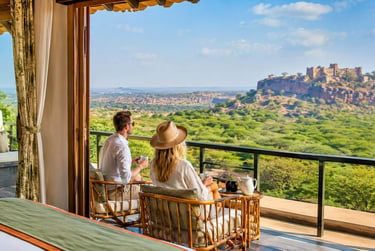
Tiger Safari in India vs African Safari: Which is Better for Australians?
Picture this. You are sitting at your kitchen table in Sydney or Melbourne, coffee in hand, scrolling through two sets of images that are making it very hard to concentrate on anything else.
In one tab: a Bengal tiger padding silently through the sal forest of Bandhavgarh, its amber eyes catching the early morning light. In the other: a lion pride sprawled across the golden Maasai Mara, yawning at a distant herd of wildebeest.
Both images are extraordinary. Both promise the kind of wildlife encounter that changes how you see the world. But you have two weeks of annual leave, a budget you have been building for this trip, and you can only choose one.
For Australian travellers weighing up a tiger safari in India versus an African safari, this is one of the most common and genuinely difficult travel decisions there is. Both destinations are long-haul from Australia. Both offer world-class wildlife. And both are bucket-list experiences for very different reasons.
This guide, written from 17 years of first-hand experience running private India wildlife tours, breaks down every factor that matters from costs in Australian dollars, to flight times from Sydney and Melbourne, to the sheer quality of the wildlife encounter itself.
📋 About This Guide UK India Tourism has been arranging private tiger safari tours for Australian travellers since 2008. Our founder Adarsh Gupta has personally visited every major tiger reserve in India. Every insight in this guide comes from direct, on-the-ground experience, not travel brochures.
The Flight from Australia: India vs Africa
For Australians, the journey begins before you even land in the wildlife zone and flight time and connections matter enormously.
Flying to India for a Tiger Safari
Direct and one-stop flights from Sydney or Melbourne to Delhi (Indira Gandhi International Airport) or Mumbai run approximately 11–14 hours depending on your routing. Singapore Airlines, Qatar Airways, Air India, and Etihad all offer excellent connections, with one-stop options typically via Singapore, Doha, or Abu Dhabi. From Delhi, it is a further domestic flight or an overnight train to reach Madhya Pradesh's tiger country.
Time zone adjustment from Australia to India (IST is UTC+5:30) is also manageable, typically a 4.5 to 5.5 hour difference from AEDT, meaning jet lag is significantly less disruptive than flights heading further west.
Flying to Africa for a Safari
Getting from Australia to East Africa (Nairobi for Kenya's Maasai Mara; Kilimanjaro for Tanzania's Serengeti) or Southern Africa (Johannesburg for Kruger) involves considerably longer travel. From Sydney to Nairobi, expect 15–20 hours including connections, often routing through the Middle East (Dubai, Doha, Abu Dhabi) or occasionally Singapore and Addis Ababa. Flights to Johannesburg are similarly long.
For many Australian travellers, the Africa journey is a significant commitment and the additional internal charter flights often required to reach remote camps in Kenya, Tanzania, or Botswana add further cost and travel time.
✈️ Australian Travel Note From Sydney or Melbourne, India is meaningfully closer than East or Southern Africa, both in flying hours and in time zone adjustment. For Australians who want to maximise their time on the ground rather than in transit, this is a genuine advantage for India.
The Star Wildlife: Bengal Tiger vs The Big Five
At the heart of any safari comparison is the wildlife itself and India and Africa offer iconic encounters that are genuinely different in character.
India: The Bengal Tiger
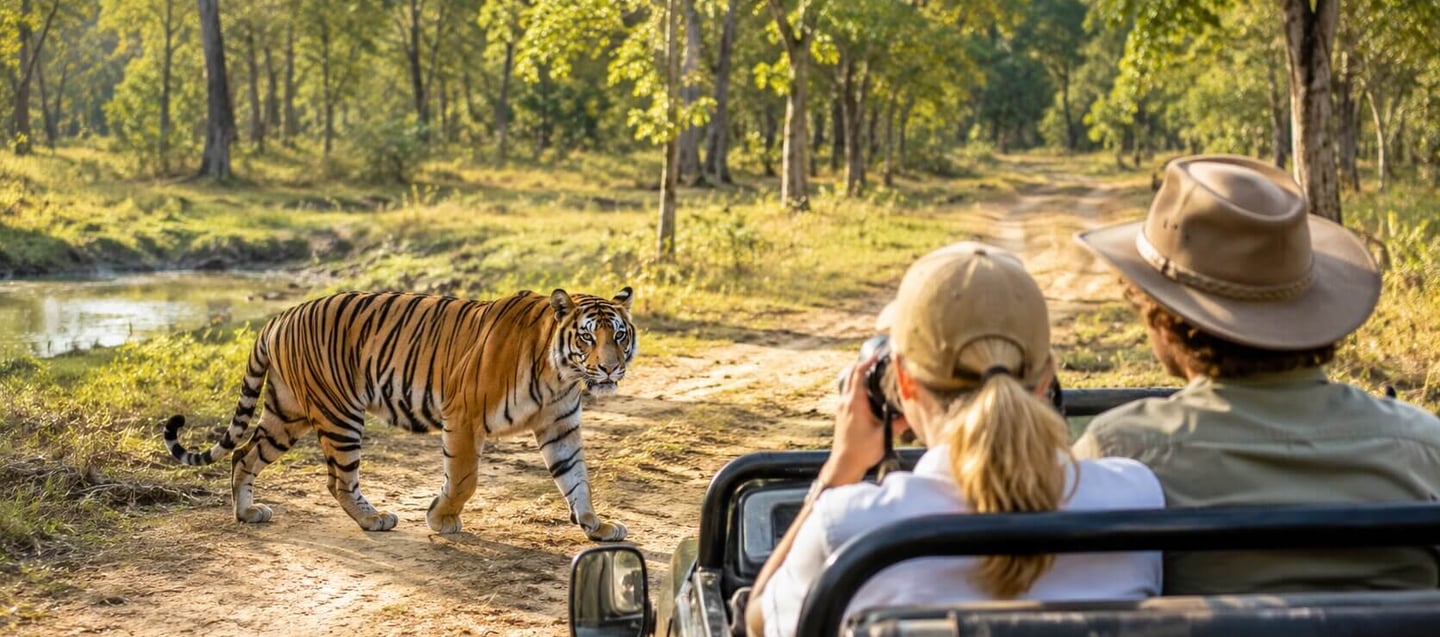
India is home to approximately 75% of the world's remaining wild tigers. There are fewer than 4,000 Bengal tigers left on earth making a sighting in the wild one of the rarest, most precious wildlife encounters available to any traveller anywhere on the planet. The tiger is the apex predator of the Indian jungle: silent, solitary, immensely powerful, and utterly unlike anything you have ever seen at a zoo or wildlife park in Australia.
The experience of tracking a tiger, following pugmarks through the Sal forest at dawn, hearing a spotted deer's alarm call, and then watching as a tiger materialises from the undergrowth onto the track five metres from your open jeep, is not easily put into words. Australians who have done both often describe it as the most viscerally exciting wildlife moment of their lives.
India's leading tiger reserves each offer a distinctive setting and character:
• Bandhavgarh National Park (Madhya Pradesh) — one of the world's highest tiger densities; outstanding sighting rates
• Kanha National Park (Madhya Pradesh) — lush meadows and dense forest; the inspiration for Rudyard Kipling's The Jungle Book
• Ranthambore National Park (Rajasthan) — tigers against a backdrop of dramatic Rajput fort ruins; combines perfectly with Jaipur
• Jim Corbett National Park (Uttarakhand) — India's oldest national park; diverse Himalayan foothills habitat
• Tadoba Andhari Tiger Reserve (Maharashtra) — intimate, off-the-beaten-track; excellent leopard and wild dog sightings too
Africa: The Big Five
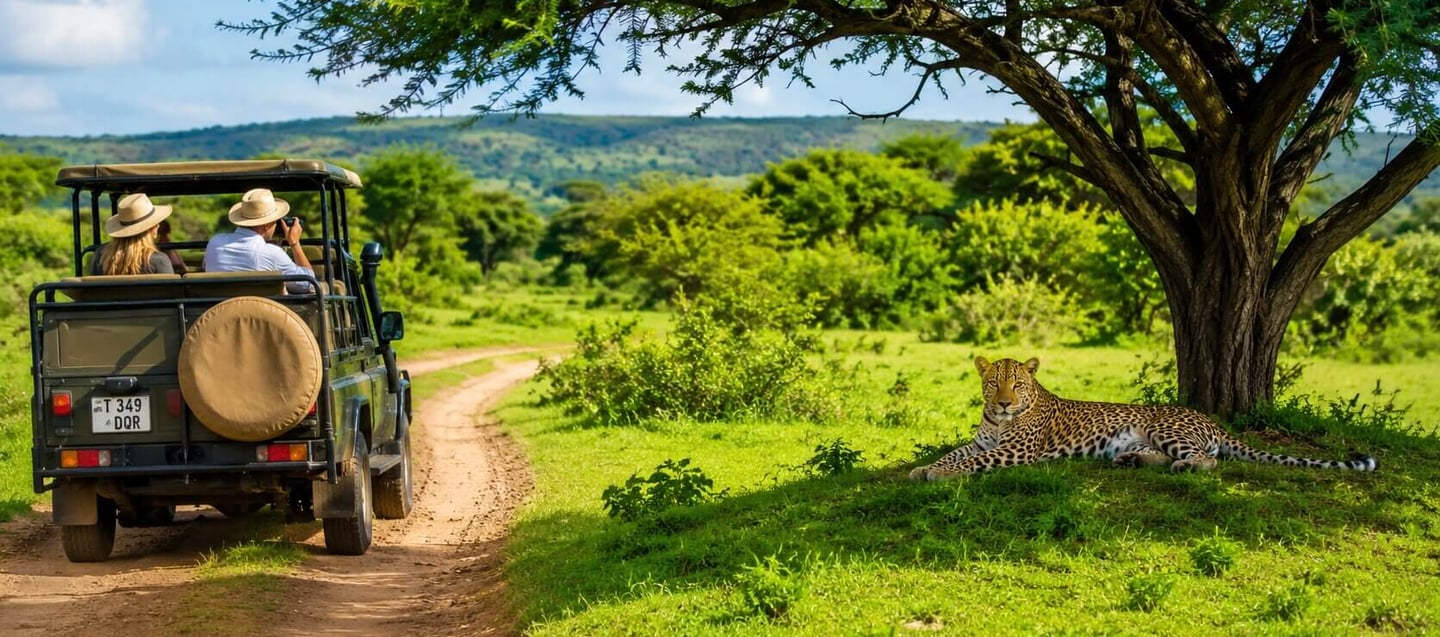
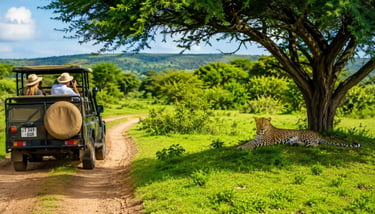
Africa's iconic wildlife encounter is the Big Five - lion, African elephant, Cape buffalo, leopard and white rhinoceros. The term was originally coined by big-game hunters referring to the most dangerous animals to hunt on foot, and these five species remain the centrepiece of virtually every East and Southern African safari.
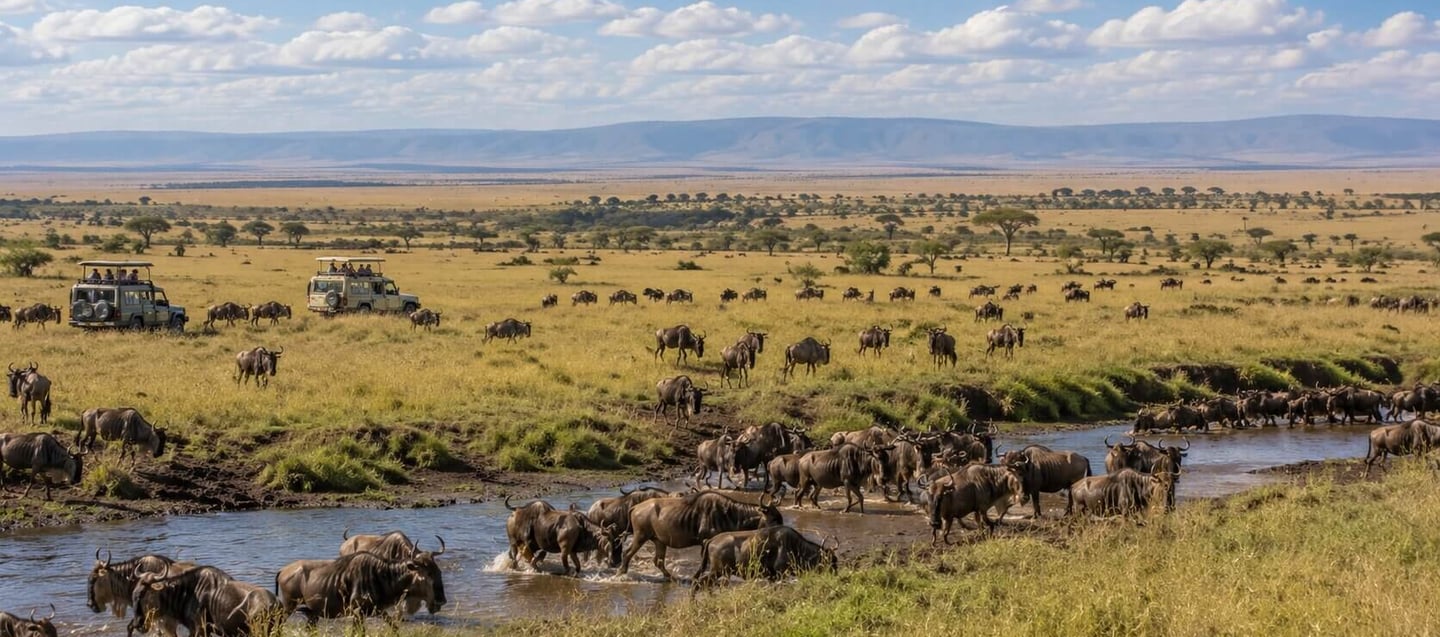
The sheer scale and biodiversity of a great African park is extraordinary: wildebeest migrations of over 1.5 million animals, vast elephant herds moving across open plains, cheetahs sprinting across grassland, hippos jostling in muddy rivers, and a bird life so rich it keeps dedicated ornithologists busy for weeks. Africa's flagship national parks have been refined by decades of wildlife tourism and offer a consistency of experience that India is still developing.
• Serengeti National Park (Tanzania) — the Great Migration, vast open plains, the quintessential Africa experience
• Maasai Mara National Reserve (Kenya) — Big Five, dramatic river crossings, Maasai cultural encounters
• Kruger National Park (South Africa) — excellent Big Five, self-drive options, most accessible for Australians via Joburg
• Chobe National Park (Botswana) — largest elephant concentration on earth, superb river safaris
• Okavango Delta (Botswana) — water-based mokoro safari, extraordinary biodiversity, exclusive luxury camps
🐯 Adarsh's Take The Bengal tiger encounter and the African Big Five encounter are not really competing for the same emotional territory. The tiger is singular, secretive and shockingly close. Africa is vast, cinematic and overwhelming in its abundance. Neither is 'better' - they are different kinds of magnificent.
The Safari Experience: Jungle Jeep vs Open Savanna
How you spend your time on the ground differs enormously between India and Africa and for some Australian travellers, the texture of the experience matters as much as the wildlife itself.
India Tiger Safari: What to Expect
A tiger safari in India is structured, intimate, and deeply atmospheric. You enter the national park in an open 6-seater jeep with a trained naturalist and a mandatory government-certified guide. Strict zone controls mean only a very small number of vehicles are permitted in any given area per session, so when a tiger is located, you will not be surrounded by dozens of jeeps as commonly happens in Africa's most popular parks during peak season.
Safaris run in two daily sessions: early morning (approximately 6:00–10:00am) and late afternoon (2:00–6:00pm). The rest of the day is spent at your jungle lodge which ranges from comfortable mid-range properties to genuinely extraordinary luxury camps. Highlights between safaris might include a guided walk in the buffer zone, a visit to a local village, or simply sitting on your verandah listening to the forest.
What makes India truly unique for Australian travellers is the depth of experience beyond the wildlife itself. A tiger safari in Bandhavgarh or Kanha can be seamlessly combined with the Taj Mahal in Agra, the palaces of Jaipur, the ghats of Varanasi, or the temples of Khajuraho, creating a complete, multi-dimensional India journey that goes far beyond any single-theme safari holiday.
African Safari: What to Expect
The African safari experience particularly in East Africa's open savanna parks, is visually vast and emotionally cinematic. Full-day game drives across golden grassland, sundowners on a kopje watching elephants at a waterhole, and the extraordinary spectacle of the Great Migration river crossings offer a style of wildlife travel that has inspired generations of travellers.
In private conservancies bordering the great national parks, additional activities like walking safaris guided by armed rangers, night game drives to witness nocturnal behaviour and fly-camping under the stars, elevate the experience further. The African lodge and tented camp experience has been refined over a century of wildlife tourism and ranges from well-run mid-market properties to some of the most extraordinary luxury accommodation on earth.
For Australian travellers who want the Hollywood classic movie 'Out of Africa' experience - wide skies, dawn game drives and the sense of being on the edge of the wilderness, Africa delivers this in a big way.
Cost Comparison for Australian Travellers: India vs Africa (AUD)
Budget is one of the most decisive factors for Australian wildlife travellers and here, India offers a significant advantage.
India Tiger Safari Costs from Australia
A well-crafted private tiger safari tour in India, combining Delhi, the Taj Mahal at Agra, three to four nights at Bandhavgarh, two nights at Kanha, and a cultural extension — typically costs between AUD $4,500 to $6,500 per person on the ground (excluding international flights from Australia and food). Mid-range jungle lodges deliver excellent food and service; premium properties like Samode Safari Lodge, Kings Lodge Bandhavgarh may offer a little more price but remain significantly below comparable African luxury options.
Return flights from Sydney or Melbourne to Delhi currently range from approximately AUD $900 to $2,000 depending on airline, season, and how far in advance you book.
African Safari Costs from Australia
A comparable quality African safari - five nights in the Maasai Mara and four nights in the Serengeti, staying at good-quality tented camps, starts at approximately AUD $6,000 per person on the ground and rapidly escalates to AUD $12,000–$22,000, once luxury private conservancy camps, internal charter flights between parks, and single supplements are included. Africa's premium safari market is extraordinarily expensive, and even mid-range options represent a significant step up in cost from comparable India experiences.
Return flights from Sydney to Nairobi or Johannesburg currently range from approximately AUD $1,400 to $2,800, with fewer direct routing options and typically longer total travel times.
🐯 India Tiger Safari — At a Glance
• Star Animal: Bengal Tiger — India holds 75% of all wild tigers on earth
• Landscape: Dense sal and teak jungle, open grassland meadows
• Safari Vehicle: Open Jeep (max 6 passengers), strict zone permit system
• Typical Cost (AUD): AUD $4,500 – $6,000 per person (excl. international flights and food)
• Flight from Australia: Approx. 11–14 hrs direct/one-stop to Delhi or Mumbai from Sydney/Melbourne
• Best Season: October – June (peak: November – March)
• Sighting Certainty: High in top reserves — Bandhavgarh has one of the world's best tiger densities
• Cultural Add-on: Golden Triangle, Rajasthan, Varanasi, Khajuraho temples
• Group Size: Small and intimate — only a handful of jeeps permitted per zone per session
• Uniqueness: One of only two countries with wild tigers — India has by far the largest population
🦁 African Safari — At a Glance
• Star Animals: The Big Five — Lion, Elephant, Buffalo, Leopard, Rhino
• Landscape: Open savanna, bushveld, floodplains, Rift Valley escarpments
• Safari Vehicle: Open 4×4; private vehicles common in game conservancies
• Typical Cost (AUD): AUD $6,000 – $15,000+ per person (excl. international flights)
• Flight from Australia: Approx. 15–20 hrs with connections to Nairobi or Johannesburg from Sydney
• Best Season: Year-round; peak Jul – Oct (Kenya & Tanzania Great Migration)
• Sighting Certainty: High across most Big Five species in key parks
• Cultural Add-on: Maasai culture, Zanzibar beaches, Cape Town, Victoria Falls
• Group Size: Can be busy — vehicle convoys at popular sightings in peak season
• Uniqueness: Scale and biodiversity unmatched; Great Migration is a once-in-a-lifetime spectacle
Best Time to Visit from Australia
Best Time for India Tiger Safari
India's tiger reserves close during the monsoon season (typically July to September) and reopen in October. For Australian travellers, the timing aligns well with several common travel windows:
• October – November: Parks reopen post-monsoon; lush green forests, good sightings, quieter than peak season
• December – February: Peak season — cool and comfortable, best wildlife visibility, highest demand for accommodation
• March – May: Best tiger sighting rates of the year as heat drives wildlife to waterholes; warm to very hot
• June – September: Most parks closed (monsoon season) — not recommended for safari
The Indian school holiday calendar does not significantly affect safari availability the way it does in Australia, so travelling during Australian school holiday periods (April, July, September) is very manageable with the exception of December/January when demand from European travellers is highest.
Best Time for Africa Safari from Australia
Africa's best wildlife season varies significantly by region. East Africa (Kenya, Tanzania) is best from July to October, coinciding with the Great Migration's Mara River crossings which also overlaps with Australian school holidays in July, making this a popular time. Southern Africa (Kruger, Botswana) is best from May to October during the dry season when animals concentrate around water sources. Year-round safaris are possible in much of Africa, though the green season (November–April in many regions) reduces game visibility.
Why India Tiger Safari Wins for Australian Travellers
For many Australians who have done both, the India tiger safari ultimately delivers the more singular and unforgettable experience. Here is why:
1. The Tiger Has No Equal
Australia has extraordinary wildlife - kangaroos, koalas, crocodiles, great white sharks but the Bengal tiger is in a category of its own. It is the world's largest wild cat, critically endangered, and seeing one in its home forest is one of the last genuinely rare wildlife encounters on earth. African lions and leopards, while magnificent, exist across wide areas of sub-Saharan Africa in comparatively stable numbers. Every tiger sighting in India carries the weight of rarity.
2. Significantly Better Value in AUD
When priced in Australian dollars, India safari tours offer dramatically better value than Africa. The same AUD $8,000 that buys a mid-range five-night African safari will fund a 12–16 day private India tour combining luxury tiger safari accommodation, the Golden Triangle, and premium transfers throughout. For Australian travellers with families, this cost difference is particularly significant.
3. A Complete Holiday, Not Just a Safari
India's wildlife parks sit within one of the most culturally extraordinary countries on earth. Australians who visit India rarely come back having only done the wildlife, they come back having seen the Taj Mahal at sunrise, ridden elephants at Amber Fort, sat on the ghats in Varanasi at dawn, or eaten dal baati churma at a roadside dhaba in Rajasthan. Africa offers genuine cultural encounters too but the sheer density and variety of India's heritage is extraordinary.
4. Smaller Groups, More Exclusive Experience
India's national park system strictly limits the number of vehicles permitted per zone per session. When a tiger is found, you are sharing that moment with two or three other jeeps at most, often fewer. In Africa's most popular parks during peak season, a big cat sighting can attract fifteen to twenty vehicles simultaneously, significantly diminishing the intimacy and silence of the moment.
5. Easier Journey from Australia
While neither India nor Africa is a short flight from Australia, India's routing options from Sydney, Melbourne, Brisbane, and Perth are genuinely more accessible - shorter total travel time, more airline options, and a smaller time zone shift. For Australians who want to minimise time in transit and maximise time on the ground, India's geographical position is a meaningful advantage.
Why African Safari Still Wins for Some Australians
In the spirit of fairness and because we genuinely believe the right choice depends on the individual, here is Africa's honest case:
1. The Great Migration is Incomparable
Witnessing 1.5 million wildebeest, zebra and Thomson's gazelle crossing the Mara River while Nile crocodiles surge from the water is arguably the greatest natural spectacle on earth. It exists nowhere else. No Indian wildlife park offers anything on this scale of sheer animal abundance in motion.
2. Biodiversity at a Different Scale
A single day in the Maasai Mara might yield lions, cheetahs, leopards, elephants, rhinos, hippos, giraffes, zebras, and over a hundred bird species. India's tiger reserves are comparatively sparse in species variety outside of the tiger itself - though leopards, wild dogs (dholes), sloth bears, gaur, and langur monkeys provide plenty of supporting wildlife interest.
3. Night Drives and Walking Safaris
Africa's private game reserves permit walking safaris guided by armed rangers, and night game drives that reveal an entirely different cast of nocturnal wildlife. India's national parks strictly prohibit both your safari is limited to the designated morning and afternoon jeep sessions.
4. The Classic Safari Aesthetic
The classic safari image open jeep, golden plains, acacia trees at sunset, lion on a termite mound, is Africa's. For Australians whose wildlife dream has been shaped by David Attenborough documentaries and the imagery of the Serengeti, Africa delivers on that promise in a way India is not trying to replicate.
Which Should YOU Choose? A Guide for Australian Travellers
If you are still undecided, use this guide to match your priorities to the right destination:
✅ Choose an India Tiger Safari if…
• You want to see a wild Bengal Tiger, the rarest big cat encounter on earth
• You want a combined wildlife + culture trip (Golden Triangle + tiger jungle)
• Budget matters - India delivers outstanding value compared to African safari prices
• Dense jungle atmosphere appeals to you more than open savanna
• You want to avoid the very long-haul flight to East or Southern Africa
• Smaller, more private safari groups are important to you
• You are travelling with family or a mixed group - India's cultural richness suits everyone
✅ Choose an African Safari if…
• Seeing lions, elephants and rhino on open plains is your ultimate wildlife dream
• Classic wide-open savanna photography is your priority
• Budget is flexible - luxury lodges and private conservancies are appealing
• You want to witness the Great Migration (July – October, Kenya/Tanzania)
• You want to combine your safari with Zanzibar's beaches or Cape Town
• Night game drives and walking safaris are important to your experience
• You have already done India and want to compare the two continents first-hand
Why Not Do Both? The Australia–India–Africa Grand Safari
For Australian travellers with the time and the budget, the ultimate wildlife journey combines India & Africa and many seasoned wildlife travellers recommend this exact combination, with India first.
The logic is compelling: a Bengal tiger in dense Indian jungle recalibrates your sense of what wildlife travel can be. The silence, the tension, the close proximity of one of the world's most endangered apex predators in its own territory. Then you arrive in Africa - vast, luminous, teeming and experience the spectacle of the savanna with fresh eyes. Both experiences become richer for the contrast.
From Australia, a combined itinerary might look like this: fly into Delhi, spend three days in the Golden Triangle, take the train to Bandhavgarh for four nights of tiger safari, extend to Kanha for two nights, fly to Nairobi for five nights in the Maasai Mara, and close in Zanzibar for three nights of beach recovery. Three to four weeks, two continents, memories for a lifetime.
🌟 Australian Guest Story "I came to India thinking Africa had already given me the best wildlife experience of my life. On day two in Bandhavgarh, a tigress crossed the track three metres in front of our jeep. I didn't breathe for about thirty seconds. I have been back to India three times since." - Australian guest, Melbourne, 2024
Plan Your India Tiger Safari from Australia with UK India Tourism
UK India Tourism is a specialist private India tour operator founded in 2008, with a presence in the UK, India (Noida), and Spain. We have designed and guided India wildlife experiences for Australian travellers for over 17 years - handling everything from visa assistance to park permits, domestic flights, private transfers, and accommodation across all of India's major tiger reserves.
Every tour we design is fully private and personalised. No group tours. No fixed departures. Just your family or group, a private jeep, and some of the most experienced wildlife naturalists in India.
Our most popular tiger safari packages for Australian travellers include:
• Bandhavgarh & Kanha Jungle Safari — 7 nights - our most popular wildlife-only India safari
• Grand Central India Road Journey — 16 days - Bandhavgarh, Kanha, heritage stops and cultural experiences
• Bespoke India Safari + Culture Combinations — 10 to 21 days, built entirely around your interests, pace, and budget
Ready when you are
Let Us Bring Your India Dream to Life
UK India Tourism Company
UK: +44 7345 191205
India: +91 9958 480873
Email: sales@ukindiatourism.co.uk
To start planning your India tiger safari from Australia, contact UK India Tourism at ukindiatourism.co.uk or WhatsApp our founder Adarsh Gupta directly for a no-obligation consultation tailored to Australian travellers.
Luxury India Tour Specialists for UK, USA, Canada, Australia, Europe, Singapore, Japan and beyond
UK: +44 7345191205
UK India Tourism© 2026, all rights reserved
India: +91 9958480873
⭐⭐⭐⭐⭐ 4.9/5 | 2,600+ Travelers | 18 Years | 98% Recommend