
Jim Corbett: Hunter to Conservationist
He hunted tigers, saved villages and became a conservation legend. Discover Jim Corbett's extraordinary life journey from predator tracker to wildlife protector
Adarsh Gupta
6/7/202611 min read
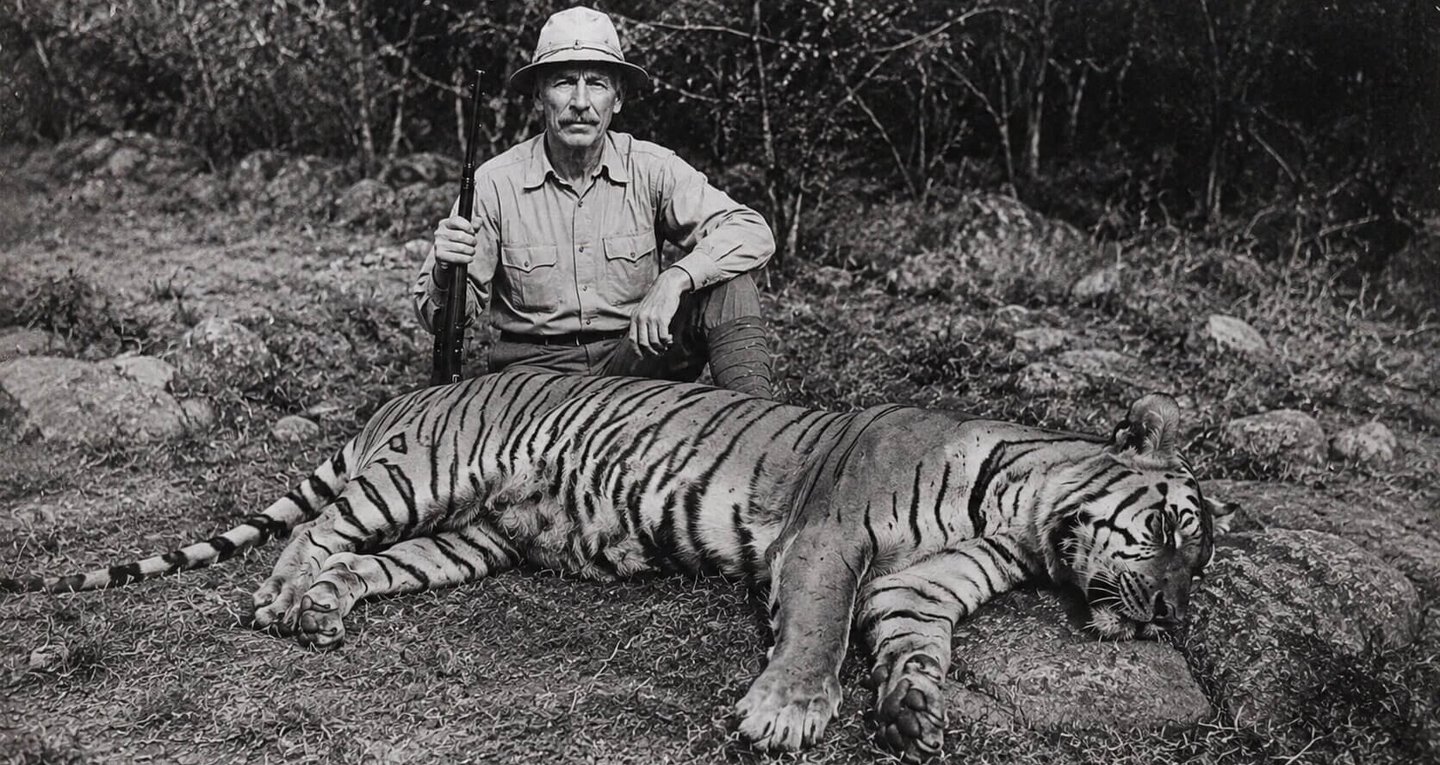
Jim Corbett: Hunter, Protector, Legend
The Man Who Loved the Jungle More Than Life Itself
The extraordinary journey of A British boy from Nainital who became India's greatest wildlife guardian
A Boy, a Jungle and No Father
He had no silver spoon. He had no grand estate. What Edward James Corbett had was a jungle outside his window, a mother who never gave up, and an instinct for the wild that no school on earth could teach.
July 25, 1875. Nainital, Kumaon. A town of lakes and mountains, of mist that rolls down from the Himalayas each morning and clings to the tea-coloured water of Naini Lake like a prayer. Into this world, into a family already crowded with children, Edward James Corbett arrived as the eighth of eventually thirteen, some accounts say sixteen siblings. His father, Christopher William Corbett, was the postmaster of Nainital. It was an honest job. A modest one. And it did not last long.
When Jim was barely four years old, his father died. Just like that, the Corbett household, already stretched thin across a widow's pension and the needs of a small army of children - had to find a new way to survive. Mary Jane Corbett, Jim's mother, was made of something extraordinary. She held the family together with a ferocity that would have impressed the tigers her son would one day hunt. But the money was always short, the winters always long, and the jungle always close.
That jungle would save Jim Corbett. Not from poverty exactly, but from something worse purposelessness. From the time he could walk without falling over, Jim was in the forests around Nainital and the family's winter cottage in Kaladhungi - a small village at the edge of the Terai, where the flat plains of India meet the ascending ridges of the Kumaon Hills. Here, he learned the names of birds by their calls before he knew the names of European capitals. He learned to read a tiger's pug mark before he could read a full newspaper.
His first teacher was not a schoolmaster. It was a village headman named Kunwar Singh, who taught the young Jim everything the forest had to say - how a deer's alarm call differs from its ordinary bark, how a sambar stamps before it flees, how the jungle falls silent when something large and dangerous is moving through it. These were not lessons from a textbook. These were lessons written in mud, in blood, in the sound of wind through bamboo at dawn.
Jim Corbett grew up between two worlds - the colonial English world of Nainital's hill station, and the deeply Indian world of Kaladhungi's forests and farming communities. He belonged, fully, to both. And that is what made him unlike anyone who came before or after.
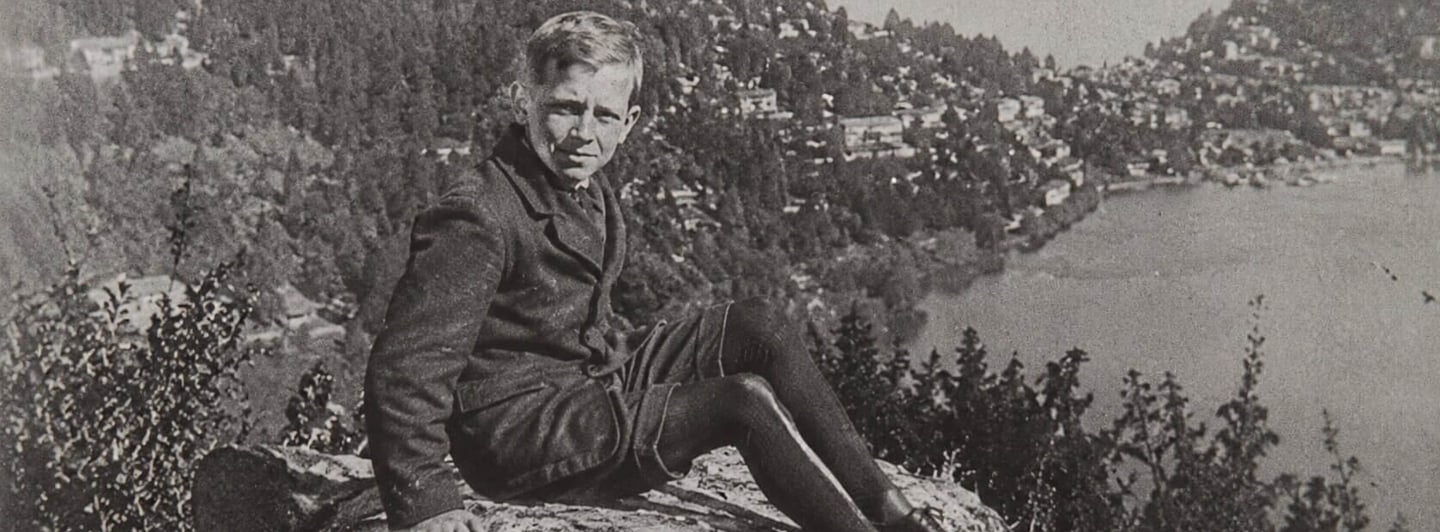
The Boy Who Shot His First Big Cat
At the age of eight, Jim was given his first gun, a muzzle-loading shotgun. By this point, he had already been hunting with catapults and pellet bows, picking off jungle fowl and small game with the focused patience of someone who understood that every missed shot was a wasted meal. Ammunition cost money the Corbetts did not have. So young Jim learned, from the very beginning, to shoot only when he was certain. He never wasted a bullet.
His early hunting was not sport. It was survival. The family needed protein. The jungle provided it, if you were skilled enough to ask. Jim became skilled enough very quickly. At the school he attended in Nainital, his marksmanship was so remarkable that the cadet company loaned him a military lever-action rifle, a weapon of far greater precision than anything the Corbett household could afford. It was with this rifle, around the age of ten, that Jim Corbett killed his first leopard in the forests near Kaladhungi.
There are different versions of this story, as there are different versions of all great origin stories. Some say he was eight. Some say ten. Corbett himself, in his writing, was characteristically modest about his early exploits. What is not in doubt is that a boy who had grown up listening to the jungle, who had learned its grammar and its silences, walked into the forest one day and came back having killed one of its most dangerous inhabitants. And he did it alone. That detail alone would define everything that came after.
Jim Corbett hunted alone his entire life. No army escort. No armed backup. Often, just his rifle, his faithful spaniel Robin, and the jungle speaking to him in a language he had spent a lifetime learning to understand.
The Railway Years and a Legend Waiting to Happen
In 1895, at the age of seventeen, Jim left school and took a position with the Bengal and North-Western Railway. He would work for the railway for many years, first as a fuel inspector, then supervising the movement of goods across the Ganges River at Mokameh Ghat. It was hard, physical, unglamorous work. But it gave him financial independence and, crucially, it gave him time. Time to return to the Kumaon forests. Time to hunt. Time to observe.
During these years, Jim Corbett was quietly becoming something remarkable. He was not just a hunter. He was a naturalist of the first order, a man who could sit in a tree for twelve hours without moving, watching, listening, learning. He bought land in the village of Chotti Haldwani, near Kaladhungi, and farmed it. He hired families of farmers from the village. He built a nine-kilometre stone wall around the village's boundary to protect livestock from leopards and tigers. He ran a small school for the children of railway workers. He learned the languages of the hill communities with the same devotion he had given to learning the calls of birds.
The people of Garhwal and Kumaon gave him a name: Carpet Sahib. Nobody is entirely sure where the name came from. Some say it was a corruption of Corbett. Others say it reflected his smooth, quiet, almost impossibly soft-footed way of moving through the forest, like a carpet laid over stone, making no sound. Whatever the origin, the name carried one meaning above all others: this was a man you could trust. In a region where colonial authority was often experienced as distant and indifferent, Carpet Sahib was different. He walked into your village. He sat with your farmers. He listened.
The people of Kumaon did not call Jim Corbett a hunter. They called him a sadhu - a holy man. Not because he was religious, but because he came when nobody else would, asked for nothing in return, and left the forest safer than he found it.
The Man-Eaters - 19 Tigers, 14 Leopards, Over 1200 Lives Saved
In 1907, a letter arrived. A telegram, actually. The Deputy Commissioner of Nainital, Charles Henry Berthoud, had been searching for someone with the skill, the nerve, and the local knowledge to do something no government soldier, no professional hunter, no bounty-chasing shikari had been able to do. He needed someone to kill the Champawat Tiger. The most dangerous animal in the history of India. Possibly in the history of the world.
Corbett said yes. He always said yes. Between 1907 and 1938, he would be called upon again and again to walk into a forest where a man-eating tiger or leopard had reduced entire communities to paralysis, where women would not walk to the river, where children were kept indoors, where men would not go to their fields at dawn. He would walk in, alone, with his rifle and his dog, and he would not come out until the man-eater was dead.
The official record, documented and verified, speaks for itself. Jim Corbett hunted and killed nineteen tigers and fourteen leopards, all confirmed man-eaters. Together, these thirty-three animals had been responsible for over 1,200 human deaths across the Kumaon and Garhwal regions of northern India. Each hunt was different. Each was dangerous. Several came within seconds of costing Corbett his life.
The Kills That Made History
• The Champawat Tigress (1907) - 436 documented kills across Nepal and India. The most lethal wild animal in recorded human history.
• The Panar Leopard (1910) - 400 documented kills. The deadliest leopard ever recorded.
• The Chowgarh Tigress (1930) - 64 kills across two districts, hunted over two separate expeditions.
• The Leopard of Rudraprayag (1926) - 125+ kills, terrorised pilgrims on the route to Kedarnath and Badrinath shrines for eight years.
• The Thak Man-Eater (1938) - Corbett's last man-eater hunt, a tigress that had killed five people in a small village.
• Bachelor of Powalgarh (1930) - Not a man-eater; a magnificent, record-sized tiger that Corbett shot on a sanctioned colonial hunt, a kill he later deeply regretted.
The Bachelor of Powalgarh deserves a moment of honest reflection. It was a huge, beautiful male tiger, never having harmed a human that Corbett killed during a colonial-era trophy hunt. It was not his finest hour, and he knew it. In his later writings, the Bachelor is conspicuously absent from the same moral confidence with which he describes the man-eater hunts. The regret was real. It was also, perhaps, the seed of everything that came after.
Jim Corbett never charged for his services. Not a rupee. Government officials offered him money. He declined. They offered medals, those he accepted, with characteristic grace. The reward money from communities and district governments he often redirected back to the villages that had suffered. He turned down the skins and trophies from man-eaters entirely. He did not see them as prizes. He saw them as tragedies, animals that had been broken by injury or circumstance and had turned to humans out of desperate necessity. He pitied them even as he hunted them.
'A man-eating tiger is not a criminal,' Corbett once wrote. 'It is an animal that, through no fault of its own, has been compelled by circumstances beyond its control to adopt a diet that is not natural to it.' He killed them because people were dying. He mourned them because they were magnificent.
The Turn - From Hunter to Guardian
Something shifted in Jim Corbett during the 1920s. It had been building for years, the quiet revolution of a man who had spent thirty years in the deepest forests of India and had watched them change. The tigers were fewer. The forests were shrinking. The colonial government's bounty programmes which at various points offered rewards for every tiger killed, had unleashed a slaughter. Hunters from across the empire came to India not to protect villages but to take trophies. Corbett watched this with growing dismay.
He put down his rifle. He picked up a camera. Photography became his new obsession, stalking tigers not to kill them but to capture them, spending just as many hours in the forest, exercising just as much patience, requiring just as much courage. His photographs were among the first ever taken of wild tigers in India. They appeared in his books. They were shown in lectures. They gave people who had never seen a jungle a reason to care about what was being lost inside one.
Together with his friend and fellow conservationist Frederick Champion, Corbett began campaigning for something that had never existed in India before: a national park. A place where the jungle would be protected by law. Where no hunter could come with a rifle and a permit and a taste for easy glory. In 1936, after years of lobbying, the Hailey National Park was established in the Kumaon Hills, the same hills where Jim Corbett had spent his childhood, learned to track, killed his first leopard, and grown into the man the tigers had made him.
Jim Corbett helped found India's first national park. In 1957, two years after his death, it was renamed Jim Corbett National Park - a tribute that he would have found both humbling and quietly fitting. The forest that raised him now carries his name forever.
He also founded and promoted the Association for the Preservation of Game in the United Provinces, spoke to school children about the importance of forests, and lectured widely on the catastrophic decline of India's wildlife. His books, particularly Man-Eaters of Kumaon, published in 1944, became international bestsellers. The proceeds from Man-Eaters of Kumaon, remarkably, were donated to a school for blind war veterans. He kept almost nothing for himself.
Maggie, Kenya and the Long Farewell
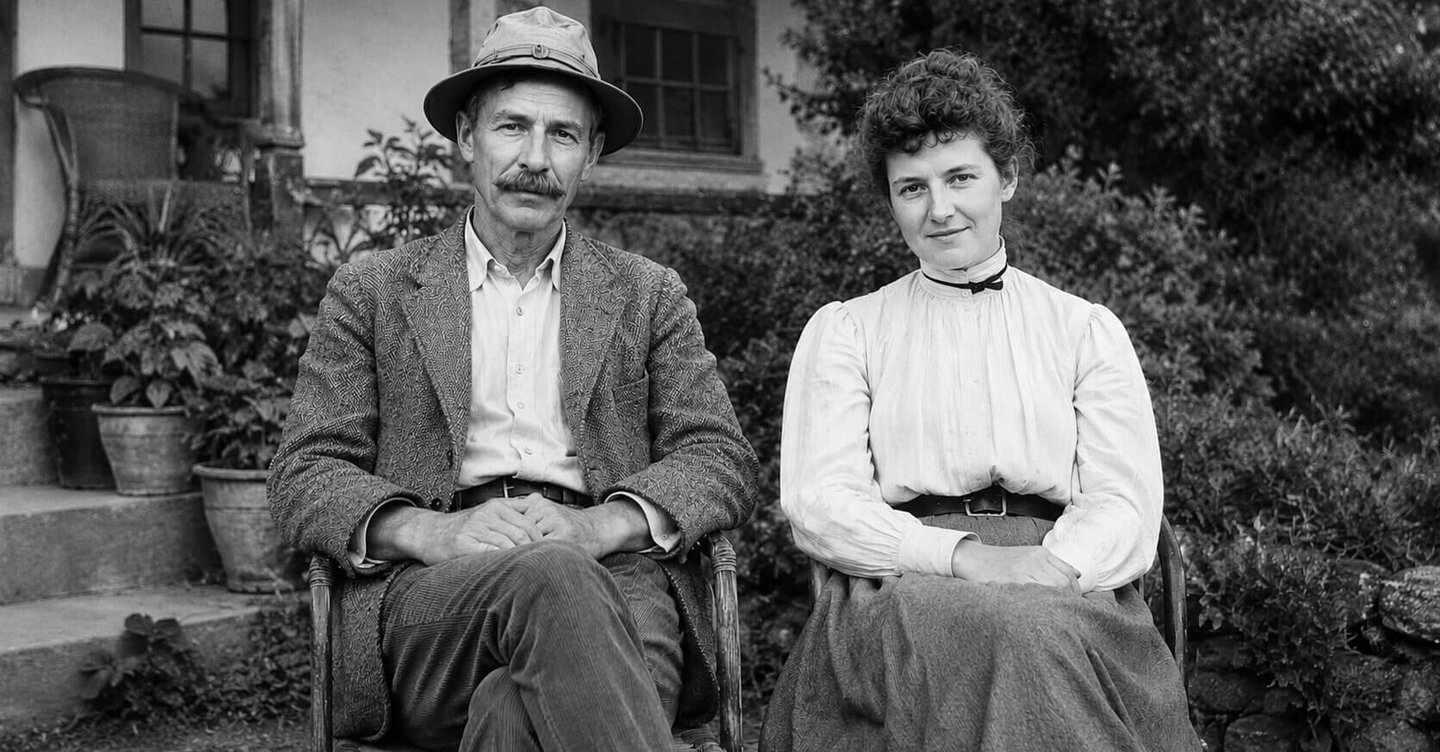
Jim Corbett never married. Those who knew him well spoke of a deep loneliness beneath the extraordinary competence, a man whose complete devotion to the jungle left little room for the ordinary rhythms of domestic life. His mother was the first love of his life. His sister Maggie — his half-sister, strictly speaking, and older than him was his constant companion and the person he lived with for most of his adult life at Gurney House in Nainital.
Maggie Corbett was formidable in her own right, independent, sharp, deeply woven into the social fabric of Nainital's hill-station community. Jim and Maggie were inseparable. They farmed together in Kaladhungi, spent summers in Nainital, and shared the quiet life of two people who had found in each other the company the rest of the world had not quite managed to provide. Jim remained unmarried. Maggie remained unmarried. They grew old together in the Gurney House, with the Naini Lake outside the window and the Himalayan forests calling from not far away.
Then came 1947. Independence. Partition. The seismic reshaping of India that Britain had shaped for two hundred years. For Jim and Maggie Corbett - Anglo-Indian, deeply English in name but profoundly Indian in soul, the new India felt uncertain. Many in their community felt that the land they had known as home was becoming a place where they no longer quite belonged. It was a heartbreak that Jim Corbett, characteristically, never fully articulated in words. But the decision it led to is a matter of historical record.
In November 1947, Jim and Maggie Corbett sold Gurney House and left India for Nyeri, Kenya. Jim was 72 years old. He had spent his entire life in the forests and hills of Kumaon. He left behind a park that bore his name, a landscape transformed by his advocacy, and a community of people in Garhwal and Kumaon who would remember Carpet Sahib for generations. He took with him his memories, his camera, his typewriter, and his sister.
'I have many regrets about leaving India,' Corbett wrote in Kenya. 'But I have no regrets about India herself. She gave me everything I ever loved.'
In Kenya, Jim Corbett wrote his final books, including Treetops, an account of the extraordinary night he spent as bodyguard to Princess Elizabeth at the famous treehouse hotel, the night her father King George VI died and she became Queen Elizabeth II. He wrote into the hotel's visitors' register what became one of the most quoted lines in the history of British royal transitions: 'For the first time in the history of the world, a young girl climbed into a tree one day a Princess, and after having what she described as her most thrilling experience, she climbed down from the tree the next day a Queen - God bless her.'
Jim Corbett died on April 19, 1955, at the age of 79, at his cottage 'Paxtu' in Nyeri of a heart attack, quietly, in the African morning. He is buried at Saint Peter's Anglican Church in Nyeri, Kenya. His grave is simple. His legacy is not.
What He Left Behind
The numbers are extraordinary. Nineteen tigers. Fourteen leopards. Over 1,200 human lives protected. India's first national park. Six books that have never gone out of print. A subspecies of tiger named after him - Panthera tigris corbetti, the Indochinese tiger. Four biographies. Three films. And a park in the Himalayan foothills of Uttarakhand where, if you are very quiet and very lucky, a Bengal tiger will cross the road in front of your safari jeep at sunrise, and for one brief, suspended moment, you will understand exactly why Jim Corbett spent his life loving the animal he was famous for hunting.
He was not a perfect man. He killed the Bachelor of Powalgarh, a non-man-eater, and the ghost of that kill followed him. He lived in an era of empire and carried its contradictions within him. But his love for the forests of India was absolute, and the actions that love produced, the park, the books, the photography, the advocacy, were real and lasting and extraordinary.
Today, 250 tigers roam the park that bears his name. They patrol the same Sal forests, drink from the same Ramganga river, raise their cubs in the same tall grass that Jim Corbett walked through alone, armed with three bullets and the jungle in his blood.
Jim Corbett National Park is not just a wildlife reserve. It is a monument to what one person, one determined, humble, extraordinary person, can do when they refuse to look away from something they love.
Experience India with those who know her soul •
UK India Tourism Company
UK: +44 7345 191205
India:+91 9958 480873
Email: sales@ukindiatourism.co.uk
UK: +44 7345191205
UK India Tourism© 2026, all rights reserved
India: +91 9958480873
⭐⭐⭐⭐⭐ 4.9/5 | 2,600+ Travelers | 18 Years | 98% Recommend