
Jim Corbett - Legendary Hunter Naturalist
Discover the remarkable life of Jim Corbett - hunter, naturalist, author, and conservationist who dedicated his life to India's jungles, wildlife, and people.
Adarsh Gupta
5/30/202612 min read
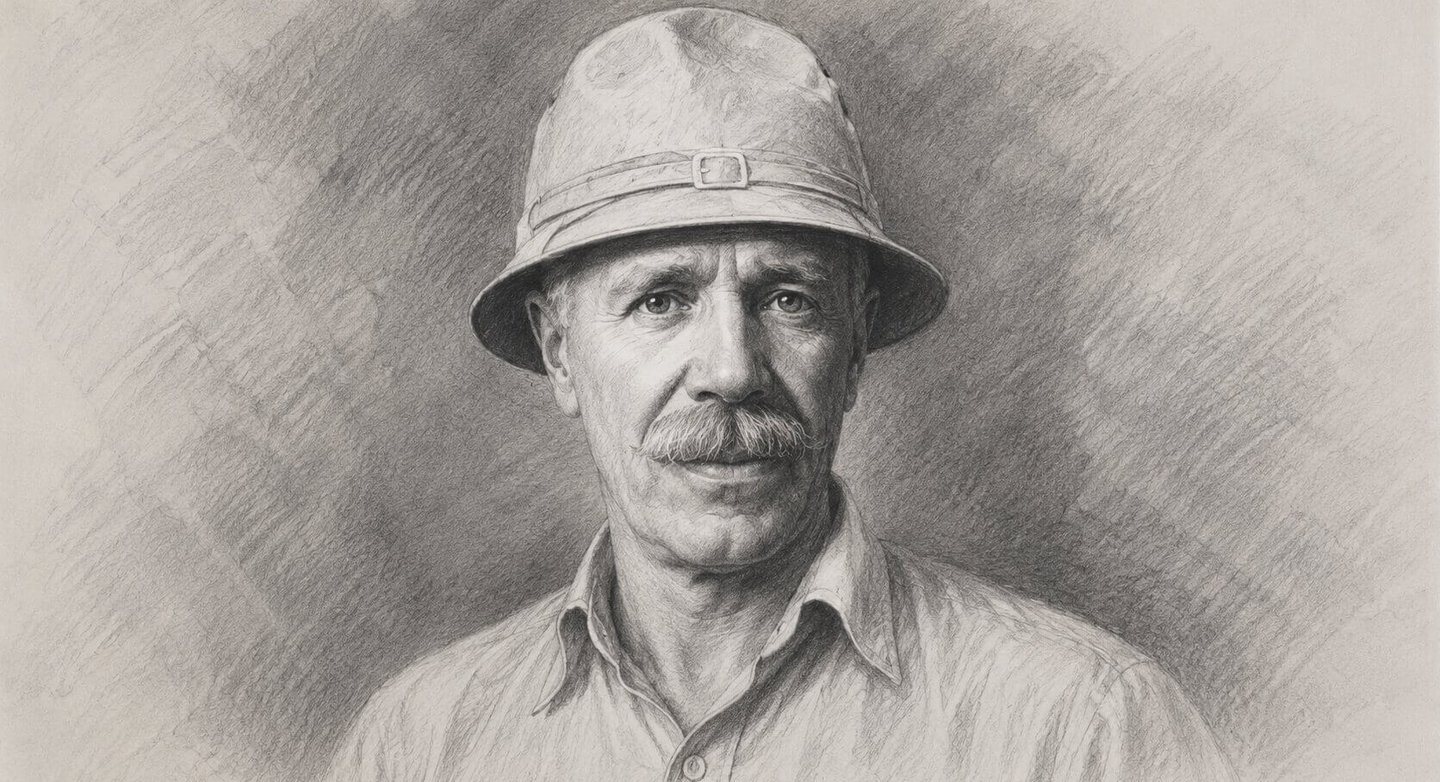
Jim Corbett: The Man who changed the world's perception of tigers forever.
There are figures in history who are defined by a single act, a single book, or a single moment of bravery. Jim Corbett is not one of them. Colonel Edward James Corbett, known to the world simply as Jim Corbett was a hunter, a naturalist, a writer, a filmmaker, a conservationist, a friend to the poor, and above all, a man of extraordinary tenderness and humanity. He was born in the Himalayan hills of northern India, he gave his whole life to its jungles and its people, and he died with India permanently etched upon his heart.
For international travellers visiting India today, Jim Corbett’s story is far more than history. It is an invitation to feel the deeper soul of this remarkable country — its wildness, its warmth, and its ancient, unbreakable relationship between humans and nature. At UK India Tourism, we believe that every great journey through India is enriched by the stories of the extraordinary people who shaped it. And very few people shaped India’s wild places, and the world’s understanding of them, as profoundly as Jim Corbett.
A Childhood Rooted in the Kumaon Hills
Edward James Corbett was born on 25 July 1875 in Nainital, a jewel of a hill station cradled in the Kumaon Hills of what is now the Indian state of Uttarakhand. He was the eighth of thirteen children born to Christopher William Corbett, the local postmaster, and his wife Mary Jane Doyle. The family was of Irish descent and lived modestly, rooted firmly in the rhythms of small-town life in the Indian hills.
When his father died in 1881 and young Jim was just six years old, the family gathered around Gurney House, their beloved home perched on the Ayarpatta hillside above Nainital Lake. This was no grand colonial mansion. It was a sturdy, warmly human home of thick stone walls, wooden-beamed ceilings, wrap-around verandahs, and deep-overhanging eaves designed to shed the monsoon rains. From its upper verandah, you could look out across the shimmer of Naini Lake framed by rhododendron forests. For Jim Corbett, this house was not merely where he lived. It was where he became himself.
While other children studied indoors, young Jim vanished into the forests. He learned to identify every bird by its call, to read animal tracks in soft mud, and to move through undergrowth with a silence that astonished adults twice his age. The hills around Nainital and the winter village of Kaladhungi, where the family retreated each cold season, were his real classroom. The jungle was his teacher, and he was the most devoted student it ever had.
Gurney House, Nainital: A Home Full of Love and Memory
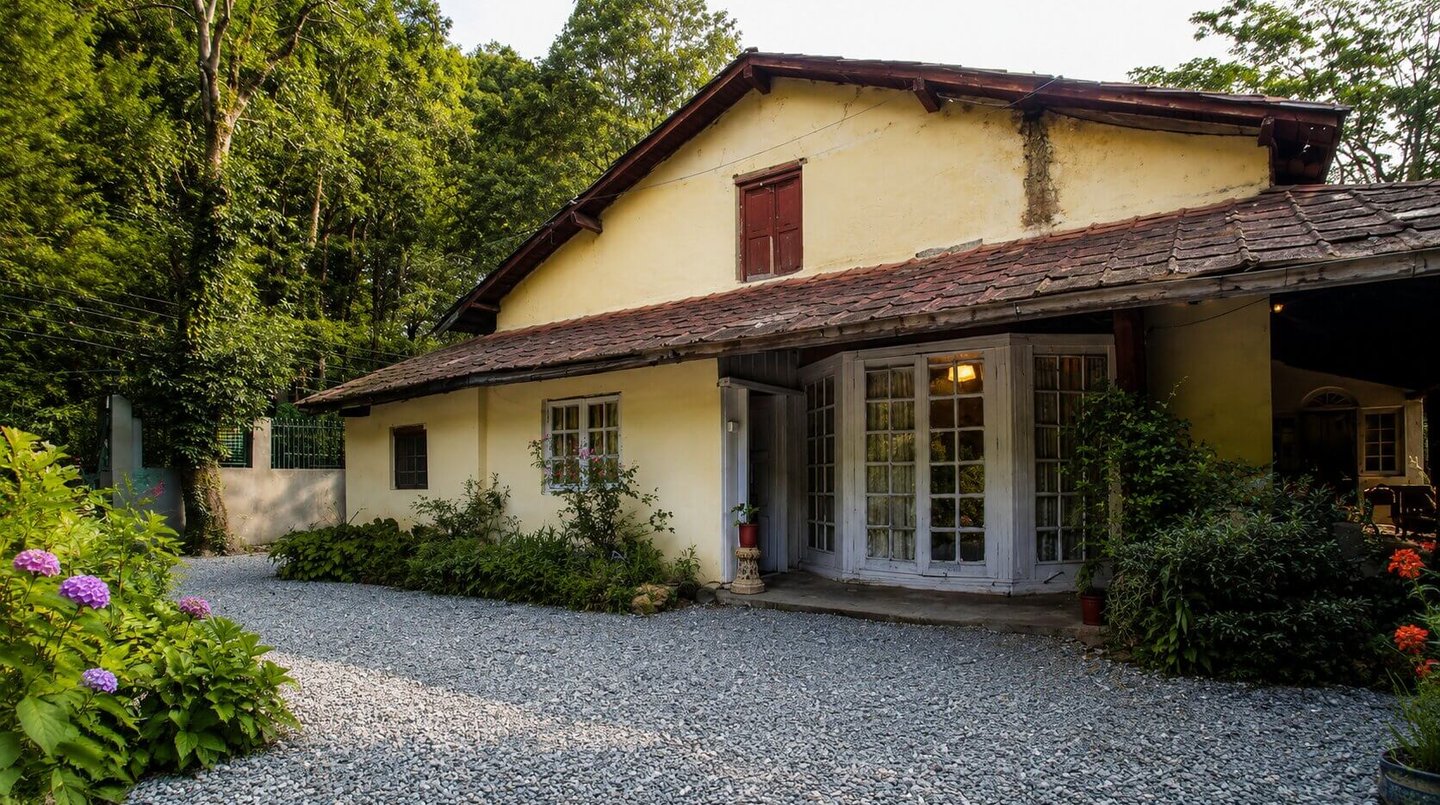
To understand Jim Corbett the man, you must understand Gurney House. Built around 1885 on the slopes of Ayarpatta Hill, just a ten-minute walk above the bustle of Nainital’s Mall Road, the house was the heartbeat of the Corbett family’s life for decades. With its colonial-style architecture, lush garden alive with the calls of Himalayan birds, and views that stretched across the lake to the pine-covered ridges beyond, Gurney House was a place of both beauty and belonging.
Jim Corbett lived here with his mother and, most significantly, with his beloved sister - Maggie Margaret Winifred Corbett who was his closest companion throughout almost his entire life. Jim Corbett never married. Those who knew him well understood that Maggie was the emotional anchor of his world. She managed Gurney House, supported his work, accompanied him on some of his early travels, and shared the quiet domestic life that sustained him through decades of dangerous jungle work. The bond between Jim and Maggie Corbett was one of the most touching aspects of his private life, a brother and sister who chose, quite simply, never to be far apart.
Today, Gurney House still stands on those same Ayarpatta slopes in Nainital, and it carries an atmosphere that visitors describe as almost otherworldly in its stillness. The house was sold when Corbett emigrated to Kenya in 1947, and it is now privately owned by the Dalmia family, who welcome Corbett admirers by prior appointment. A small private museum within the house preserves his furniture, personal artefacts, books, and photographs. Standing in those rooms, surrounded by his possessions, with the same Himalayan light filtering through the same windows he looked out of as a boy, is an experience that moves even the most casual visitor profoundly.
Kaladhungi: The Winter Cottage That Became a Museum
Every winter, as the cold descended on Nainital and the hill station quietened, Jim Corbett and his family would make the journey thirty-seven kilometres downhill to Kaladhungi, a small forest village at the edge of the terai, where the Himalayan foothills give way to the vast, flat sal forests of northern India. Here, the family maintained a winter cottage that sat in a landscape Jim Corbett loved with particular intensity. The forests around Kaladhungi were the training ground of his youth, where he first learned to track, to listen, and to understand the language of the wild.
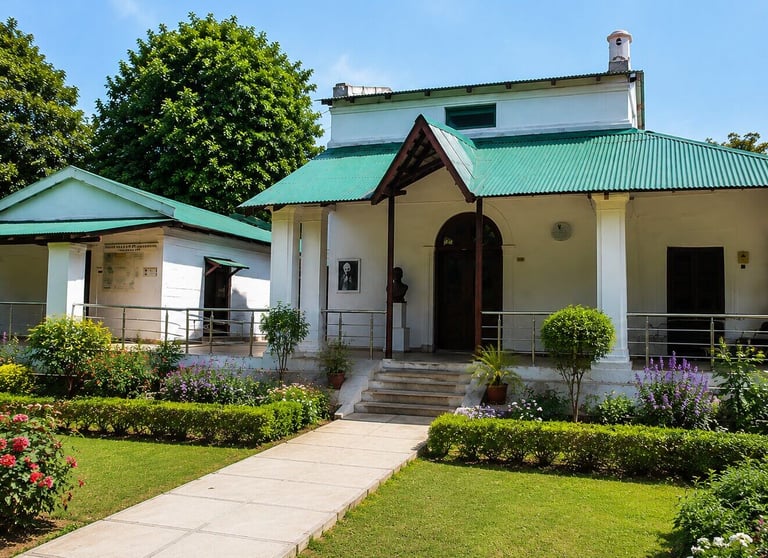
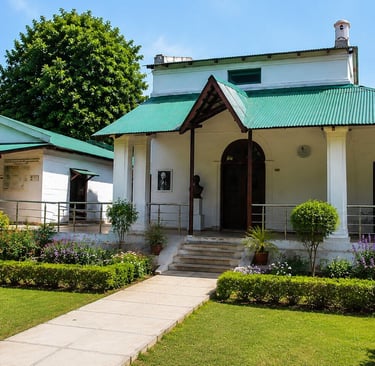
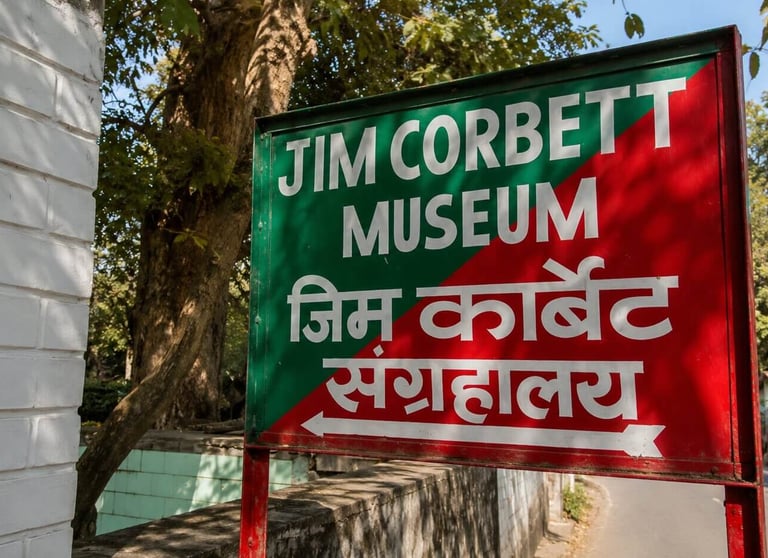
This winter home at Kaladhungi, a colonial-era bungalow built in 1888, is today managed by the Uttarakhand Forest Department and has been beautifully preserved as the Jim Corbett Museum. It is one of the most quietly moving heritage sites in all of India, and one that remains largely undiscovered by the mainstream tourist trail making it an especially rewarding experience for foreign visitors who seek the authentic and the unhurried.
Step through its doors and you step directly into Jim Corbett’s world. The museum houses his personal belongings exactly as he left them - his rifles, his fishing rods, his camera equipment from the years when he set down his gun and picked up a lens instead. There is an African drum he brought back from Kenya, his favourite books, handwritten correspondence, and original photographs of the maneaters he hunted. His boat sits in the compound. The walls of the main rooms are lined with the trophies and mementos of an extraordinary life. The garden is shaded by the same ancient trees that sheltered him on quiet afternoons between his jungle expeditions.
The museum is located just thirty kilometres from Ramnagar town and is an essential visit for anyone travelling to the Jim Corbett region. Foreign visitors who include Kaladhungi in their India itinerary inevitably describe it as one of the most emotionally resonant experiences of their entire journey. UK India Tourism includes Kaladhungi museum visits in our curated India heritage and wildlife tour packages for international travellers.
Robin: The Little Dog Who Walked Beside a Legend
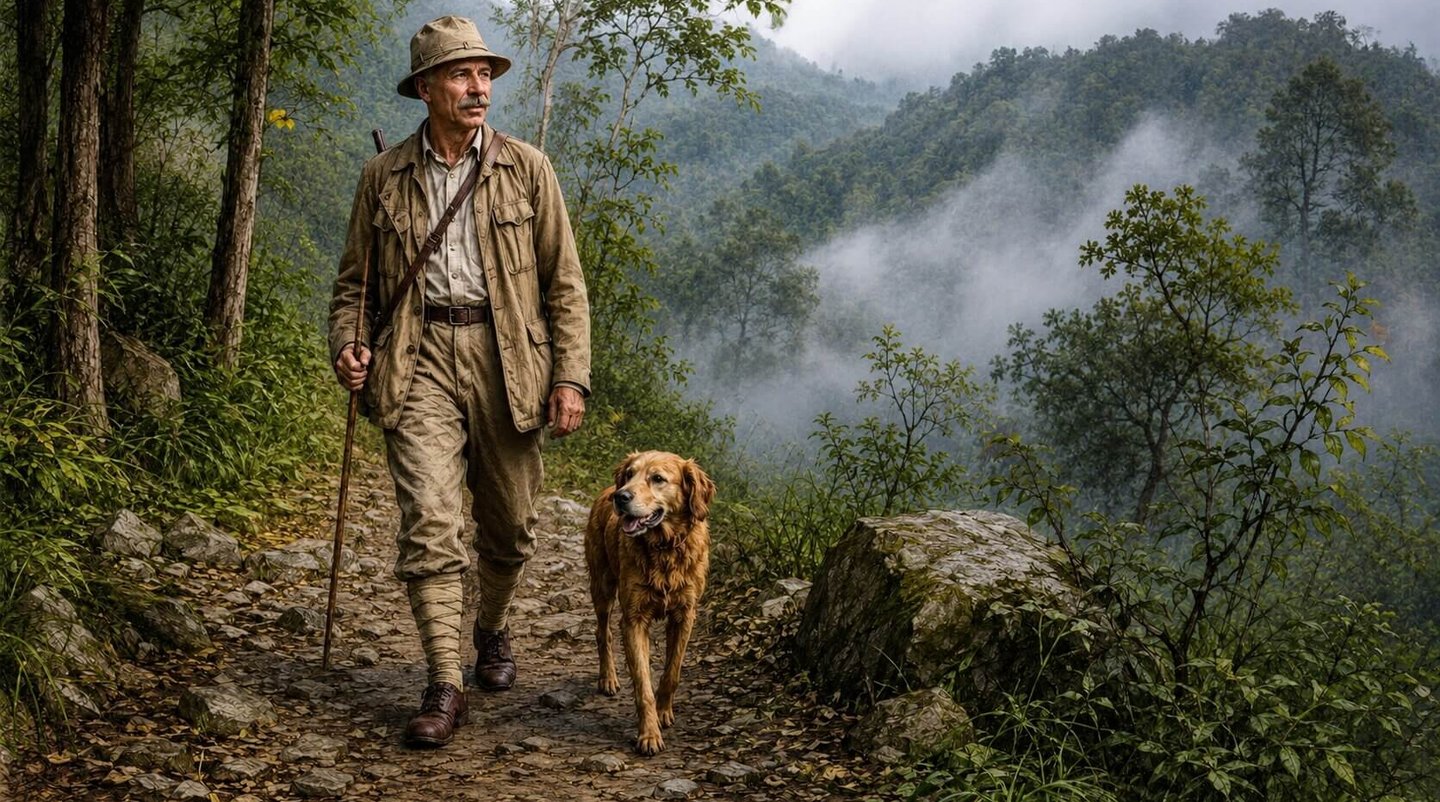
If Jim Corbett’s life had a single companion that embodied everything he valued - loyalty, courage, quiet devotion, and an instinct for the wild that went far beyond reason , it was Robin. And Robin was a dog.
Jim Corbett had not intended to choose Robin. Among a litter of puppies, Robin was the smallest and the weakest, the one least likely to survive, let alone thrive. But something in that small, struggling creature spoke to Corbett, who had always been drawn to the vulnerable and the overlooked, whether animal or human. He took Robin home, nursed him to health, and began the most remarkable friendship of his life.
Robin was a spaniel, and it soon became clear that despite a heart condition resulting from early malnutrition, he possessed a spirit utterly without fear. Jim Corbett trained him patiently, teaching him to track, to stay silent in the jungle, and to hold his nerve in the presence of danger. What followed was something extraordinary. Robin became Corbett’s constant companion on his most dangerous maneater hunts, padding silently through the Sal forests at dawn, nose to the ground, following the pugmarks of tigers that had killed hundreds of people.
Robin’s Gift: Reading the Jungle
The way Jim Corbett described their partnership in his writing reveals a depth of mutual understanding that went far beyond the relationship of man and working dog. When they were tracking on foot and the pugmarks disappeared into dense undergrowth, it was Robin who took over - moving ahead with uncanny accuracy, his body language telling Corbett everything about the direction the animal had taken, how recently it had passed, and whether it was alarmed or at ease. They communicated, Jim Corbett wrote, not in words but in something older and more reliable than words.
There were moments of terrifying danger. On one occasion, Robin faced a charging leopard at point-blank range and stood his ground without flinching, buying Corbett the seconds he needed to react. On another, Robin tracked a wounded tiger through darkness so absolute that Corbett could not see his hand in front of his face, trusting entirely in the small warm presence moving ahead of him. That trust was never misplaced.
A Love Story Written in the Jungle
Jim Corbett wrote about Robin with a tenderness that is quite unlike anything else in his books. In the chapter simply titled ‘Robin’ in Man-Eaters of Kumaon, he describes their years together with the careful, loving attention of a man commemorating something irreplaceable. He describes Robin’s habits, his personality, his particular way of sleeping with one paw across Corbett’s boot, his excitement when the rifle was taken down from the wall. He describes the grief of the times Robin was injured and the profound relief of his recovery.
For foreign readers encountering this chapter for the first time, it often comes as a surprise. Here is a man who faced the most dangerous animals on earth without apparent fear and who writes about his small dog with the unguarded emotion of someone describing their dearest friend. That contrast - iron courage and complete tenderness existing in the same person, is perhaps the truest portrait of Jim Corbett’s character that exists anywhere.
Robin lived to an old age, far beyond what his weak heart had promised as a puppy. He died in the hills he had roamed with Jim Corbett for thirteen years. Corbett mourned him deeply and privately, as he mourned all losses - quietly, without drama, but completely.
The Man Behind the Rifle: Courage, Humility, and Compassion
Jim Corbett hunted maneating tigers and leopards not for sport, not for fame, and not for money. He hunted them because ordinary people, farmers, women collecting firewood, pilgrims walking sacred mountain roads, were being killed in their own villages and no one in authority seemed to care. He answered their calls the way a neighbour answers a call for help: simply, without ceremony, and without expecting anything in return.
He spoke fluent Hindi and Kumaoni. He ate simple food, slept on rough beds in village huts, and sat with grieving families through the long nights after a loved one had been taken. He refused payment for his hunts. The villages of Kumaon and Garhwal did not merely respect Jim Corbett many regarded him as something close to a saint, a sadhu of the forest who moved between the human world and the wild world with equal ease and equal grace.
His most celebrated hunts - the Champawat Tigress with 436 kills to her name, the Rudraprayag Leopard who had terrorised pilgrims for a decade, the Panar Leopard responsible for over 400 deaths , were conducted on foot, alone, in terrain where one mistake was fatal. Yet Corbett was never reckless. He prepared meticulously, studied each animal’s behaviour with a scientist’s rigour, and always sought to understand what had driven an animal to man-eating before he pulled the trigger. Invariably, he found injury, a broken tooth, a festering wound from a poacher’s trap. His reaction was never contempt. It was always, quietly, sorrow.
The Books That Gave the World a New Way of Seeing Tigers
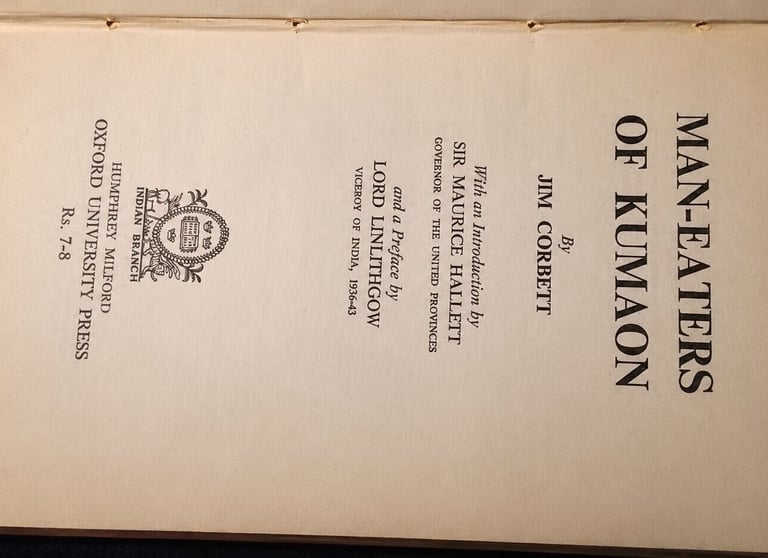
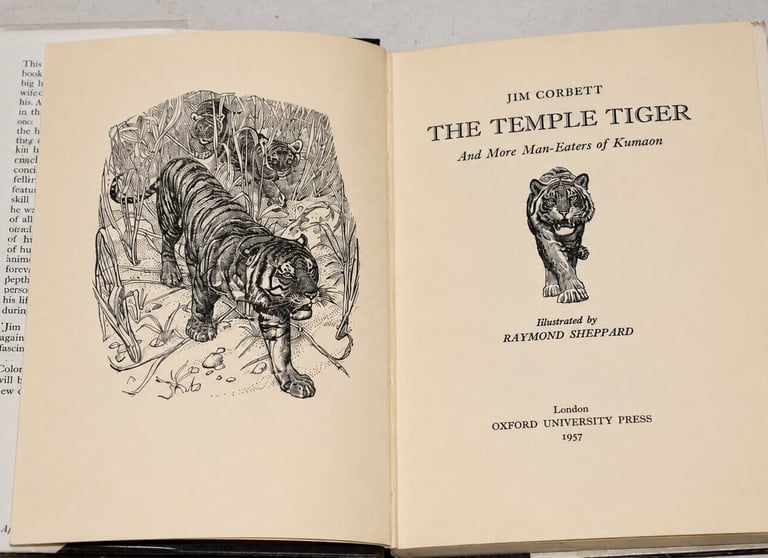
Jim Corbett was 69 years old when his first book, Man-Eaters of Kumaon, was published by Oxford University Press in 1944. It became an immediate international bestseller and has never gone out of print. Translated into more than 27 languages, it remains one of the most widely read books about the Indian jungle ever written.
His subsequent books - The Man-Eating Leopard of Rudra-prayag, My India, Jungle Lore, The Temple Tiger - built a body of work that permanently changed how educated global audiences understood the relationship between predators and people. He wrote not as a conqueror of the jungle but as one of its most attentive and respectful inhabitants. His prose is clear, precise, and alive with sensory detail. You can feel the chill of a Kumaon dawn, smell the sal forest after rain, hear the distant alarm call of a langur that means a tiger is approaching. Reading Corbett is one of the finest ways a foreign visitor can prepare themselves emotionally for a journey into the forests of northern India.
Walking in His Footsteps: Visiting Jim Corbett’s Homes Today
For international travellers with a love of history, wildlife, and the human stories behind iconic places, the opportunity to visit both Gurney House in Nainital and the Corbett Museum at Kaladhungi is one of the most rewarding experiences the Uttarakhand region offers.
Gurney House in Nainital sits on the same Ayarpatta hillside where Jim Corbett spent his summers for over seven decades. Though now a private home, visitors are welcomed by prior arrangement and the experience - walking through rooms that still hold his furniture, standing on the verandah from which he could see Naini Lake glittering below, wandering a garden planted in the same Himalayan wildness he loved, is one of those rare encounters with history that feels genuinely personal rather than performative.
The Jim Corbett Museum at Kaladhungi, managed by the Uttarakhand Forest Department, is the more formal of the two experiences but no less moving. Open daily from 9am to 6pm with a modest entry fee, the museum preserves his winter bungalow, personal belongings, rifles, cameras, fishing equipment, correspondence, and photographs in an atmosphere of quiet reverence. The village of Kaladhungi itself - surrounded by the same forest edges where the young Jim Corbett first learned to track, adds a landscape layer to the visit that no amount of reading can replicate.
UK India Tourism includes visits to both Gurney House and the Kaladhungi Museum within our privately guided Uttarakhand heritage and wildlife itineraries. For foreign visitors who wish to go beyond the surface of a destination and truly connect with its stories, these are unmissable.
Jim Corbett’s Enduring Legacy: Why the World Still Owes Him a Debt
Jim Corbett left India in 1947, as India gained Independence, emigrating to Nyeri, Kenya with his sister Maggie at the age of 72, a decision that cost him enormously in private grief, even as he understood its practical necessity. He continued writing in Kenya, completing his last books with India always in his heart. He died on 19 April 1955. He was 79 years old.
India did not forget him. In 1957, Hailey National Park, the protected forest he had fought so hard to create was renamed Jim Corbett National Park in his honour. In 1968, a subspecies of tiger was named Panthera Tigris Corbetti in his memory. Project Tiger, launched in 1973, was built on the foundations he had laid. Today, India’s wild tiger population numbers over 3,000 animals, a conservation miracle in which the spirit of Jim Corbett played an irreplaceable part.
But perhaps his most enduring legacy is simpler than any of these formal honours. It is the fact that people all over the world - in Britain, in America, in Japan and Germany and Australia and India, still read his books and are moved by them. They are moved not just by the adventure, but by the man they meet on every page: patient, honest, fearless, tender, and completely, unreservedly in love with the wild world and the human beings who share it.
Discover Jim Corbett’s India with UK India Tourism
At UK India Tourism, we design private, bespoke India tour packages for international visitors who want more than a holiday - they want an experience that stays with them for the rest of their lives. A journey through the landscapes Jim Corbett loved, the cedar and rhododendron forests above Nainital, the misty Ayarpatta hillside where Gurney House still stands, the forest village of Kaladhungi where his winter bungalow now opens its doors as a museum, and the vast sal forests where he walked with Robin at his side, is a journey into the living heart of northern India.
Whether you combine it with the Golden Triangle of Delhi, Agra, and Jaipur, or weave it into a wider Uttarakhand journey through Rishikesh, Haridwar, and the Himalayan foothills, we will craft every detail around you. Every tour we arrange is fully private, fully supported, and guided by people who know and love this region as Jim Corbett knew and loved it deeply, personally, and with genuine reverence.
Visit ukindiatourism.co.uk to begin planning your journey into the India that Jim Corbett spent his whole life celebrating. The forests are still there. The stories are still alive. And somewhere in the early morning light of a Kumaon hillside, if you are very quiet and very patient, India will offer you exactly the kind of moment that Jim Corbett spent his entire life trying to share with the world.
UK India Tourism — Private & Bespoke India Tour Packages | ukindiatourism.co.uk
READY WHEN YOU ARE
UK: +44 7345 191205
India: +91 9958 480873
Email: sales@ukindiatourism.co.uk
UK India Tourism
Travel Specialists for UK, USA, Canada, Australia, France, Poland, Singapore, Japan & Beyond
UK: +44 7345191205
UK India Tourism© 2026, all rights reserved
India: +91 9958480873
⭐⭐⭐⭐⭐ 4.9/5 | 2,600+ Travelers | 18 Years | 98% Recommend