
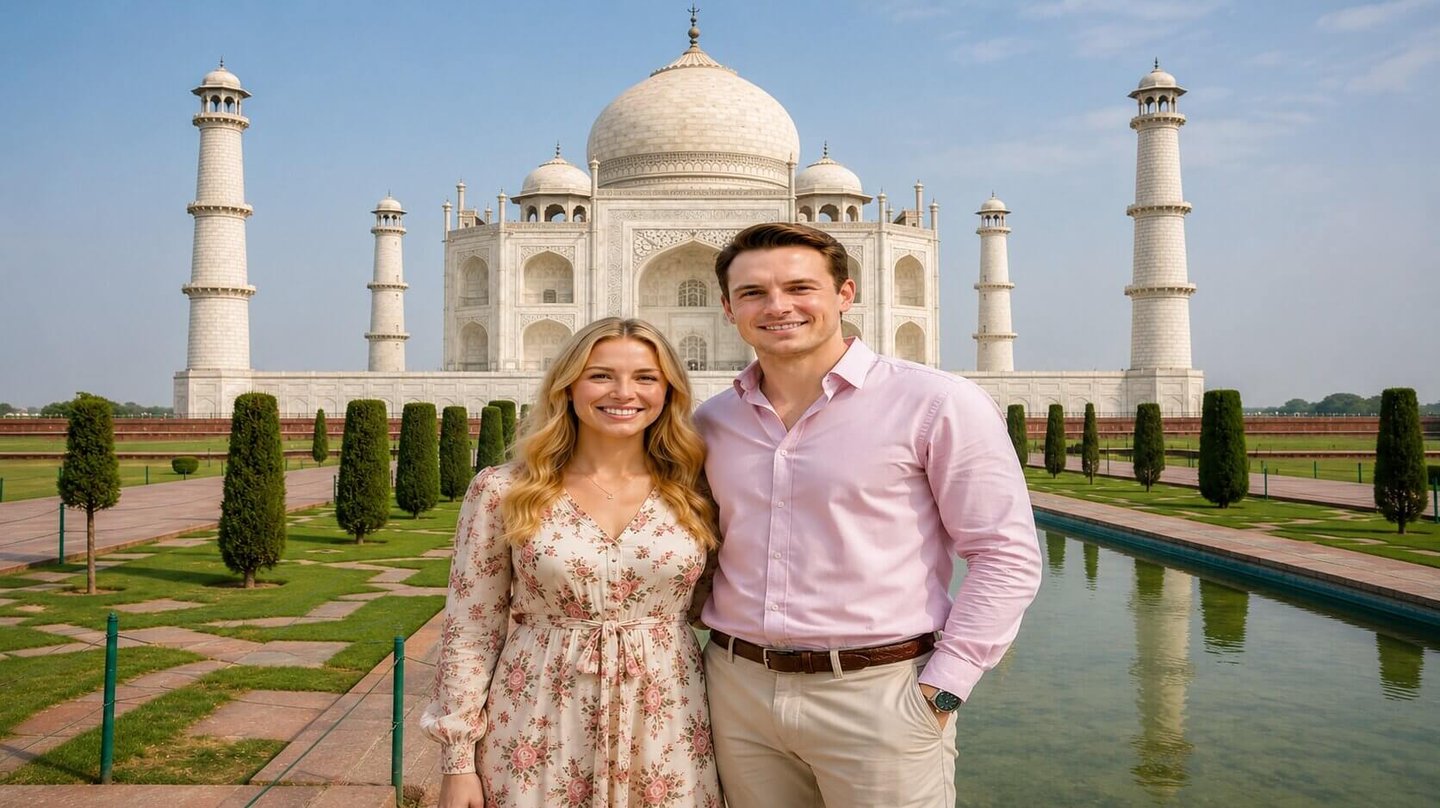
Taj Mahal India Tours from Canada
Canada's love of experiential travel finds its fullest expression in India. UK India Tourism designs luxury Taj Mahal India tour packages from Canada that go far beyond the iconic mausoleum, weaving together heritage, culture, wildlife, and the warmth of authentic Indian hospitality into journeys of lasting significance.
India's Greatest Wonder, Designed for Canadian Travellers
Canada is consistently ranked among India's top five international source markets, accounting for nearly five percent of all foreign tourist arrivals, a number that reflects both the size and diversity of Canada's India-connected community and the deep curiosity that Canadians of all backgrounds bring to travel in the Subcontinent. For Canadians of South Asian heritage, a visit to the Taj Mahal carries a dimension of personal and ancestral connection that adds a profound layer of meaning to the experience. For Canadians discovering India for the first time, the Taj Mahal serves as the most spectacular possible introduction to a country of bewildering richness and beauty.
UK India Tourism designs private, bespoke Taj Mahal India tour packages from Canada that are built entirely around your vision of this extraordinary country. Whether you are travelling as a couple, a family, a group of friends, or a solo explorer, every itinerary is private, personalised, and supported by the UK India Tourism team from first consultation to safe return home.
The Taj Mahal: A Love Story in White Marble
The Taj Mahal is, at its heart, the most extravagant love letter in human history. When Mumtaz Mahal, the third and most beloved wife of the Mughal Emperor Shah Jahan died in 1631 during the birth of their fourteenth child, the grief-stricken Emperor vowed to build her a tomb of such magnificence that the world would never forget her name. Over the next twenty-two years, more than twenty thousand artisans, calligraphers, stonecutters, inlay craftsmen, and labourers from India, Persia, Central Asia, and the Ottoman Empire worked under the supervision of chief architect Ustad Ahmad Lahori to produce a complex that cost an estimated thirty-two million rupees, a figure that in modern terms represents hundreds of millions of dollars.
The result is a mausoleum of extraordinary perfection. White Makrana marble quarried in Rajasthan forms the central dome and four secondary domed kiosks, their surfaces inlaid with semi-precious stones, lapis lazuli, carnelian, jasper, jade, and turquoise in intricate geometric and floral patterns of the pietra dura tradition. The calligraphy panels framing the great arched niches of the mausoleum were designed by Amanat Khan Shirazi, the chief calligrapher, who signed his work, an almost unprecedented act of personal attribution in Mughal art. The Taj Mahal complex as a whole mausoleum, gateway, mosque, guest house, and gardens was designated a UNESCO World Heritage Site in 1983, described as the jewel of Islamic art in India and one of the universally admired masterpieces of the world's heritage.
For Canadian travellers arriving from Toronto, Vancouver, Calgary, Edmonton, or Montreal, the journey to the Taj Mahal is long but the encounter is genuinely transformative. No account, no photograph, and no prior preparation fully captures the reality of standing before the mausoleum in the clear light of a North Indian morning. It is the kind of experience that changes how you understand the capacity of human beings for both love and achievement.
Flights from Canada to the Taj Mahal
Canadian travellers heading to the Taj Mahal will fly into Indira Gandhi International Airport in New Delhi, the natural gateway for the Agra and Golden Triangle circuit. Direct Air Canada services from Toronto and Vancouver to Delhi operate with competitive journey times, and a range of one-stop options via London Heathrow, Dubai, Doha, Abu Dhabi, Frankfurt, and Amsterdam provide frequent connections for travellers across Canada. From Vancouver, the Pacific routing via Singapore or Tokyo is an attractive alternative that can be incorporated into a broader Asia itinerary.
From Delhi airport, the journey to Agra is made either by the Gatimaan Express train in eighty minutes or by private air-conditioned vehicle in three to three and a half hours along the Yamuna Expressway. We tailor the transport option to your itinerary. Many Canadian clients prefer the train for the outward leg as a vivid introduction to Indian rail travel, and return to Delhi by private vehicle, which allows stops en route at archaeological sites or local villages according to interest.
The Taj Mahal at Sunrise and Sunset
The timing of your Taj Mahal visit is one of the most important decisions in planning your India tour package from Canada, and UK India Tourism's itinerary design always prioritises the sunrise visit as the primary experience. The complex opens one hour before sunrise, typically between 5:30 and 6:30 AM depending on the season and the experience of the monument in the first hour of the day, before the main crowds arrive, is qualitatively different from any other time. The marble in the predawn light has a luminous, almost spectral quality, and as the sun rises the surface shifts through a remarkable palette of colours - silver, blush pink, pale gold, and finally the brilliant, almost aggressive white of full morning.
Our skip-the-line priority access ensures that Canadian guests pass through the Taj Mahal ticketing and security procedures without extended queuing, and your private guide is positioned at the key vantage points, the central pool axis, the elevated mausoleum platform, the subsidiary gardens to ensure the finest photography opportunities. After the mausoleum tour, we recommend the short drive to Mehtab Bagh on the opposite bank of the Yamuna River, where the entire complex is visible in a single panoramic view and the morning light falls across the marble with particular beauty. This is where the most celebrated Taj Mahal photography takes place, and it is a location that many visitors miss entirely.
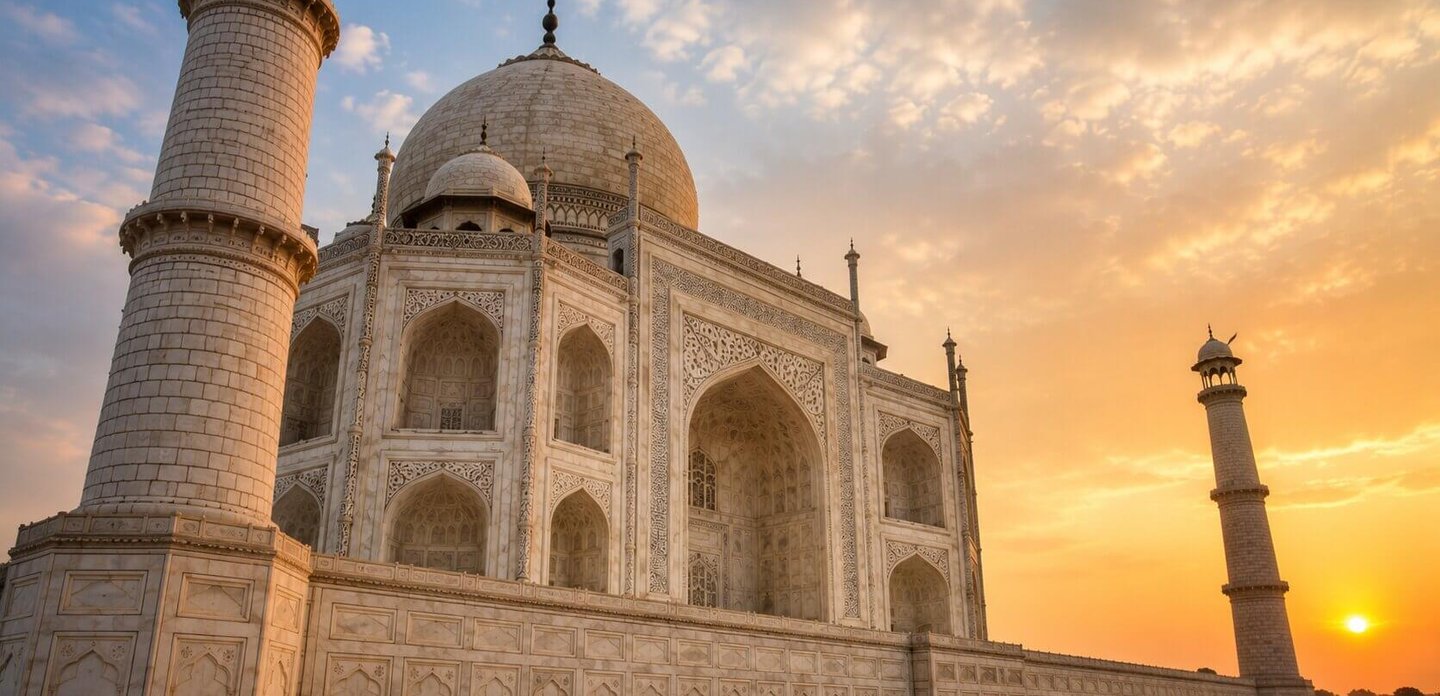
For Canadian clients spending two nights in Agra which we strongly recommend for the fullest experience, we arrange both the sunrise visit and a late-afternoon sunset visit on the same day, or on consecutive days. The Taj Mahal at sunset is warmer, more golden, and in some respects more intimate than at sunrise, with the day's visitors beginning to thin and the long horizontal light of the late afternoon bringing the inlay work on the marble facade into particularly sharp relief. The full moon viewing of the Taj Mahal, available on the night of the full moon and the two evenings before and after, excluding the month of Ramadan provides a third, almost surreal experience that very few international visitors ever encounter.
Golden Triangle India Tour Packages from Canada
The Golden Triangle - Delhi, Agra, and Jaipur, is the most celebrated and most satisfying touring circuit in India, and it forms the natural framework for most Taj Mahal tour packages from Canada. In five to eight days, the Golden Triangle delivers the full arc of North India's Mughal and Rajput heritage, connecting three cities that between them contain some of the finest architectural monuments in the world.
New Delhi: Layers of Empire
Canada to India flights arrive at Indira Gandhi International Airport in New Delhi, and UK India Tourism's representative will be at the arrivals hall to welcome you and arrange your private transfer to your hotel. Delhi is a city of extraordinary historical depth, it has served as the capital of multiple empires over more than a millennium, and its landscape reflects those successive layers with remarkable clarity. The Mughal quarter of Old Delhi - Shahjahanabad, built by Shah Jahan in the 1640s, clusters around the great Red Fort and Jama Masjid, the largest mosque in India. A cycle-rickshaw journey through the narrow lanes of Chandni Chowk, the ancient Mughal bazaar, delivers an immediately vivid immersion in the sights, sounds, and aromas of an Indian market that has operated continuously for nearly four hundred years.
In New Delhi proper, the Raj-era capital planned by Edwin Lutyens and Herbert Baker and inaugurated in 1931, the broad tree-lined boulevards, the grand sandstone buildings of Parliament and the Presidential Palace, and the triumphal axis of Rajpath and India Gate provide a very different architectural experience. South Delhi's heritage circuit, the Qutab Minar complex with its twelfth-century iron pillar and the earliest mosques of the Delhi Sultanate, the serene Humayun's Tomb with its Mughal char bagh gardens, and the Lodi Garden with its fifteenth-century tombs in public parkland, completes a picture of Delhi that encompasses more than seven centuries of urban history in a single day's touring.
Agra: The Taj Mahal and Its World
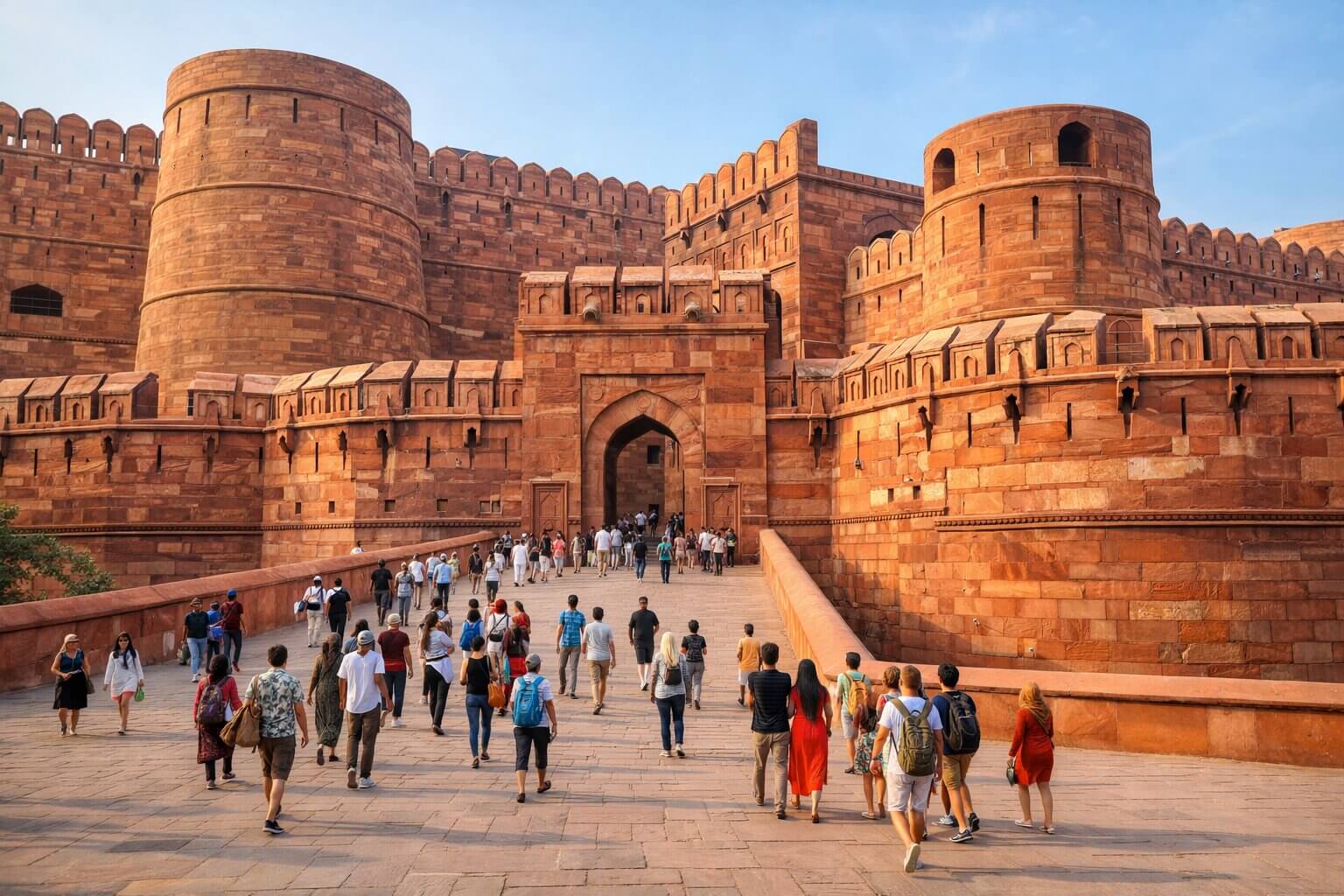
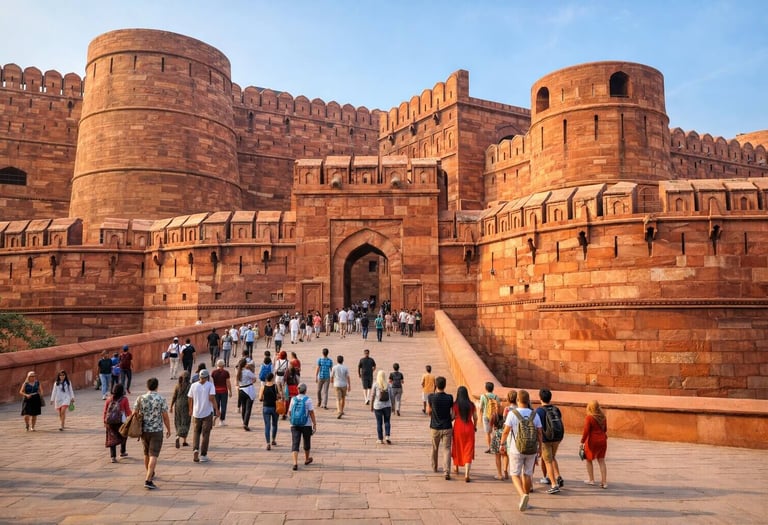
The Taj Mahal occupies the heart of Agra's heritage circuit but it is far from the city's only treasure. Agra Fort, the great Mughal citadel begun by Emperor Akbar in 1565 and expanded by his successors Jahangir and Shah Jahan, is a UNESCO World Heritage Site that rivals the Taj Mahal in architectural ambition if not in emotional impact. Its successive courtyards contain the Diwan-i-Am (Hall of Public Audience), the Diwan-i-Khas (Hall of Private Audience), the exquisite marble Khas Mahal, and the Musamman Burj, the octagonal tower from which Shah Jahan, in his final years of imprisonment, could see the distant white dome of his wife's tomb across the river. The story of Shah Jahan's captivity by his son Aurangzeb, told in the context of this view, is one of the most moving narratives in Indian history.
The Itimad-ud-Daulah, built by the Empress Nur Jahan for her father between 1622 and 1628, is a mausoleum of extraordinary intimacy and decorative refinement that prefigures the Taj Mahal in its use of white marble and pietra dura inlay. Smaller in scale and far less visited than its famous neighbour, the Baby Taj rewards careful examination of its geometrically precise inlay panels, patterns of wine vessels, cypress trees, vases, and flowers in malachite, jasper, onyx, and mother-of-pearl. Fatehpur Sikri, the ghost Mughal capital built by Emperor Akbar forty kilometres from Agra and abandoned within twenty years of its completion, is one of the most haunting sites in India, a complete Mughal city, preserved in red sandstone, that was once home to the greatest empire on earth.
Jaipur: Royal Rajputana
The road from Agra to Jaipur through the Rajasthani countryside marks a visible transition from the Mughal world of red sandstone and white marble to the Rajput world of honey-coloured stone, vibrant textiles, and camel caravans. Jaipur's old walled city, planned by Maharaja Jai Singh II in 1727 according to the ancient Vastushastra principles of town design, is a grid of broad avenues lined with arcaded shops and punctuated by grand civic buildings, all painted in the terracotta-pink that gives the city its popular name. The Amber Fort on its hillside above Maota Lake is Jaipur's crown jewel, a vast complex of Rajput palace architecture that draws on both indigenous and Mughal influences to produce a building of great spatial complexity and visual richness. A guided tour of Amber Fort typically takes two to three hours and covers the Ganesh Pol gateway, the Diwan-i-Khas, the Sheesh Mahal (Hall of Mirrors), and the pleasure garden of Aram Bagh.
The City Palace at the centre of Jaipur's walled city, still partially occupied by the descendants of the royal family, houses the Maharaja Sawai Man Singh II Museum, one of India's finest collections of Mughal and Rajput textiles, weapons, and manuscripts. The Hawa Mahal, the five-storey screened facade of nine hundred and fifty-three latticed windows, is Jaipur's most iconic silhouette. The Jantar Mantar, built by Maharaja Jai Singh II between 1727 and 1734, is a UNESCO-listed observatory containing nineteen giant geometric instruments that continue to predict celestial events with impressive accuracy. For Canadian visitors interested in craft and shopping, Jaipur is India's finest destination for gemstone jewellery, block-print textiles, hand-knotted carpets, blue pottery, and miniature paintings.
Extending Your Canada Tour Package: Rajasthan and Beyond
Many Canadian clients choose to extend their Taj Mahal India tour package with a deeper exploration of Rajasthan's extraordinary desert landscape. From Jaipur the classic Rajasthan circuit moves through Pushkar (the sacred lake town and camel fair capital, set in a natural bowl of the Aravalli hills), Jodhpur (the Blue City whose houses are painted in shades of cobalt and indigo, dominated by the fortress of Mehrangarh rising sheer from a rocky outcrop above the city), Udaipur (the Lake City of floating palaces, romantic rooftop restaurants, and the finest traditional textiles in Rajasthan), and finally Jaisalmer (the desert fortress city whose golden sandstone walls rise from the dunes of the Thar in the western extremity of Rajasthan).
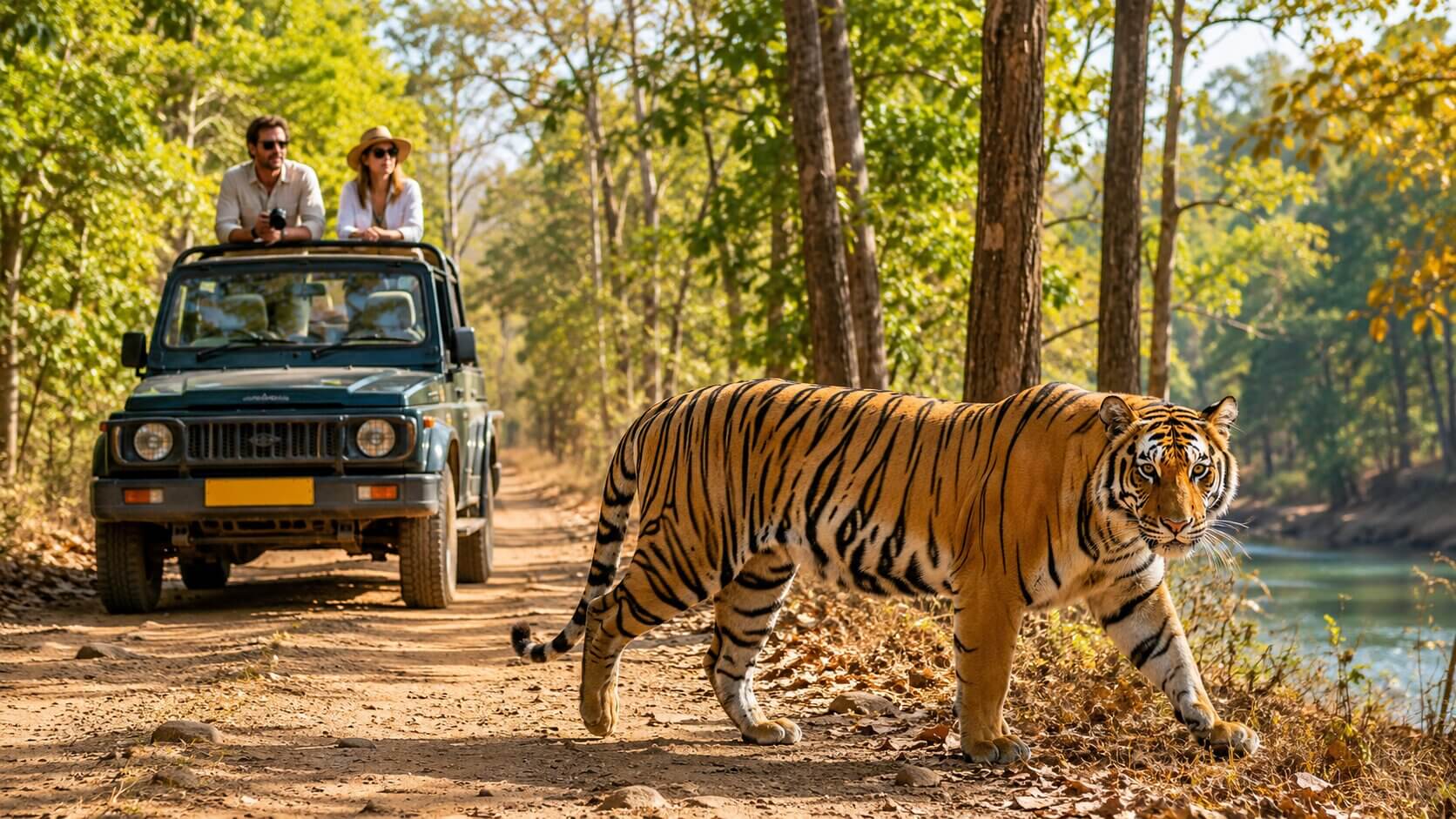
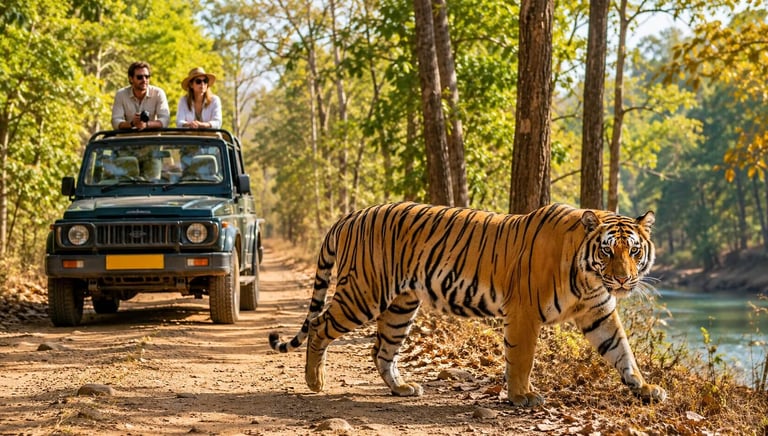
For Canadian clients with wildlife interests, the Bengal tiger reserves of Ranthambore National Park, located midway between Agra and Jaipur, provide one of the most accessible and rewarding wildlife experiences in Asia. Ranthambore's tigers have been habituated to safari vehicles for decades and are seen with impressive frequency on both morning and afternoon game drives. We combine Ranthambore with the Taj Mahal and Golden Triangle for clients who want a tour package that balances heritage and natural history in equal measure.
Sample Taj Mahal Tour Packages from Canada
Golden Triangle Classic — 8 Nights / 9 Days
• Day 1: Arrive New Delhi — private transfer, five-star hotel, welcome dinner
• Day 2: Old Delhi — Red Fort, Jama Masjid, Chandni Chowk, Raj Ghat
• Day 3: New Delhi — Humayun's Tomb, Qutab Minar, India Gate, Lodi Garden
• Day 4: Delhi to Agra (Gatimaan Express) — Agra Fort, Baby Taj, Mehtab Bagh sunset
• Day 5: Taj Mahal sunrise — full complex tour, Fatehpur Sikri afternoon
• Day 6: Agra to Jaipur — Abhaneri Chand Baori stepwell en route
• Day 7: Jaipur — Amber Fort, City Palace, Hawa Mahal, Jantar Mantar
• Day 8: Jaipur — Nahargarh Fort, local craft workshops, textile market
• Day 9: Jaipur airport — onward to Canada
Taj Mahal with Rajasthan and Tigers — 13 Nights / 14 Days
• Days 1–6: As above (Delhi + Agra + Jaipur foundation)
• Day 7: Jaipur to Ranthambore National Park — evening jeep safari
• Day 8: Morning tiger safari, afternoon drive to Pushkar
• Day 9: Pushkar — Brahma Temple, lake ghats, camel market
• Day 10: Pushkar to Jodhpur — Mehrangarh Fort, Blue City walk
• Day 11: Jodhpur to Udaipur — Kumbhalgarh Fort en route
• Day 12: Udaipur — City Palace, Lake Pichola, Bagore Ki Haveli
• Day 13: Udaipur — Sajjangarh Monsoon Palace, local craft market
• Day 14: Udaipur airport — depart for Canada
Indian e-Visa for Canadian Passport Holders
Canadian passport holders qualify for the Indian e-Tourist Visa, which is applied for online without any requirement to post a passport or attend a consulate appointment. The e-Visa is typically issued for sixty days from the date of first arrival in India and permits tourism, heritage sightseeing, short-duration yoga programmes, and other recreational visits. Applications require a valid Canadian passport with at least six months of remaining validity, a recent passport photograph, and payment of the visa fee — the whole process typically takes between forty-eight and seventy-two hours for approval. UK India Tourism provides step-by-step e-Visa guidance as part of every booking and recommends applying at least two to three weeks before your departure date.
Best Season to Visit the Taj Mahal from Canada
The ideal season for Canadian travellers visiting the Taj Mahal is October through March, when northern India is at its most comfortable and beautiful. November through February offers the clearest skies and the best light for photography, with daytime temperatures in the mid-twenties Celsius that make extended sightseeing a pleasure. The Christmas and New Year period is the most popular window for Canadian families and is the time of highest hotel demand across the Golden Triangle, early booking is essential, and we recommend enquiring six to nine months in advance for December and January travel.
The Canadian school holiday windows in March and July also generate significant demand. March travel coincides with Holi, the Festival of Colours, which falls in late February or early March and transforms Rajasthan into an explosion of powdered dye, music, and communal celebration. Witnessing Holi in Jaipur or Pushkar while on a Taj Mahal tour package from Canada is an experience that sits permanently in the memory. July travel falls in India's monsoon season, which brings lush greenery, dramatic skies, and significantly reduced crowds to the Taj Mahal - a different, greener India that many experienced travellers find deeply appealing.
Book Your Taj Mahal India Tour Package from Canada Today
The team at UK India Tourism includes specialists who have guided hundreds of Canadian clients through the full richness of the Indian Subcontinent. We bring deep knowledge, genuine passion, and meticulous attention to detail to every tour package we design, from the simplest five-day Golden Triangle journey to the most ambitious three-week pan-India exploration. Every enquiry is treated individually, every itinerary is crafted from scratch, and every Canadian client travels with the confidence of knowing that our team is available throughout their journey to provide support, make adjustments, and ensure that every day in India exceeds expectation.
India is waiting. The Taj Mahal is waiting. Let UK India Tourism design your perfect India tour package from Canada today.
Ready when you are
Let Us Bring Your India Dream to Life
UK India Tourism Company
UK Phone: +44 7345 191205
India Phone: +91 9958 480873
Email: sales@ukindiatourism.co.uk
Website: https://ukindiatourism.co.uk/
Luxury India Tour Specialists for UK, USA, Canada, Australia, Europe, Singapore, Japan and beyond
UK: +44 7345191205
UK India Tourism© 2026, all rights reserved
India: +91 9958480873
⭐⭐⭐⭐⭐ 4.9/5 | 2,600+ Travelers | 18 Years | 98% Recommend